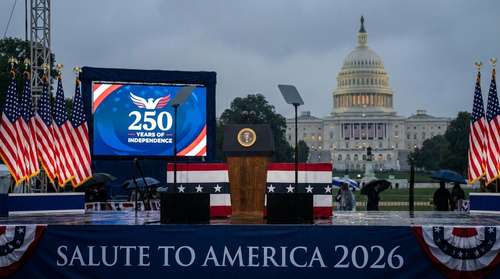
WASHINGTON, D.C. — President Donald Trump convened the inaugural meeting of his controversial "Board of Peace" on Thursday at the newly renamed Donald J. Trump U.S. Institute of Peace, creating a surreal diplomatic spectacle as American warships moved into attack positions in the Persian Gulf. The gathering, attended by representatives from over 40 nations, took place under the shadow of imminent military conflict, with intelligence reports indicating a potential U.S. strike on Iranian targets could launch as early as this weekend.
Inaugural Summit at the Renamed Trump Institute
The atmosphere inside the former U.S. Institute of Peace building—officially rebranded in December following a contentious executive order—was a mix of celebratory rhetoric and geopolitical anxiety. President Trump, flanked by Vice President J.D. Vance and Secretary of State Marco Rubio, declared the new body would "look over" the United Nations, a comment that immediately sent ripples through the diplomatic community.
"The Board of Peace is going to be the most consequential international body in history," Trump told the assembly, which included high-profile figures like former British Prime Minister Tony Blair and Trump’s son-in-law Jared Kushner. The President announced a $5 billion pledge from member states for the reconstruction of Gaza, framing it as the first major victory for his transactional approach to diplomacy. However, the absence of key Western European allies, including France and Germany—who sent only low-level observers—highlighted the deepening transatlantic rift over the Board's mandate.
Rubio and the State Department in the Crosshairs
Tensions between the White House and the State Department were on full display regarding the venue itself. In a surprising moment during his opening remarks, President Trump claimed that Secretary of State Marco Rubio was the "driving force" behind renaming the federal institute in his honor. "Marco named it after me. It was a surprise, a beautiful surprise," Trump stated.
Sources close to the Secretary of State, however, suggest Rubio was blindsided by the renaming and has privately expressed frustration with the "politicization of federal peace assets." This public friction comes at a critical moment for Rubio, who is simultaneously managing failing nuclear talks in Geneva and attempting to hold together a fragile coalition against Tehran. The Secretary's body language was notably stiff as the President suggested the Board of Peace might eventually supersede traditional diplomatic channels like the UN Security Council.
Military Buildup and Persian Gulf Tensions
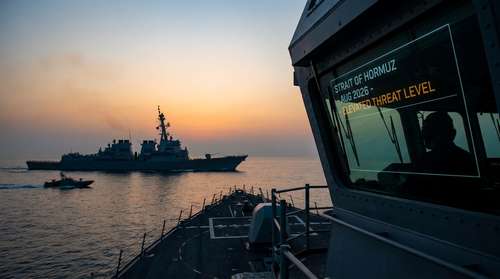
While diplomats toasted to peace in Washington, the Pentagon was finalizing preparations for war. The USS Abraham Lincoln carrier strike group has moved into strike range in the Arabian Sea, and the White House has reportedly given Tehran a final ultimatum to halt its nuclear enrichment and maritime provocations. Intelligence officials confirm that "kinetic action" is on the table if Iran does not return to compliance within 48 hours.
The drumbeat of war has already impacted global markets. Oil prices surged on Thursday, with Brent crude jumping over 2% to $71.76 amid fears that an Iranian retaliation could close the Strait of Hormuz. Prediction markets like Polymarket have seen a sharp spike in traders betting on a U.S. military strike before the end of the month, reflecting a growing consensus that diplomatic off-ramps are disappearing.
Iran's Defiant Stance
Tehran has shown little willingness to back down. Iranian officials warned earlier this week that they are "ready for war" and threatened to target U.S. bases in the region if attacked. The regime’s recent maritime maneuvers, which included the harassment of commercial vessels near the UAE, have been cited by the Trump administration as a direct challenge to U.S. authority.
A Weekend of Decision
As the Board of Peace concluded its first session with promises of a new global order, the reality of the old one loomed large. President Trump is expected to spend the weekend at Camp David with his national security team, where he will likely make the final decision on the Iran strike options. For the diplomats departing the Donald J. Trump U.S. Institute of Peace, the question remains whether the new institution’s first major test will be brokering a peace, or managing the fallout of a new American war.