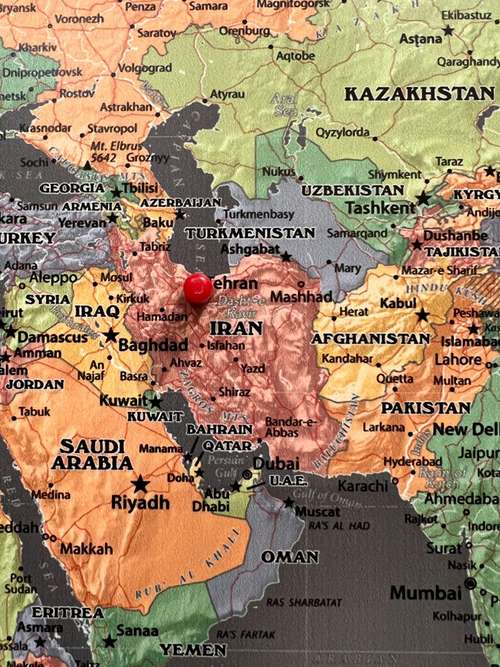
Nearly three weeks into the escalating Trump Iran war 2026, the United States is reportedly evaluating one of the most high-risk maneuvers of the conflict: a direct occupation of Iran's vital oil export terminal. As the ongoing Strait of Hormuz blockade sends shockwaves through international energy markets, President Donald Trump is exploring plans to seize Kharg Island. This aggressive pivot comes exactly as Washington and Jerusalem find themselves increasingly at odds over the ultimate objectives of their joint military campaign, widely known as Operation Epic Fury.
The conflict, which began with nearly 900 joint U.S. and Israeli strikes over a 12-hour period in late February 2026, initially saw American and Israeli forces acting in total synchronization. Those initial salvos eliminated Iran's Supreme Leader Ali Khamenei, fundamentally shaking the region. Now, however, the strategic alignment is fracturing. With global markets panicking and regional violence spiraling out of control, a potential Kharg Island military operation could either force Tehran's hand or ignite a catastrophic expansion of the war.
The High-Stakes Gamble for Kharg Island
According to reports from Axios and confirmed by anonymous senior administration officials, the White House is seriously considering deploying U.S. forces to occupy or establish a naval blockade around Kharg Island.
The Strategic Value of the Island
Located just 15 miles off the Iranian coast, this small coral outcrop—roughly one-third the size of Manhattan at 22 square kilometers—processes nearly 90% of Iran's crude oil exports. With an estimated storage capacity of 30 million barrels, the terminal represents the crown jewel of Iran's economic and military infrastructure.
United States Central Command (CENTCOM) already laid the groundwork for such a move. Last week, American forces executed a massive precision strike against the island, eliminating more than 90 Iranian military targets, including naval mine storage facilities and missile bunkers. Crucially, the U.S. intentionally preserved the oil infrastructure, leaving the massive deep-water export capabilities intact.
‘He wants Hormuz open,’ a senior administration official noted regarding President Trump's mindset. ‘If he has to take Kharg Island to make it happen, that's going to happen. If he decides to have a coastal invasion, that's going to happen’. However, military analysts warn that putting ground forces in such a geographically confined space would expose American troops to relentless Iranian drone and rocket fire. Iran has heavily fortified its coastal defenses, and despite massive aerial bombardment, the Islamic Revolutionary Guard Corps (IRGC) continues to operate lethal drone swarms.
A Deepening US-Israel Diplomatic Rift
While the Pentagon draws up contingency plans for the Gulf, a severe US-Israel diplomatic rift is spilling into public view. The friction stems from fundamentally incompatible endgame strategies. Trump is seeking a quick military victory that neutralizes Iran's immediate threats while keeping global markets stable. In contrast, Israeli Prime Minister Benjamin Netanyahu appears intent on broader regime change, executing what U.S. officials have privately described as a scorched-earth campaign meant to wreck Iran's economy.
The alliance hit a breaking point this week when Israel independently launched a devastating strike on Iran's South Pars gas field. The attack triggered immediate Iranian retaliation against Qatar's nearby liquefied natural gas facilities and Kuwait's Mina Al-Ahmadi oil refinery, setting critical infrastructure ablaze.
President Trump swiftly distanced himself from the Israeli maneuver. Taking to Truth Social, he declared that Israel had violently lashed out and explicitly stated that the United States knew nothing about this particular attack. This public rebuke highlights the chaotic nature of Trump foreign policy breaking away from traditional unconditional support for Israeli military actions when American economic interests are directly threatened. U.S. intelligence officials acknowledge that despite the heavy bombardment, the Iranian regime is not cracking and maintains a firm grip on power under the newly appointed Supreme Leader, Mojtaba Khamenei.
Strait of Hormuz Blockade and Global Oil Price Crisis
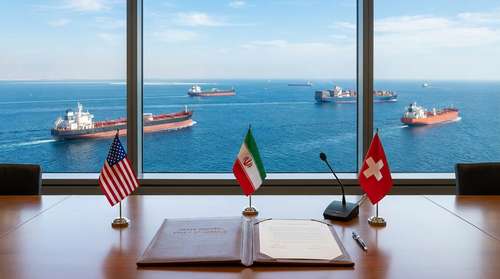
The urgency driving the Kharg Island plan is directly tied to the global economy. Since the war began, Tehran has effectively blockaded the Strait of Hormuz, trapping roughly one-fifth of global oil and gas supplies. This disruption has triggered a devastating global oil price crisis, infuriating American consumers and allies alike.
International Energy Agency chief Fatih Birol warned that the world is facing what could be the most severe energy crisis in history. He noted it could take up to six months just to restore regional oil and gas flows, warning that markets are vastly underestimating the scale of the disruption. Instead of relying entirely on diplomacy to ease the pain at the pump, Trump is looking for hard leverage.
Frustration is mounting in the Oval Office. In recent statements, Trump slammed NATO members as cowards for failing to contribute military support to secure the critical shipping lane. They complain about the high oil prices they are forced to pay, but don't want to help open the Strait of Hormuz, he posted, asserting that securing the strait should be a simple military maneuver and promising that America will REMEMBER their inaction.
Middle East Conflict Escalation and the Path Forward
The situation represents a critical juncture for Middle East conflict escalation. Taking Iranian oil off the market entirely by destroying Kharg's infrastructure would only exacerbate the energy squeeze, which is why an armed occupation—rather than total destruction—is the favored contingency. Yet, experts like Rear Admiral (Ret.) Mark Montgomery caution that capturing the island does not guarantee Tehran will concede to Washington's demands. If we seize Kharg Island, they're going to turn off the spigot on the other end. It's not like we control their oil production, Montgomery warned.
The Iranian regime remains battered but unbowed. They have absorbed tremendous punishment—including thousands of casualties and targeted assassinations of senior commanders—yet their retaliatory strikes and maritime blockade prove they still possess the capacity to inflict heavy costs on the global economy.
For the Trump administration, the clock is ticking. The president must weigh the extreme hazards of a coastal invasion against the unsustainable economic damage of a closed shipping lane. If U.S. Marines deploy to Kharg Island, it will mark an unprecedented geographic expansion of the conflict. How the United States navigates this volatile landscape over the coming days will likely determine the geopolitical and economic trajectory of the entire decade.