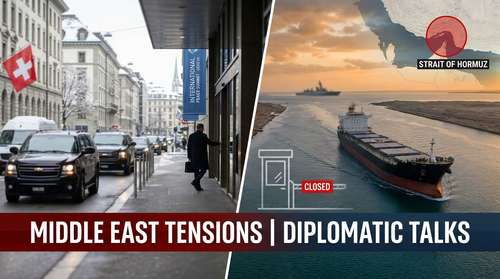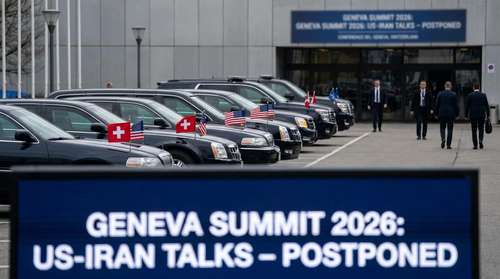
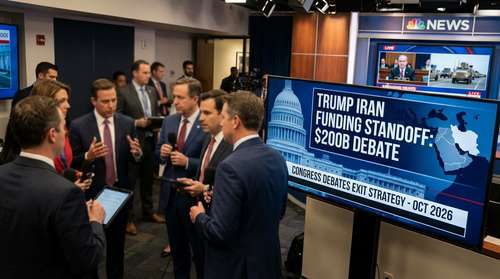
Three weeks into a volatile military conflict, the Trump Iran war 2026 has reached a critical political juncture. The administration’s massive $200 billion war funding request to sustain "Operation Epic Fury" has ignited a fierce standoff on Capitol Hill. With the death toll rising to at least 13 U.S. service members and a drastic oil price surge 2026 squeezing American consumers, lawmakers from both sides of the aisle are aggressively pushing back. The monumental Pentagon emergency funding request is forcing a reckoning in Washington, where fiscal hawks and anti-war advocates alike are demanding a definitive Congress Iran exit strategy before authorizing another dime.
The Scope of the Pentagon Emergency Funding Request
The staggering financial appeal, formulated by the Defense Department and sent to the White House for congressional transmission, comes as the conflict’s human and economic tolls escalate. When pressed about the $200 billion figure during a recent briefing, Defense Secretary Pete Hegseth defended the administration's aggressive posture, bluntly stating, "It takes money to kill bad guys."
However, rubber-stamping this budget is far from a guarantee. The national debt recently eclipsed a record $39 trillion, leaving fiscal conservatives deeply uneasy. For many on Capitol Hill, the sheer scale of the request reflects an open-ended commitment rather than a targeted strike package. Public advocacy groups have vehemently condemned the expenditure. Organizations like Public Citizen argue that deploying such gargantuan sums for an unauthorized military campaign is fiscally reckless, particularly amid ongoing domestic budget battles.
Mounting Casualties in Operation Epic Fury
The financial debate is inextricably tied to the growing human cost of the three-week campaign. The U.S. death toll currently stands at 13 service members, with seven killed in direct combat and six airmen lost in a recent refueling tanker crash over Iraq. The Pentagon has also reported over 140 injuries among American forces, including eight severe cases.
Internationally, the humanitarian impact is sparking global outcry. Reports indicate over 1,300 deaths in Iran, including a highly controversial strike on an elementary school that claimed 168 young lives. The administration maintains its objective is to completely deny Tehran nuclear capabilities, but the collateral damage is complicating diplomatic relations and straining international alliances.
Economic Shockwaves and the Oil Price Surge 2026
Beyond the battlefield, the economic ramifications of the conflict are rippling through global markets. The oil price surge 2026 has become a defining domestic issue, severely impacting everyday Americans. Brent crude, the international benchmark, has skyrocketed to approximately $106 per barrel—up from roughly $70 just weeks prior to the onset of hostilities.
At the pump, the average price of gasoline in the United States has jumped by more than 65 cents a gallon in merely two weeks. The administration has attempted to alleviate market pressure by temporarily pausing sanctions on certain Russian oil shipments, a move critics argue only provides a modest buffer while enriching Moscow. With 2026 midterm election politics already dominating the legislative calendar, these immediate financial pains are forcing vulnerable incumbents to answer for the administration's foreign policy choices.
The War Powers Act Debate 2026 Intensifies
As military operations expand, the fundamental legality of the conflict is under the microscope. The intensifying War Powers Act debate 2026 centers on the president's authority to wage a protracted campaign without formal congressional approval. Under the current statute, the executive branch has a 60-day window to conduct military action before requiring an Authorization for Use of Military Force (AUMF) or a declaration of war.
Lawmakers are increasingly frustrated by the lack of clear parameters. Senator Thom Tillis (R-N.C.) recently summarized the bipartisan apprehension, asking, "What are we ultimately trying to accomplish?" While acknowledging general support for neutralizing immediate threats, Tillis emphasized the necessity of a "strategic articulation of our objectives."
This unease was further amplified by President Trump's recent assertion that he would know the war is over when he "feels it in his bones." The comment drew sharp rebukes from legislative leaders. Senator Mark Warner (D-Va.) dismissed the sentiment as "crazy," noting that ambitious goals like eliminating enriched uranium cannot be achieved exclusively from the air without risking a prolonged ground war.
Demanding a Congress Iran Exit Strategy
The White House has offered shifting narratives regarding its ultimate end game. Initial statements focused on halting nuclear development, while recent rhetoric has vaguely hinted at hoping for a domestic uprising to topple the current regime. Over the weekend, Trump pivoted again, suggesting on social media that he is considering "winding down" military operations.
Contradicting this de-escalation narrative, however, is the simultaneous deployment of additional military assets. The U.S. is currently repositioning multiple amphibious assault ships and roughly 2,500 more Marines to the Middle East, reinforcing the 50,000 troops already stationed in the region.
For a deeply divided legislature, the mixed signals are unacceptable. Before signing off on the $200 billion check, lawmakers are unified in their demand for a coherent Congress Iran exit strategy. They want concrete metrics for success, a transparent timeline, and a definitive pledge to avoid a trillion-dollar quagmire. As the 60-day War Powers clock ticks down, the administration faces an uphill battle to secure both the funds and the political mandate necessary to sustain its campaign.