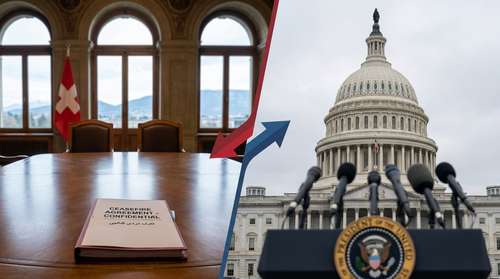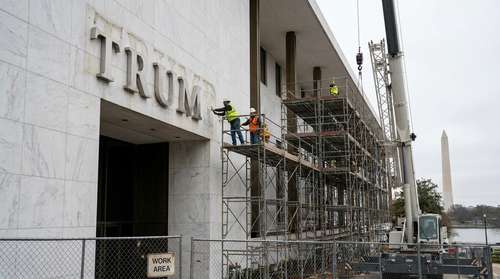
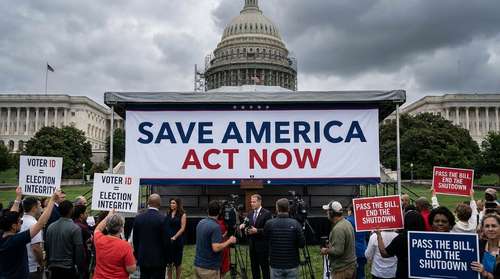
The U.S. Senate is hurtling toward a chaotic legislative clash this week as debate officially opens on the highly controversial SAVE America Act Senate bill. In a move that has paralyzed Washington, President Donald Trump has issued a stark ultimatum, demanding the passage of strict new voter registration requirements before he signs any other legislation into law. With the Department of Homeland Security already closed for a month, this ongoing Trump government shutdown 2026 has escalated tensions precisely as voters head to the polls for early primary contests. For those following US politics live March 17, the unfolding drama represents one of the most consequential standoffs ahead of the November midterms.
High Stakes: The John Thune Voting Bill Dilemma
Senate Majority Leader John Thune finds himself navigating an exceptionally narrow path. The John Thune voting bill strategy involves launching an unprecedented, days-long floor debate starting Tuesday. However, Thune has frankly acknowledged to reporters that the chamber lacks the 60 votes needed to overcome a united Democratic filibuster, stating he must be a "clear-eyed realist" about the math.
While President Trump and conservative allies like Utah Senator Mike Lee have pushed for a grueling "talking filibuster" to exhaust Democrats, Thune and the broader GOP conference rejected the tactic. They recognized it as a procedural trap that would only hand Democrats the floor to offer endless amendments. Instead, Republicans are utilizing the floor time to make a loud public show of support, operating outside regular time limits to force Democrats onto the record regarding noncitizen voting ahead of the fall elections.
What the Legislation Means for Voter ID Proof of Citizenship
At its core, the SAVE America Act (an expanded version of 2024's SAVE Act) mandates stringent voter ID proof of citizenship at the time of registration. The legislation, which narrowly cleared the House in February, would force voters nationwide to provide documentary proof of their U.S. citizenship and show an accepted photo identification to cast a ballot. It also creates new penalties for election workers who register individuals without such documentation.
However, the debate has been vastly complicated by the president's shifting demands. Over the weekend, Trump insisted he would only accept a "go for the gold" version of the legislation. His newly proposed additions include:
- A near-total ban on mail-in ballots, with extremely limited exceptions for military personnel or illness.
- Unrelated provisions banning transgender women from participating in women's sports.
- Sweeping restrictions on gender-affirming medical care for minors.
Voting rights advocates argue that the baseline voter ID proof of citizenship requirements are already overly burdensome. They point out that the law could disenfranchise recently married women who have changed their legal names, or elderly citizens without easy access to their birth certificates. Injecting highly polarizing social issues into the text virtually guarantees that not a single Democrat will break ranks to support it.
Trump Government Shutdown 2026: The Collateral Damage
The president's vow to veto all unrelated legislation until his election demands are met has triggered a deepening federal crisis. The Department of Homeland Security has been shuttered for a month, marking the damaging centerpiece of the Trump government shutdown 2026.
This legislative blockade extends far beyond agency funding. Critical bipartisan housing legislation and a supplemental military appropriations bill meant to address the escalating conflict in the Middle East are currently stalled on the president's desk. The irony of shuttering the nation's domestic security apparatus has not been lost on political observers, especially as top intelligence officials prepare to testify on global threats this week.
Democrats Prepare Procedural Pushback
Senate Democrats are not sitting idly by as Republicans command the floor. Minority Leader Chuck Schumer and his caucus have condemned the bill as a "despicable" attempt to steal the election. Because the legislation is not moving under normal time limits, Democrats are expected to retaliate with their own procedural countermeasures. This includes forcing painful live quorum calls and potentially interrupting the proceedings with privileged votes, such as an anticipated Iran war powers resolution.
Shaping the 2026 Midterm Election News Cycle
As the Senate talkathon stretches into the weekend, it is absolutely dominating the 2026 midterm election news cycle. Trump has explicitly stated that passing the legislation will "guarantee the midterms," warning his party that they face "big trouble" if they fail to deliver this legislative victory.
For now, the Senate floor will serve as high-profile political theater. Thune plans to bring up the House-passed version of the bill for a simple-majority procedural vote, which may ultimately require Vice President JD Vance to break a tie if moderate Republicans like Senator Lisa Murkowski defect. From there, the chamber will plunge into an unpredictable, extended debate. While the SAVE America Act is virtually certain to fail in the Senate, the political shockwaves from this showdown will undeniably shape the battleground campaigns of 2026.