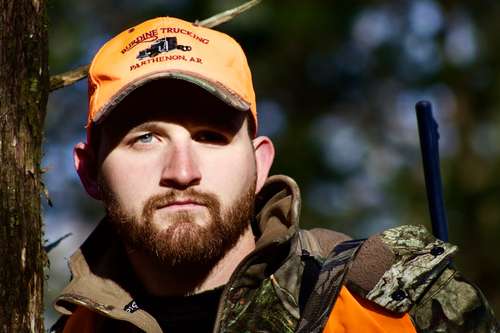
President Donald Trump has ignited a massive political firestorm at the 2026 Milano Cortina Winter Games, publicly attacking U.S. Olympic freestyle skier Hunter Hess as a “real loser” following the athlete's expressions of dissent. The controversy exploded on Sunday after Hess admitted to harboring “mixed emotions” about representing the current administration on the global stage, marking the latest and perhaps most volatile chapter in the president’s long-standing battle with elite athletes who challenge his policies.
The Spark: Hunter Hess’s "Mixed Emotions" Admission
The conflict began during a press conference in Milan late last week, where Hess, a 27-year-old freestyle skier from Bend, Oregon, was asked about the significance of wearing the Team USA flag. In a candid moment that has since gone viral, Hess deviated from the standard patriotic script, citing the current political climate back home—specifically referencing recent aggressive enforcement operations by U.S. Immigration and Customs Enforcement (ICE)—as a source of internal conflict.
“It brings up mixed emotions to represent the U.S. right now,” Hess told reporters. “There’s obviously a lot going on that I’m not the biggest fan of, and I think a lot of people aren’t.” He clarified that his motivation for competing wasn't nationalistic pride in the government, but rather a desire to represent his community. “Just because I’m wearing the flag doesn’t mean I represent everything that’s going on in the U.S. I think, for me, it’s more I’m representing my friends and family back home.”
Trump’s blistering Response on Truth Social
President Trump, who has never shied away from criticizing athletes he views as unpatriotic, responded with a scathing rebuke on his Truth Social platform on Sunday, February 8. In a post that immediately dominated the news cycle, the President called for Hess’s removal from the team and questioned his loyalty.
“U.S. Olympic Skier, Hunter Hess, a real Loser, says he doesn’t represent his Country in the current Winter Olympics,” Trump wrote. “If that’s the case, he shouldn’t have tried out for the Team, and it’s too bad he’s on it. Very hard to root for someone like this. MAKE AMERICA GREAT AGAIN!”
The comment marks a sharp break from the traditional presidential role of unconditional support for the national team during the Games. By labeling an active Olympian a “real loser” while the competition is still underway, Trump has effectively drawn a battle line through the Team USA village, forcing other athletes to choose sides or dodge political questions entirely.
Wider Fallout: JD Vance Booed and Team USA Divided
The tension isn't limited to social media. The atmosphere in Milan has been politically charged since the opening ceremony, where Vice President JD Vance was met with audible boos from sections of the international crowd at the San Siro stadium. The hostility suggests that the domestic polarization in the United States is spilling over into the Olympic arena.
Hess is not alone in his unease. Teammate Chris Lillis also spoke out at the same press conference, expressing heartbreak over the administration's immigration policies. “I think that as a country we need to focus on respecting everybody’s rights,” Lillis stated. However, Hess has borne the brunt of the conservative backlash. High-profile figures like YouTuber-turned-boxer Jake Paul have piled on, tweeting that if athletes don't want to represent the country, they should “go live somewhere else.”
Historical Context: The President vs. The Podium
This incident is consistent with President Trump’s history of engaging in public feuds with athletes who express political dissent. From kneeling NFL players to the U.S. Women’s National Soccer Team, the President has frequently used sports as a cultural battleground. However, the timing of this attack—targeting a specific winter athlete midway through the Games—raises the stakes for the U.S. Olympic & Paralympic Committee (USOPC).
While the USOPC guidelines generally support athletes' rights to free expression provided it doesn't disrupt competition, the organization now faces the uncomfortable reality of the Commander-in-Chief actively rooting against one of his own delegates. Former “Miracle on Ice” captain Mike Eruzione weighed in on the controversy, suggesting that if athletes aren't proud to represent the country, they “shouldn’t represent it at all,” highlighting the deep generational and political divide within the American sports community.
What’s Next for Hunter Hess?
As the competition continues, all eyes will be on Hess’s performance in the halfpipe. The pressure on the Oregon native has intensified exponentially; he is no longer just competing for a medal, but skiing under the weight of a presidential condemnation. Whether this controversy fuels his performance or becomes a distraction remains to be seen, but one thing is certain: the 2026 Milano Cortina Games have officially become a political flashpoint.