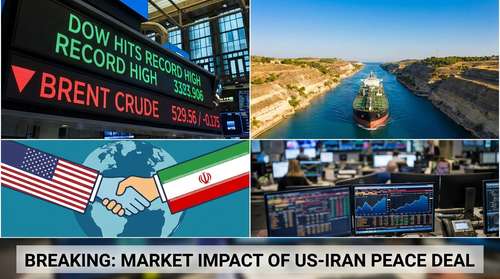
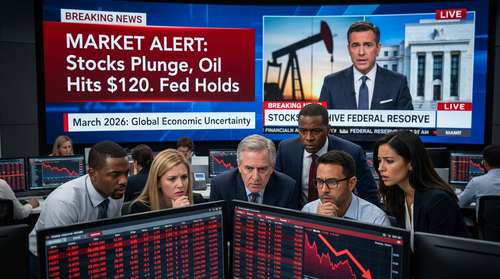
The financial landscape is shifting rapidly as investors navigate the escalating stock market crash March 2026. Wall Street is bleeding red today, capping off a brutal stretch that has left equities reeling. Market indicators show the S&P 500 fourth week loss is virtually locked in, while the tech-heavy index plunges closer toward a confirmed Nasdaq correction territory. The primary catalyst for this aggressive sell-off is a dangerous cocktail of explosive geopolitical conflict and a stubborn central bank. As military strikes against Iran's Kharg Island deep-water export facility send shockwaves through global supply chains, the resulting energy crisis is reigniting fears of rampant, unyielding inflation.
Iran War Economic Impact and the $120 Oil Threat
The Iran war economic impact has officially spilled over from a regional geopolitical crisis into a global economic emergency. Following coordinated U.S. and Israeli military strikes on critical Iranian oil infrastructure, energy markets are actively pricing in worst-case supply disruption scenarios. WTI crude has surged well past the $90 mark, while the international benchmark, a historic Brent crude oil price spike, is aggressively pushing toward the $120 per barrel threshold.
This unprecedented disruption threatens to paralyze global supply chains and significantly inflate shipping costs. With the Strait of Hormuz—the world's most crucial oil transit chokepoint—facing severe blockade risks, major financial institutions warn that energy prices could remain artificially inflated for the foreseeable future. For the broader market, this immediate energy shock is the primary driver pushing risk assets deeper into the red, squeezing profit margins for transport and manufacturing sectors alike.
Federal Reserve Interest Rates Today: A Hawkish Hold
If investors were looking to the central bank for a rescue from the market carnage, Wednesday's Federal Open Market Committee (FOMC) meeting delivered a harsh reality check. Outlining the Federal Reserve interest rates today, Chairman Jerome Powell announced the unanimous decision to maintain the benchmark federal funds rate at 3.50%-3.75% for the second consecutive session in 2026.
The Fed's official policy statement specifically cited 'elevated uncertainty' regarding the Middle East conflict, effectively prioritizing inflation control over economic stimulation. The central bank is now caught in a vicious dual-mandate dilemma:
- Inflationary Pressures: The soaring cost of energy is practically guaranteed to bleed into core consumer goods, raising the cost of everyday living.
- Labor Market Softening: The U.S. economy recently shed 92,000 jobs in February, pushing the national unemployment rate up to 4.4%.
Despite the highly concerning labor data and slowing economic growth, the staggering surge in oil prices has put any immediate monetary easing on an indefinite pause. Wall Street's optimistic expectations for early spring rate cuts have been thoroughly crushed.
Shifting US Inflation Forecast 2026
The global energy shock has completely derailed the central bank's previous economic models. The newly revised US inflation forecast 2026 now expects the Personal Consumption Expenditures (PCE) price index to hit 2.7% by year-end, a notable increase from the 2.4% projected just three months ago in December. Consequently, futures markets, which previously anticipated two or more rate reductions this year, now price in less than a 50% probability of even a single cut. The dreaded 'higher for longer' interest rate narrative has returned with a vengeance, creating a massive headwind for both equities and non-yielding assets like gold, which recently plummeted from its all-time highs.
Wall Street's Reaction: Stagflation Fears Ignite
The realization that the Fed will choose to look through the 'fog of conflict' and delay rate cuts has triggered a widespread and indiscriminate equity sell-off. As institutional traders dump risk assets to seek shelter in cash and short-term Treasuries, the market is bracing for an incredibly ugly close to the week.
Financial institutions are under immense pressure, with major private credit funds capping investor withdrawals amidst a surge in redemption requests. This liquidity crunch has caused leading investment bank stocks to drop significantly, further dragging down the broader index. The impending S&P 500 fourth week loss highlights the sheer breadth of the current pullback, with consumer discretionary, financials, and industrial sectors taking massive hits due to tightening credit conditions. Meanwhile, high-growth technology stocks, which are particularly sensitive to sustained high borrowing costs, are leading the downward charge. This targeted tech sell-off is dragging the Nasdaq correction territory narrative into mainstream financial discussions, wiping out months of built-up retail investor gains.
What Investors Should Watch Next
As we move deeper into the spring of 2026, domestic market stability hinges almost entirely on the Strait of Hormuz and the broader Middle East theater. Until the supply-side energy shock resolves, investors should anticipate continued intraday volatility, elevated bond yields, and a highly defensive posture across all major equity indices. The reality of stagflation—stagnant economic growth paired with runaway inflation—is no longer just a theoretical risk debated by economists; it is actively reshaping Wall Street portfolios today. Furthermore, traders must pay close attention to the upcoming consumer spending reports and the April core PCE data, which is now expected to accelerate to 3.5%. If energy costs continue to dictate retail prices, the Federal Reserve may be forced to formally adopt a hawkish stance, permanently shelving the prospect of 2026 rate cuts.