Millions of Americans are facing unprecedented disruptions to their Spring Break travel 2026 plans as a partial US government shutdown severely curtails operations across major airports. Following a critical DHS funding lapse that began on February 14, over 61,000 Transportation Security Administration (TSA) officers and Customs and Border Protection (CBP) agents have been forced to work without pay. The financial strain on essential personnel has triggered staggering staffing shortages, leading to soaring TSA wait times today and sparking a widespread air travel crisis.
The US Government Shutdown Travel Impact Expands
The convergence of peak holiday travel and a deeply entrenched federal standoff has created a worst-case scenario for the aviation industry. With TSA officers anticipating their first fully missed paychecks by mid-March, unscheduled absences have skyrocketed. Workers are struggling to cover commuting expenses and child care, prompting many to take gig work between shifts or resign entirely.
Travel industry leaders, including the US Travel Association and Airlines for America, have issued stark warnings about the ongoing US government shutdown travel impact. As passenger volumes surge to an estimated three million daily flyers for the spring holiday period, the sheer lack of available federal screeners is threatening to paralyze the nation's aviation network. Morale among agents is reportedly plummeting, reviving memories of previous prolonged funding gaps that drove thousands of screeners out of the agency.
Global Entry Enrollment Suspended: International Arrival Bottleneck
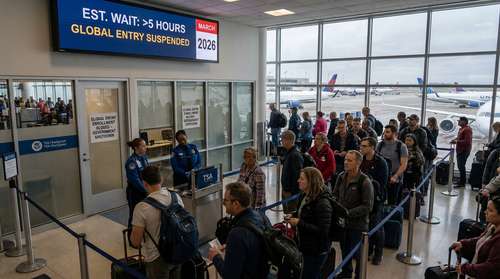
In a drastic move to preserve rapidly depleting funds and redirect manpower to standard security checkpoints, the Department of Homeland Security officially paused its trusted traveler programs. While TSA PreCheck experienced a brief pause before being reinstated following massive public backlash, Global Entry enrollment suspended status remains firmly in place as of late February. Automated kiosks at major international gateways are powered down, and all scheduled enrollment interviews have been canceled indefinitely.
This suspension means every returning international traveler—even those who paid for expedited processing—must now funnel into standard customs queues. To avoid an extra hour or more of processing time, travel managers and CBP officials are strongly urging passengers to download the free Mobile Passport Control (MPC) smartphone app. For the time being, MPC serves as the most effective workaround for the prolonged trusted traveler outage, creating an expedited lane for US citizens and permanent residents.
Houston and Atlanta Airport Lines Stretch for Hours
The strain is most visible at massive transit hubs, where the convergence of connecting flights and holiday departures is pushing physical infrastructure to the breaking point. Houston and Atlanta airport lines have been observed stretching into terminal lobbies, wrapping around ticketing counters, and extending outside automatic doors. Travelers have documented security queues lasting anywhere from three to five hours during peak morning departure banks.
Other major airports, including New Orleans and Dallas Love Field, have also reported severe congestion, offering a grim preview of what awaits regional hubs as the March travel rush intensifies. Airlines are scrambling to rebook passengers who miss flights due to these severe checkpoint bottlenecks. Unfortunately, heavily booked spring schedules offer virtually no empty seats for displaced travelers, leaving many stranded overnight.
Navigating Airport Security Delays March 2026
With no immediate legislative compromise in sight to resolve the funding deadlock, passengers must proactively adapt their strategies to survive the airport security delays March 2026. Lawmakers remain bitterly deadlocked over immigration enforcement policies stemming from recent domestic incidents, leaving federal aviation security firmly in the crosshairs of a protracted political battle.
If you are flying during this volatile period, standard arrival guidelines no longer apply. Travel experts and airline representatives are universally adjusting their recommendations to prevent mass missed departures and cascading logistical failures.
Essential Survival Tips for Your Departure
- Arrive Exceptionally Early: For domestic flights out of major hubs, arrive at least three hours prior to departure. International travelers should budget four full hours to clear customs and security checkpoints.
- Monitor Checkpoint Status: Check airline apps and official airport social media channels for real-time updates on security line lengths before leaving for the terminal. Many hubs update their wait times every 15 minutes.
- Leverage Mobile Passport Control: With Global Entry kiosks inactive, the MPC app is your absolute best defense against brutal international arrival lines. Set up your profile before leaving your home country.
- Pack Meticulously: Minimize carry-on luggage and ensure all liquids and electronics strictly comply with standard TSA regulations. Secondary bag checks are currently severely backlogged, and a flagged bag could add an extra 45 minutes to your wait.
Until Washington secures a funding agreement to pay the thousands of dedicated federal workers protecting the skies, travelers must pack a heavy dose of patience alongside their vacation gear. The current aviation landscape demands extreme flexibility, proactive planning, and a readiness to endure significant logistical hurdles before reaching your final destination.