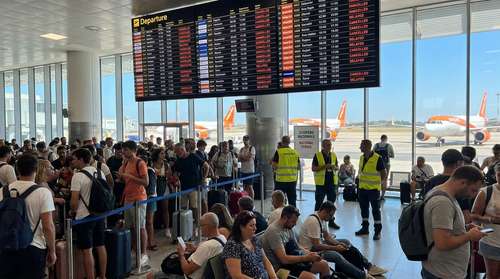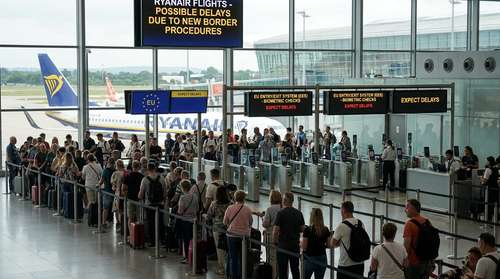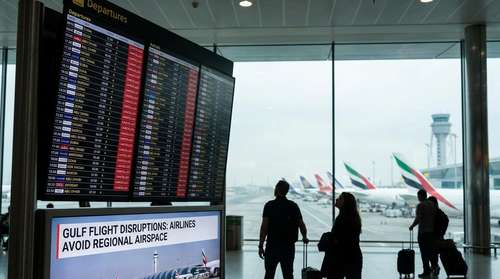
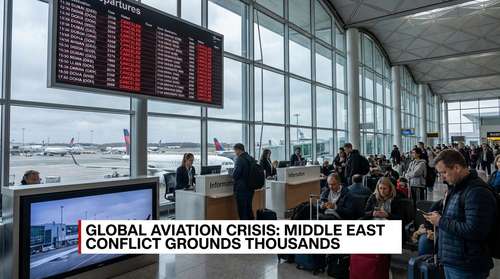
DUBAI — The global aviation industry is facing its most severe disruption since the COVID-19 pandemic, with over 20,000 flights canceled worldwide as of Wednesday, March 4, 2026. The escalating military conflict between the U.S., Israel, and Iran has paralyzed the world’s busiest international transit corridors, forcing the closure of key airspace across the Middle East and leaving tens of thousands of passengers stranded from London to Sydney.
Unprecedented Shutdown: The Scale of the Crisis
Following the launch of Operation Epic Fury—a joint U.S.-Israel military campaign targeting Iranian military infrastructure on February 28—and subsequent retaliatory strikes, airspace over Iran, Iraq, Kuwait, and vast swathes of the Persian Gulf has been declared a "no-fly zone" for civil aviation. The impact has been immediate and catastrophic for global connectivity.
According to aviation analytics firm Cirium, Middle East flight cancellations have surged past the 20,000 mark in just four days. The crisis has severed the critical "super-connector" routes that link Europe and the Americas with Asia and Australia. Major hubs that typically operate with clockwork precision have ground to a near-halt.
Data from Flightradar24 paints a stark picture of the paralysis: Dubai International Airport (DXB), typically the world’s busiest international hub handling over 1,200 daily movements, recorded fewer than 20 civilian flights on Monday. This historic 98% drop in traffic effectively renders the airport a ghost town, with runways occupied only by military sorties and emergency repatriation aircraft.
Major Hubs Paralyzed: Dubai, Doha, and Abu Dhabi Closed
The global aviation crisis is centered on the three "ME3" giants—Emirates, Qatar Airways, and Etihad—which have been forced to suspend the majority of their networks. The closure of these hubs has created a ripple effect, displacing millions of passengers globally.
Dubai and Abu Dhabi: "Do Not Come to the Airport"
In the United Arab Emirates, authorities have issued strict directives. Emirates flight status updates have turned grim, with the carrier suspending all regular check-ins. "Due to the closure of regional airspace and ongoing security risks, all commercial operations remain suspended until further notice," an Emirates spokesperson stated early Wednesday. "We urge customers not to travel to the airport."
Similarly, Abu Dhabi’s Zayed International Airport remains largely shuttered, though Etihad Airways has managed to operate a handful of limited repatriation flights through a narrow, heavily monitored corridor over Saudi Arabia. These "lifeline" flights are currently the only civilian links out of the UAE, subject to approval from military air traffic controllers.
Doha in Lockdown
Qatar’s Hamad International Airport faces a total blockade of its usual flight paths. With Iranian airspace to the north and Bahraini airspace to the west closed to commercial traffic, Qatar Airways has been forced to ground its entire fleet, stranding thousands of transit passengers inside the terminal.
Travel Advisory: Stranded Travelers and Rerouting Nightmares
For stranded travelers in the Middle East, the situation is becoming increasingly desperate. Hotels in Dubai and Doha are at capacity, and ticket prices for the few available alternative routes have skyrocketed by over 400%. European and Asian carriers attempting to bypass the region are being forced to take lengthy detours.
International travel alerts for 2026 have been upgraded to their highest levels by the U.S. State Department and the UK Foreign Office, advising against all travel to the region. The "Caucasus Corridor"—a narrow strip of airspace over Azerbaijan and Georgia—is now the only viable route for flights between Europe and Asia, but it is suffering from severe congestion, leading to delays of up to 12 hours.
Airlines like Qantas, Lufthansa, and Singapore Airlines have rerouted flights to avoid the conflict zone entirely, adding 3-4 hours to flight times and requiring unscheduled fuel stops in places like Cairo and Athens.
Geopolitical Trigger: Why the Skies Went Dark
The current Iran conflict travel advisory stems from the rapid escalation of hostilities earlier this week. The closure of Iranian airspace is particularly damaging because it sits at the heart of the Eurasian flight network. Without access to these skies, the efficient "Great Circle" routes utilized by modern long-haul jets are impossible.
Aviation analysts warn that even if a ceasefire were called today, it would take weeks to unravel the logistical knot. "This isn't just a pause; it's a system reset," explains industry analyst Sarah Jenkins. "Crew are out of position, aircraft are grounded in the wrong continents, and the backlog of passengers will take a month to clear."
What Travelers Need to Know Now
If you are scheduled to fly through the Middle East in the next 72 hours, experts advise the following:
- Check Status Immediately: Do not rely on old itineraries. Check your airline's app for the latest Emirates flight status updates or notifications from your specific carrier.
- Avoid the Region: If your flight connects through Dubai, Doha, or Abu Dhabi, assume it is canceled. Seek rerouting via hubs outside the conflict zone, such as Istanbul or Singapore, though seats are scarce.
- Contact Consulates: If you are stranded in the UAE or Qatar, register with your embassy immediately for potential government-assisted repatriation flights.