The escalating conflict in the Middle East is delivering a severe financial blow to the global tourism economy, paralyzing major transit hubs and sending the cost of flying skyrocketing. As of March 11, 2026, the ripple effects of these geopolitical tensions are being felt worldwide. According to a new WTTC tourism loss report, the travel industry is hemorrhaging an estimated $600 million daily in international visitor spending. Concurrently, American travelers are facing a steep airfare price increase in March 2026, driven by an unprecedented jet fuel price surge impact. This dual crisis of restricted airspace and soaring operational costs marks a critical moment for travel industry economic news, reshaping how and where millions of people fly.
WTTC Details $600 Million Daily Economic Hit
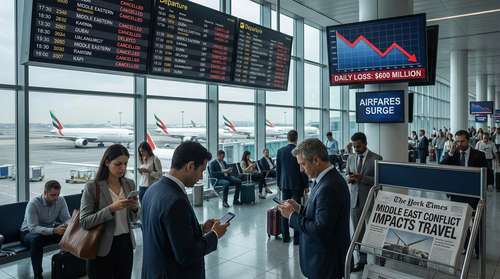
The Middle East serves as a vital connective tissue for global aviation, handling approximately 14 percent of international transit traffic and 5 percent of global arrivals. With tensions involving Iran boiling over into open conflict, that connective tissue has been severely severed. The World Travel & Tourism Council (WTTC) paints a grim picture of the Middle East travel impact 2026, estimating a devastating daily loss of $600 million in international visitor spending.
Before hostilities erupted, the WTTC had projected a robust $207 billion in tourism revenue for the region this year. The sudden halt in regional connectivity quickly translates into a substantial economic impact across the entire tourism ecosystem, affecting airlines, hotels, car rental companies, and cruise operators alike. Gloria Guevara, President and CEO of the WTTC, noted that while the immediate financial blow is profound, the travel sector remains inherently resilient. Historical data from previous security crises suggests that with appropriate government intervention—such as emergency repatriation flights and localized hotel support—regional tourism can begin recovering in as little as two months once stability is securely restored.
Dubai Airport Flight Cancellations Strand Thousands
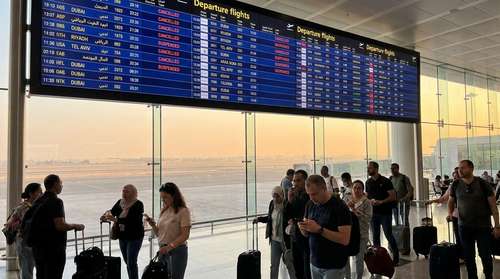
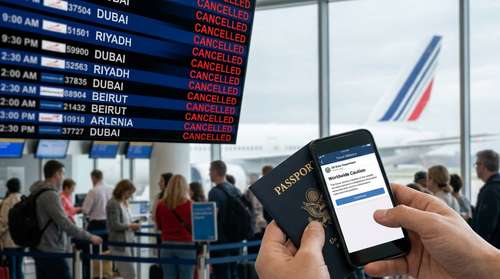
Nowhere is the crisis more visible than in the United Arab Emirates. As military activity escalated, civil aviation authorities enacted strict zero-risk policies that led to widespread airspace closures. The resulting Dubai airport flight cancellations have left over 100,000 passengers stranded, with massive departure screens in Terminal 3 flashing continuous red cancellation notices. Major regional aviation hubs—including Dubai (DXB), Abu Dhabi, Doha, and Bahrain—which collectively process around 526,000 passengers daily under normal conditions, have been thrown into operational chaos.
While limited operations cautiously resumed by the first week of March, more than 80 percent of scheduled flights remained grounded at the peak of the crisis. Dubai International Airport has been forced to prioritize emergency repatriation flights and heavily restrict incoming capacity. Travelers stuck in transit are grappling with overflowing hotel lobbies at locations like Fairmont The Palm, facing the daunting task of rebooking complex long-haul routes while waiting for clearance from local crisis management desks.
Surging Jet Fuel Prices Drive Airfares Up 7.1%
The geopolitical shockwaves have rapidly breached American borders, directly affecting the wallets of prospective vacationers. The Bureau of Transportation Statistics released data earlier this week confirming a 7.1 percent year-over-year jump in airline fare costs. This airfare price increase March 2026 is inextricably linked to the jet fuel price surge impact following the conflict's massive disruption of global oil markets.
While some international and European carriers historically rely on robust fuel hedging strategies to absorb sudden price shocks, many U.S. airlines have recently backed away from these financial safety nets. Consequently, the surging cost of aviation fuel is being passed directly to the consumer. Financial analysts warn that if the conflict becomes protracted, airline consolidation could accelerate, especially among low-cost carriers struggling to absorb the operational hits. Whenever airlines are forced to merge or pull out of key markets, it permanently reduces route competition and gives remaining carriers more pricing power to maintain elevated baseline ticket costs.
Coping with Ongoing International Travel Disruptions
For individuals with impending travel plans, these international travel disruptions require an immediate shift in booking strategy. With airlines actively adjusting their schedules to avoid conflict zones over Iranian, Iraqi, and parts of Saudi airspace, flight times are lengthening, and operational costs are mounting. Tourism experts recommend several critical steps for anyone navigating the current climate:
- Prioritize Flexible Booking: Ensure your airline tickets come with comprehensive refund and rebooking guarantees. Never book non-refundable basic economy fares during periods of high geopolitical volatility.
- Upgrade Travel Insurance: Verify that your policy explicitly covers acts of war, state of emergency clauses, and unprompted cancellations.
- Monitor Official Channels: Rely exclusively on verified updates from civil aviation authorities and your specific carrier. Disregard unverified social media footage, which often exacerbates panic and spreads misinformation.
Ultimately, the compounding pressures of geopolitical instability and inflationary economics are creating a perfect storm for the tourism sector. While the travel industry is uniquely adaptable, the short-term reality is a landscape defined by higher costs, unpredictable schedules, and the ongoing necessity for hyper-vigilance among global travelers.