Wall Street endured another punishing session this Friday as the escalating military conflict between the United States, Israel, and Iran cast a heavy shadow over the global economy. The unprecedented oil price surge US Iran war developments have triggered is rapidly transforming a localized geopolitical crisis into a worldwide financial event. Major indexes, including the S&P 500 and the tech-heavy Nasdaq, are now tracking for their third consecutive losing week as crude prices spike and investors scramble to reassess their portfolios.
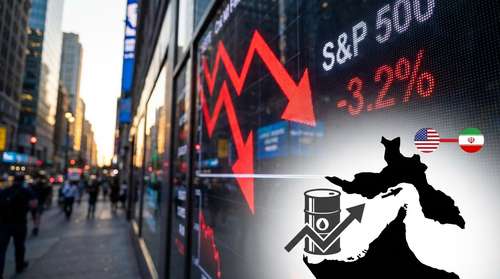
The S&P 500 tumbled 0.6% on Friday to close at 6,632, following steep declines earlier in the week. The benchmark index is now down 3.1% for the year, a stark reversal from the optimism that characterized early 2026. The Dow Jones Industrial Average shed another 119 points, and the Nasdaq dropped 0.9%. The stock market volatility March 2026 has witnessed stems directly from the targeted strikes against Iranian infrastructure and Tehran's subsequent retaliation, which have introduced an unpredictable risk premium into global equities.
Global Energy Crisis Impact: The Strait of Hormuz Bottleneck
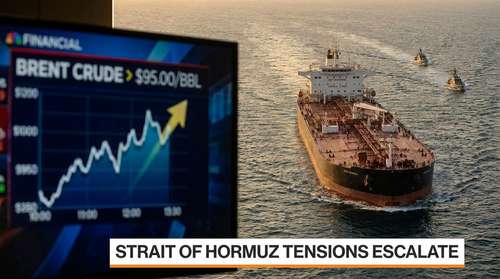
The epicenter of the current economic anxiety lies in the Strait of Hormuz. Following the launch of Operation Epic Fury by joint U.S. and Israeli forces in late February, Iranian forces have heavily restricted access to the critical shipping lane. This narrow waterway is responsible for the daily transit of roughly 20 million barrels of oil, accounting for a staggering 20% of global supply.
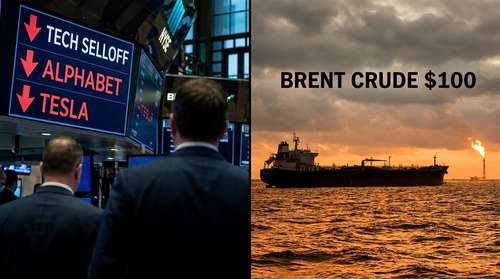
The global energy crisis impact is already being felt across both physical and financial markets. Energy analysts note that markets are no longer just pricing in a temporary logistical hurdle; they are bracing for a prolonged structural block. Looking at the Brent crude price today, the international benchmark closed 2.7% higher at an astonishing $103.14 per barrel, capping a massive 40% gain for the month. Meanwhile, U.S. West Texas Intermediate (WTI) crude spiked 3.1% to settle at $98.71. This upward trajectory places immense pressure on energy-importing nations and heavily fuel-dependent industries. Airlines, shipping conglomerates, and heavy manufacturers are already issuing profit warnings as their fuel hedging strategies prove inadequate for an extreme tail-risk event.
A Darkened Inflation Forecast 2026 Amid War
For months, equity investors had been betting on a series of interest rate cuts from the Federal Reserve. Those hopes are now rapidly evaporating. The February Consumer Price Index (CPI) report confirmed that headline inflation was already holding stubborn at 2.4% year-over-year. Now, economists warn that the economic shockwaves will push those numbers significantly higher in the coming months.
The inflation forecast 2026 war scenarios outline is overwhelmingly bleak. A sustained period of oil trading above the $100 mark acts as a massive and immediate tax on consumers and businesses alike. Beyond the pump, shipping insurance costs for vessels navigating near conflict zones have skyrocketed. These increased maritime transportation costs will inevitably flow through global supply chains, raising the cost of imported goods across the board. Consequently, the probability of a rate cut at the upcoming March 17-18 Federal Open Market Committee (FOMC) meeting has plummeted to below 5%. Central bankers are caught in an impossible trilemma: they cannot easily combat supply-side inflation without heavily stifling economic growth, leaving markets to face the dreaded prospect of stagflation.
Corporate Casualties Mount
The broader market selloff is exposing vulnerabilities in companies already struggling with higher operating costs. Ulta Beauty, for example, slid 14.2% on Friday, marking the steepest decline among S&P 500 components. The retailer's earnings report revealed a massive 23% spike in selling, general, and administrative expenses, which jumped to $1 billion. When fuel and transportation costs surge, retail margins are among the first to collapse, a reality that is currently paralyzing Wall Street trading desks.
Shifting Capital: Safe Haven Assets for Investors
With equities sliding and energy markets caught in a geopolitical firestorm, capital is fleeing toward security. The safe haven assets for investors are seeing massive inflows as portfolio managers look to insulate themselves from further shocks. The U.S. dollar has stood exceptionally tall during the tumult, putting intense pressure on foreign currencies and driving the Japanese yen to multi-month lows.
Simultaneously, the bond market is flashing undeniable warning signs. The yield on the 10-year Treasury note has jumped to 4.28%, up sharply from the 3.97% level seen just before the military strikes began in late February. Higher yields reflect the bond market's expectation that the Middle East conflict economic fallout will force the central bank to maintain restrictive monetary policy far longer than initially anticipated. Gold has also seen a modest resurgence, but it is the greenback that remains the undisputed king of capital preservation during this current crisis.
As the weekend approaches, geopolitical analysts and financial traders alike are watching the Middle East with bated breath. The combination of soaring crude prices, rising bond yields, and collapsing retail margins creates a toxic environment for risk assets. Until there is concrete evidence that the flow of oil can be safely restored, Wall Street will continue taking its cues directly from the energy markets, bracing for whatever the next headline might bring.