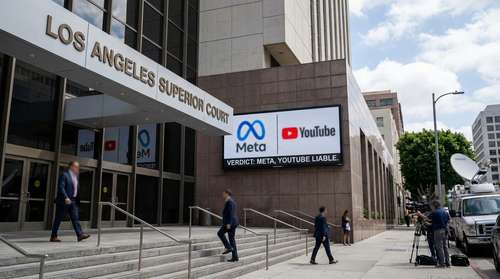
A Los Angeles jury has delivered a seismic blow to Silicon Valley, concluding the highly anticipated Meta social media addiction trial with a historic verdict. After a grueling six-week proceeding and nine days of deliberation, jurors found Meta and Google-owned YouTube negligent in designing addictive platforms that inflicted severe mental health harm on young users. This ruling effectively shatters the long-standing invincibility of internet giants, marking the first time major tech corporations have been held directly responsible for the psychological toll their platforms take on adolescents. The March 2026 decision arrives at a critical juncture for online safety, transforming theoretical arguments about algorithmic harm into actionable courtroom victories.
A Watershed Moment for Big Tech Mental Health Liability
The total $6 million verdict centers on a 20-year-old plaintiff, identified in court documents as KGM or Kaley, who alleged she developed severe depression, social phobia, and body dysmorphia after joining YouTube at age six and Instagram at age nine. Jurors awarded $3 million in compensatory damages and an additional $3 million in punitive damages, splitting the financial penalty—70 percent to Meta and 30 percent to YouTube.
This YouTube negligence verdict stands as a defining moment in the modern digital era. It proves that juries are willing to penalize technology companies not just for what happens on their platforms, but for the fundamental ways those platforms operate. Jurors deliberated for over 40 hours, carefully weighing whether the tech firms knew their product designs were dangerous. The 10-2 split decision concluded that the companies were well aware of the adverse effects their platforms could have on minors, yet failed to adequately warn users. During the trial, heavyweights including Meta CEO Mark Zuckerberg and Instagram head Adam Mosseri took the stand to defend their companies, drawing stark comparisons to the tobacco executives who testified in the 1990s.
Bypassing the Section 230 Social Media Lawsuit Defense
For decades, tech conglomerates have shielded themselves behind the Section 230 social media lawsuit defense, a 1996 provision that protects online platforms from liability regarding third-party content. However, this lawsuit took a radically different legal approach.
Instead of focusing on the specific videos or images Kaley viewed, her legal team targeted the underlying architecture of the apps. Los Angeles County Superior Court Judge Carolyn Kuhl repeatedly rejected the tech companies' attempts to dismiss the case, ruling that First Amendment and Section 230 protections do not immunize platforms from decisions regarding their fundamental design features.
The Engineering of Addiction
Plaintiffs argued that specific product features—such as infinite scroll, autoplaying videos, push notifications, and augmented reality beauty filters—were intentionally crafted to exploit human psychology. Mark Lanier, the plaintiff's attorney, famously asked the jury, How do you make a child never put down the phone? That's called the engineering of addiction. By zeroing in on product liability and defective design, the legal strategy successfully bypassed traditional internet safe harbors. The jury agreed that these design choices functioned like defective physical products—similar to a faulty airbag or a dangerous toy—directly causing the plaintiff's emotional distress.
Inside the Instagram Addiction Court Case
Throughout the trial, Meta and Google's defense argued that teen mental health is profoundly complex and cannot be solely attributed to a single application. They pointed to the plaintiff's external life factors, family dynamics, and pre-existing challenges as the primary drivers of her psychological struggles.
Despite these defenses, the evidence resonated with the jury. Kaley testified that she spent her entire day glued to her screens, chasing the emotional rush of likes and notifications. The timeline of her descent into self-harm closely tracked her escalating use of the platforms. The outcome of this specific Instagram addiction court case arrives just one day after a separate New Mexico jury ordered Meta to pay $375 million in a deceptive trade practices lawsuit involving child exploitation. The back-to-back legal defeats represent a devastating week for Meta's legal department and underscore a growing public and judicial consensus against Big Tech mental health liability.
What This Tech Company Legal Precedent Means for the Future
Both Meta and Google have announced their intention to appeal the Los Angeles verdict, with Google asserting that YouTube is a streaming service rather than a social media site. However, the immediate impact of this ruling cannot be overstated.
With thousands of similar cases consolidated across the country—brought by parents, school districts, and state attorneys general—this victory opens the floodgates for mass litigation. As one of the most significant pieces of social media regulation news 2026 has delivered, the tech industry now faces an existential threat to its core business model. If infinite scroll and push notifications are now legally recognized as dangerous design flaws, companies may be forced to fundamentally overhaul how their platforms operate. This tech company legal precedent demonstrates that prioritizing engagement metrics over human well-being now carries a massive, unavoidable financial risk. Experts suggest this could eventually spur federal lawmakers to enact comprehensive digital safety legislation, moving beyond piecemeal state laws. For now, the era of frictionless, algorithmic manipulation is facing its ultimate trial, and the tech giants are finally being handed the bill.