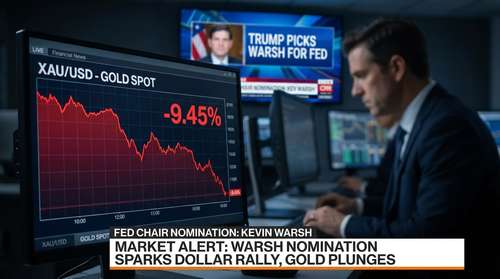
Global markets are reeling this Monday as the price of gold plummeted in its sharpest decline in over a decade, triggered by President Donald Trump’s nomination of Kevin Warsh as the next Chairman of the Federal Reserve. The announcement, made late Friday, sent shockwaves through the precious metals sector and ignited a massive rally in the US dollar, as investors rapidly repriced their expectations for a new, potentially more hawkish era of monetary policy.
The Warsh Shock: A Hawk Returns to the Nest
President Trump’s selection of Kevin Warsh, a former Federal Reserve Governor and vocal critic of the central bank’s post-crisis easy money policies, has upended the widely held belief that the administration would appoint a loyalist committed to slashing interest rates. While Trump praised Warsh as "central casting" and predicted he would be "one of the GREAT Fed Chairmen," Wall Street immediately latched onto Warsh’s track record as a monetary hardliner.
During his previous tenure at the Fed (2006–2011), Warsh was known for his skepticism of Quantitative Easing (QE) and his warnings against the long-term risks of ballooning central bank balance sheets. His nomination suggests a dramatic pivot away from the accommodation that markets had baked in. "This is a regime change signal," says Marcus Thorne, chief strategist at Apex Global Macro. "Traders were betting on a dove who would print money to fuel growth. Instead, they got a hawk who believes inflation is a choice and sound money is paramount."
Precious Metals Bloodbath: Gold and Silver Nosedive
The reaction in the commodities pit has been nothing short of violent. Gold prices, which had been trading near record highs of $5,600 per ounce just last week, collapsed by nearly 9% in Friday's session and continued to slide Monday morning, breaking below the psychological $4,900 support level. This marks the yellow metal's worst single-day performance since the crash of 2013.
Silver fared even worse, enduring a historic liquidation event. Prices for the grey metal cratered by over 25%, wiping out months of gains in a matter of hours. The sell-off was exacerbated by margin calls and a rush to liquidity as the US dollar rally gained steam. The greenback surged against a basket of major currencies, making dollar-denominated assets like gold significantly more expensive for foreign buyers.
Why Markets Are Panicking
The ferocity of the sell-off stems from the unwinding of the "debasement trade." For months, investors flocked to precious metals as a hedge against expected fiscal expansion and rate cuts. Warsh’s nomination challenges that thesis. If the new Fed Chair prioritizes fighting inflation over stimulating growth—even in defiance of political pressure—real interest rates could rise, crushing the appeal of non-yielding assets like gold.
Rate Hike Fears and the Dollar's Resurgence
While President Trump has publicly demanded interest rate cuts to roughly 1%, the bond market is now signaling that a Warsh-led Fed might actually keep rates higher for longer to defend the dollar's integrity. Yields on the 10-year Treasury note spiked as traders digested the news, creating a headwind for equities and commodities alike.
"Warsh is not a rubber stamp," notes Elizabeth Carter, a senior economist at Sovereign Capital. "He has deep ties to Wall Street and a philosophy that respects market signals over theoretical models. If inflation data remains sticky, Warsh is the type of Chair who will not hesitate to keep the brakes on, regardless of what the White House wants." This independence paradox—a Trump nominee who might defy Trump's low-rate wish—has introduced a new layer of market volatility today.
Political Fallout and Confirmation Outlook
As Jerome Powell prepares to exit when his term expires in May 2026, the focus shifts to the Senate confirmation process. Unlike more controversial loyalist picks, Warsh enjoys significant support among establishment Republicans. Senators like Tim Scott and Tom Cotton have already voiced strong approval, citing his competence and experience during the 2008 financial crisis.
However, the path forward is not entirely smooth. Warsh will face grueling questions about how he intends to balance the Fed's dual mandate with the administration's aggressive growth targets. For now, the message from the market is clear: the era of assumed easy money is over, and the reign of the hawk may be just beginning.