President Donald Trump has plunged the world economy into fresh turmoil by imposing a blanket 15 percent global tariff on all imports, just 48 hours after the U.S. Supreme Court struck down his previous trade program as unconstitutional. The aggressive move, announced via Truth Social early Sunday, leverages a little-known provision of the Trade Act of 1974 to bypass the Court’s 6-3 ruling, reigniting fears of a global trade war in 2026.
Supreme Court Strikes Down IEEPA Tariffs
The escalation follows Friday’s landmark decision in Learning Resources, Inc. v. Trump, where the Supreme Court ruled that the President lacked the authority to impose tariffs under the International Emergency Economic Powers Act (IEEPA). In a stinging 6-3 opinion, the Court held that the 1977 law—which Trump had used to levy duties on billions of dollars of goods—grants the power to "regulate" commerce but not to tax it. That power, the justices affirmed, belongs exclusively to Congress.
The Supreme Court tariff ruling 2026 was initially hailed by markets as a return to stability. Importers and manufacturers celebrated what they believed was the end of executive overreach in trade policy. However, the victory was short-lived. By pivoting to an entirely different statute, the President has effectively rendered the Court’s decision moot, replacing the voided IEEPA tariffs with a new, equally aggressive levy.
The New Weapon: Section 122
In his Truth Social announcement, President Trump declared he was invoking Section 122 of the Trade Act of 1974. This obscure "balance of payments" authority allows the President to impose import surcharges of up to 15% for 150 days if the United States faces a serious deficit or a threat to the dollar. Unlike IEEPA, Section 122 explicitly mentions tariffs, providing a firmer—albeit temporary—legal footing.
"The Supreme Court tried to leave our borders wide open to economic invasion," Trump wrote. "They failed. We are enacting Section 122 immediately to stop the bleeding. 15% on everything until our trade partners pay up."
Legal experts note that while Section 122 is more specific than the broad emergency powers Trump previously relied on, it comes with strict time limits. The Trump 15 percent global tariff can only remain in place for five months unless Congress votes to extend it—a scenario that sets up a high-stakes showdown on Capitol Hill later this year.
Stock Market Reaction and Economic Fallout
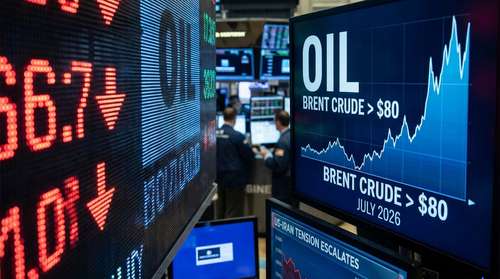
The swift reversal sent shockwaves through global finance. The stock market reaction to tariffs was immediate, with futures for the S&P 500 and Dow Jones Industrial Average plunging in overnight trading. Investors, who had priced in a period of trade calm following the court ruling, are now scrambling to hedge against renewed volatility.
Economists warn that the import duty impact on inflation could be severe. With a flat 15% tax applied to everything from consumer electronics to industrial raw materials, costs for American households are projected to rise significantly. "This isn't just a tax on China or Mexico anymore," said Elena Rodriguez, chief economist at Global Trade Analytics. "A universal 15% surcharge hits supply chains that were just starting to recover. We are looking at a potential CPI spike of 1.5% to 2% within months."
Global Partners Prepare Retaliation
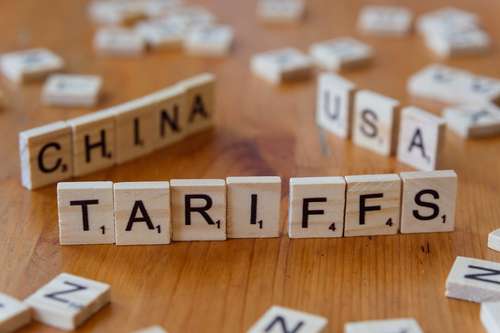
International response has been swift and hostile. The European Union and China have already signaled they will file immediate challenges at the World Trade Organization, though the WTO's dispute mechanisms remain paralyzed. Major U.S. trading partners are reportedly drafting retaliatory lists targeting American agriculture and technology exports, raising the specter of a full-blown global trade war 2026.
What’s Next for US Trade Policy?
This development marks a chaotic new chapter in US trade policy breaking news. While the International Emergency Economic Powers Act lawsuit successfully curbed one avenue of presidential power, it evidently failed to restrain the administration's protectionist agenda. The focus now shifts to Congress, which must decide whether to endorse the tariffs when the 150-day window closes, and to the courts, which will inevitably face new challenges against the use of Section 122.
For now, businesses must navigate a landscape where trade rules can change overnight, and where a Supreme Court defeat can be transformed into an even more aggressive policy victory with the stroke of a pen.