The global travel network is buckling under the weight of unprecedented global aviation disruptions. Following a targeted drone strike that ignited a fuel storage tank just outside the perimeter of the world's busiest international transit hub on March 16, a sudden Dubai International Airport closure sent immediate shockwaves through the commercial aviation industry. As regional military tensions escalate into active conflict, passengers and carriers alike are grappling with sudden airspace lockdowns, leaving tens of thousands of travelers stranded and forcing an overnight redrawing of the world's most critical intercontinental flight corridors.
Explosions and Immediate International Flight Cancellations
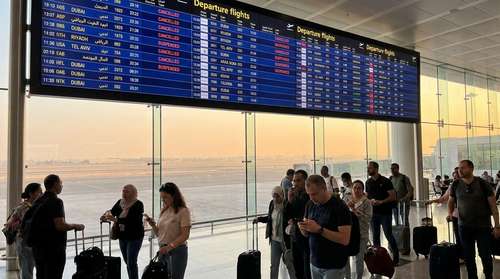
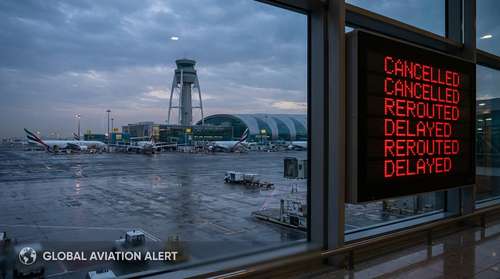
The cascading travel chaos began early Monday morning when a drone impact caused a massive explosion and fire near the Dubai airfield. The immediate Dubai International Airport closure forced at least 65 airborne jets to divert to 34 different airports spread across Europe, Asia, and North Africa. Flight tracking data from the incident revealed that 22 of these diversions became notorious "flights to nowhere," forcing frustrated passengers to return to their original departure gates after spending hours circling in the sky.
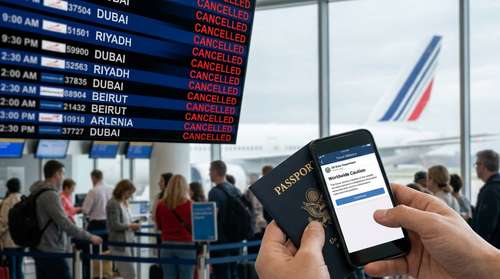
By early Tuesday, March 17, the crisis deepened significantly. The United Arab Emirates' General Civil Aviation Authority mandated a complete, albeit temporary, closure of the country's airspace as an exceptional precautionary measure against active missile and drone threats. This rare move triggered severe travel safety alerts UAE regulators broadcasted worldwide. While airspace operations have gradually resumed on a highly restricted basis as of March 19, the commercial fallout continues to multiply. Major international carriers, including Cathay Pacific, Lufthansa, Singapore Airlines, and British Airways, have responded with sweeping international flight cancellations extending through late April.
Navigating New Airline Conflict Zone Flight Paths
With massive chunks of Middle Eastern airspace—including the skies over Iran, Iraq, Kuwait, and Syria—completely closed by stringent safety notices, flight dispatchers are scrambling to map out safe alternatives. The standard Gulf corridor that seamlessly connects European capitals to Asian financial hubs is effectively shut down. For travelers and logistics experts keeping an eye on Dubai airport news today, the operational reality on the ground is stark: the UAE is currently managing a tightly controlled airspace with limited, strictly monitored entry and exit waypoints.
Airlines are now forced into navigating incredibly complex airline conflict zone flight paths to keep civilian traffic far away from active military engagements. Operations into the region now rely heavily on a highly restrictive corridor system. Foreign carriers must secure special No Objection Certificates based on comprehensive risk assessments before they are cleared to land in Abu Dhabi or Dubai, severely bottlenecking inbound traffic. Local heavyweights like Etihad, Emirates, and flydubai are maintaining bare-bones operational schedules, prioritizing essential connections while actively warning commercial passengers not to approach the airport terminals unless their specific departure is explicitly confirmed.
The Reality of Middle East Flight Rerouting 2026
The compounding airspace restrictions have drastically reshaped the economics and logistics of intercontinental travel. The defining characteristic of the Middle East flight rerouting 2026 crisis is the sheer geographic scale of the necessary detours. Aircraft that once cut efficiently across the Arabian Peninsula are now being pushed onto extreme northerly routes traversing the Caucasus and Afghanistan, or southerly pathways flying over Egypt, the Red Sea, Saudi Arabia, and Oman.
These sprawling detours are far from minor inconveniences. Aviation logistics experts and industry analysts confirm that the newly mandated routing adds anywhere from two to five hours to standard Asia-to-Europe and Asia-to-North America journeys. The operational toll of these extended flights is staggering. Pushing commercial passenger jets to their maximum range limits frequently forces unplanned refueling stops and causes flight crews to exceed their legally permitted duty hours mid-trip. The cascading result is a logistical nightmare that makes operating certain ultra-long-haul routes practically impossible and financially ruinous for airlines already battling higher operational costs.
What This Means for Passengers
If you have upcoming travel plans that transit through the Gulf hubs, you must prepare for significant friction at every stage of your journey. Travelers should expect longer flight times, tighter seat capacity as airlines consolidate or pull flights, and considerably higher airfares driven by soaring fuel burn and inflated aviation insurance premiums. Corporate travel managers are already steering executives through alternative hubs in Istanbul or routing them directly across the Pacific to avoid the Middle East entirely.
Aviation regulators, including the European Union Aviation Safety Agency (EASA), are reviewing threat assessments daily, maintaining strict warnings against operating at any altitude across multiple Middle Eastern flight information regions. Until the regional security situation stabilizes, the complex, fragile web of reroutes, mid-air diversions, and abrupt cancellations will remain the stark new reality of global air travel.