The global financial ecosystem experienced a seismic shift late Tuesday as the announcement of a two-week US-Iran ceasefire 2026 sent shockwaves of optimism across trading floors. Reversing weeks of heavy economic pressure, the breakthrough agreement—brokered by Pakistan—averted a major military escalation and triggered a massive global market relief rally. Investors piled back into risk assets as the looming threat over the world's most critical energy artery temporarily subsided. The immediate result was a historic crude oil price crash and the largest single-day gain for major equities in over a year.
The Wall Street Surge April 9: Equities Roar Back
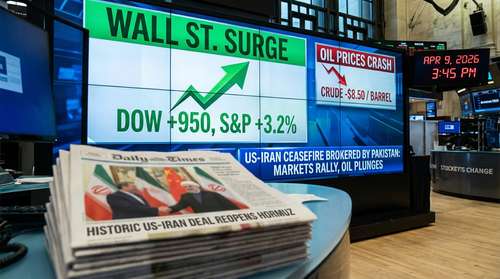
Following weeks of frenetic volatility fueled by geopolitical anxiety, the Wall Street surge April 9 demonstrated the sheer scale of pent-up investor relief. The Dow Jones Industrial Average skyrocketed over 1,100 points, climbing roughly 2.4% to close near 47,914. Simultaneously, the S&P 500 leaped by 2.5%, and the tech-heavy Nasdaq Composite led the pack with a stunning gain of nearly 2.8%.
Market breadth was overwhelmingly positive. Industrial and technology sectors drove the broader rebound, with airline and cruise operators seeing substantial lifts due to plummeting fuel cost projections. The CBOE Volatility Index (VIX), often referred to as Wall Street's "fear gauge," tumbled below 20 to its lowest level since the conflict began in late February. "It's an expected move today and there's still a lot of work to do, but I think the market is quite relieved," said Mike Dickson, head of portfolio management at Horizon Investments.
Energy Market Impact Ceasefire: Historic Oil Reversal
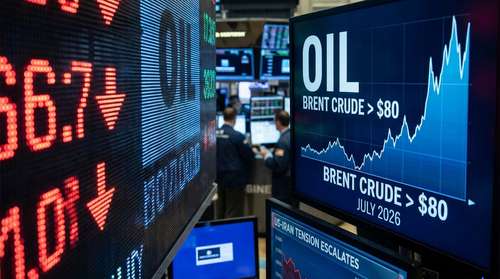
The most dramatic price action occurred within commodities. Prior to the diplomatic breakthrough, fears of supply destruction had pushed Brent crude well above $117 a barrel intraday. The energy market impact ceasefire announcement fundamentally reversed this dynamic.
West Texas Intermediate (WTI) crude plummeted over 14%, settling near $94 to $96 per barrel in what industry veterans called the steepest single-day oil decline in six years. Brent crude mirrored this collapse, shedding over 13% of its value to land around $94. This crude oil price crash directly relieved the severe pressure that high fuel costs had been applying to the broader economy. Elevated energy prices had previously pushed the national average for gasoline above $4.14 per gallon, squeezing consumer wallets and corporate margins alike.
The massive drop in oil benchmarks provides much-needed relief to fuel-dependent corporations. Airlines like Delta Air Lines surged immediately following the announcement, reflecting optimism over reduced jet fuel expenditures. While crude prices remain above the $70 threshold seen before the hostilities commenced in February, removing the geopolitical risk premium has drastically reshaped near-term corporate earnings forecasts.
The Strait of Hormuz Reopening
The catalyst for this monumental market reversal was the anticipated Strait of Hormuz reopening. The narrow waterway, which facilitates the transit of approximately one-fifth of global daily oil consumption, had been effectively paralyzed since the conflict erupted.
President Donald Trump had set a strict 8 p.m. ET deadline on Tuesday for Iran to clear the strait, threatening devastating military strikes against Iranian infrastructure if the blockage persisted. With less than ninety minutes to spare, Pakistani Prime Minister Shehbaz Sharif successfully mediated a temporary truce. Under the current agreement terms, Tehran agreed to allow maritime traffic to resume, pending formal peace talks set to begin in Islamabad.
Despite the official announcements, maritime conditions remain precarious. Reports indicate that Iran may attempt to charge transit tolls reaching $1 million per vessel or restrict passage to a fraction of the pre-conflict volume of over 100 daily ships. Until insurers see sustained safe passage and shipowners receive authoritative guidance, traffic will likely remain cautious.
Revising the Inflation Outlook 2026
Beyond immediate price action, the diplomatic pause has drastically altered Wall Street's macroeconomic projections, specifically regarding the inflation outlook 2026. Throughout March, soaring energy costs threatened to embed a new wave of inflation into the US economy, raising fears that the Federal Reserve would be forced to pause rate cuts or even hike interest rates.
With oil prices retreating to pre-conflict levels, bond markets reacted swiftly. The yield on the 10-year Treasury note fell from 4.33% to 4.29%. Lower Treasury yields provide vital support for equities and help ease borrowing costs for mortgages and corporate loans. According to CME Group data, derivatives traders are now pricing in a nearly 24% probability that the central bank could actually resume cutting rates later this year, a scenario that seemed impossible just 48 hours ago.
While delegations prepare for highly complex talks in Pakistan, investors are savoring the reprieve. The temporary truce has undeniably shifted market momentum, proving exactly how tightly global economic health remains tethered to Middle Eastern stability.