
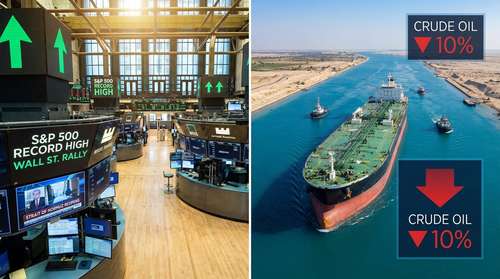
The financial world breathed a massive sigh of relief this week as the geopolitical chokehold on the Middle East finally began to ease. Propelled by an intensely anticipated ceasefire agreement, the Strait of Hormuz reopening has immediately reshaped the macroeconomic landscape. The news triggered a steep plunge in crude oil prices and sent equities soaring, providing a sudden pressure release for inflation-weary investors. After weeks of supply chain paralysis and surging commodity costs, the formal resumption of commercial shipping traffic signals a pivotal turning point for the global economy in 2026.
Global Energy Market Rally Ignites as Crude Plummets
Traders wasted no time reacting to the sudden shift in global shipping dynamics. After weeks of watching energy markets face what the International Energy Agency characterized as the largest supply disruption in the history of the global oil market, the easing of the blockade caused benchmark futures to nosedive. The oil price drop 2026 saw West Texas Intermediate (WTI) fall over 10% to settle near $84 per barrel, while the international benchmark Brent crude dropped back down toward the $90 range.
The sudden selloff signals that traders see a legitimate pathway to normalizing petroleum flows. The initial closure of the key maritime chokepoint had previously sent Brent crude flirting with $120 a barrel, choking off roughly 20% of the world's global oil supply and severely constraining liquefied natural gas shipments. Jet fuel prices in North America had also spiked by nearly 95%, forcing major airlines to hike operational fees.
The turning point arrived when Iranian Foreign Minister Abbas Araghchi confirmed the passage for all commercial vessels was completely open, a development that dominated Iran oil news today. The renewed transit capacity essentially dismantled the primary driver of this spring's inflation fears overnight, setting the stage for a massive global energy market rally across downstream sectors that rely heavily on affordable fuel.
Immediate Relief at the Pump for Consumers
For everyday American consumers, the market correction translates directly to much-needed household savings. National average gas prices had recently peaked at $4.17 per gallon in early April due to the maritime tensions, the highest levels recorded this year. Because crude oil accounts for slightly over half the cost of retail gasoline, the dramatic drop in wholesale fuel costs means drivers can expect to see prices at local stations retreat significantly in the coming days. This rapid deflationary pressure is expected to ease the cost-of-living burdens that have heavily influenced retail spending patterns.
Wall Street Record High: S&P 500 Smashes Through 7,100
The equity markets responded to the energy sector's cooling with euphoric buying across the board. The benchmark index capitalized on the fading threat of stagflation, cementing a spectacular S&P 500 all-time high by closing at 7,126. The Dow Jones Industrial Average followed suit, rocketing up roughly 869 points to close in on the psychological 50,000 threshold. Meanwhile, the tech-heavy Nasdaq Composite climbed 1.5%, showcasing broad-based confidence.
This latest Wall Street record high wasn't solely fueled by geopolitical relief. Solid corporate fundamentals played a massive supporting role. Strong early earnings reports from the financial sector—including record revenue from State Street and robust figures from Fifth Third Bancorp—alongside blistering technology sector momentum provided a solid structural foundation for the rally. Overseas semiconductor leader TSMC reported a staggering 58% year-over-year net profit jump, reassuring nervous investors that the underlying artificial intelligence boom remains firmly intact despite the recent macroeconomic anxieties.
Crude Oil Price Forecast: Navigating the Recovery
While the immediate market reaction has been relentlessly positive, institutional analysts are quickly adjusting their crude oil price forecast models for the remainder of the year. The primary question on trading floors is whether the current diplomatic frameworks will hold steady. If maritime passage remains secure and diplomatic negotiations progress, experts anticipate Brent crude could stabilize back in the $75 to $85 range as delayed shipments finally reach their destinations and global inventories have a chance to rebuild.
However, geopolitical risk premiums rarely vanish entirely. The recent volatility proved how quickly global supply chains can fracture. Major energy importers, particularly in Asian countries like Thailand which relies on the Middle East for 57% of its oil, were heavily impacted by the transit freeze and are expected to aggressively restock their national reserves. This massive physical buying could establish a firm floor under the current spot prices, preventing a complete, sustained collapse of energy sector revenues.
Looking Ahead: The Broader Economic Implications
The cascading effects of the reopened shipping lanes extend far beyond Wall Street trading desks and crude oil futures. Lower energy costs act as a functional tax cut for the global consumer, freeing up discretionary income that can be redirected into the broader economy. Furthermore, the reduction in transportation costs will alleviate pressure on corporate profit margins across the retail, logistics, and manufacturing sectors.
For now, market participants are enjoying the rare convergence of fading geopolitical risks and resilient corporate earnings. By removing the heaviest dark cloud hanging over the global economy, the resolution of the maritime blockade has granted both institutional investors and Main Street consumers a much-needed financial reprieve. As long as commercial vessels continue moving freely, the economic outlook for the remainder of 2026 appears brighter than it has in months.