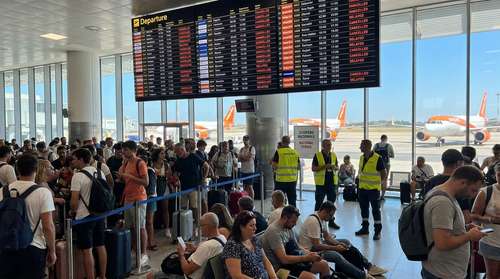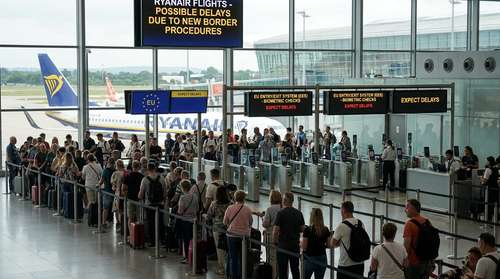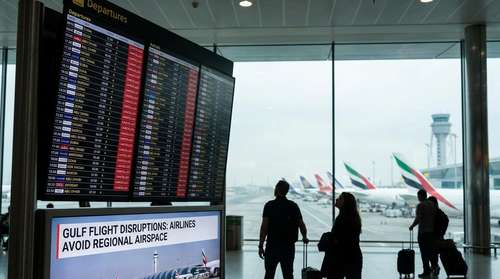
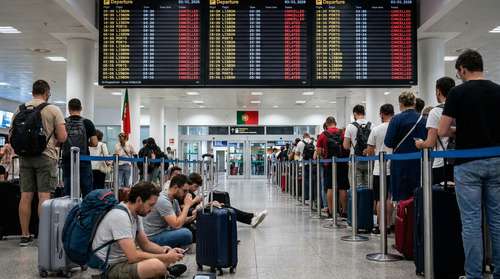
Travelers navigating through the Iberian Peninsula today are facing an unprecedented standstill as the Portugal general strike 2026 brings the nation's transit infrastructure to a sudden halt. The 24-hour industrial action, which began at midnight on Wednesday, June 3, has grounded more than 500 flights and paralyzed major transport networks across the country. What was widely expected to be a booming kickoff to the summer tourism season has abruptly transformed into a logistical nightmare for thousands of international passengers now stranded at terminals.
Aviation Chaos: Over 500 Portugal Flight Cancellations
The aviation sector is bearing the brunt of today's massive walkout, with airport staff, air traffic controllers, and cabin crews all joining the picket lines in a coordinated halt of services. As a result, the wave of Portugal flight cancellations has surpassed initial estimates. The situation is particularly grim for the country's flag carrier. The TAP Air Portugal strike participation has forced the airline to ax roughly 300 services—representing a full third of its daily flight schedule—leaving only 79 legally mandated minimum-service flights operational for the entire day.
Major transit hubs are feeling the immediate squeeze. Widespread Lisbon airport delays have quickly snowballed into outright cancellations, while Porto (OPO), Faro (FAO), Madeira, and Ponta Delgada are similarly gridlocked. The National Union of Civil Aviation Flight Personnel (SNPVAC), which represents over 5,000 cabin crew members across multiple airlines, voted overwhelmingly to participate in the labor action, citing declining job security and deteriorating working conditions.
International Carriers Issue Travel Waivers
The disruption extends far beyond domestic borders, pulling major international carriers into the fray. United Airlines, American Airlines, and Iberia have scrambled to issue travel waivers, allowing passengers to rebook flights through June 6 without facing the usual penalty fees. Meanwhile, European operators like easyJet, Finnair, and Eurowings have warned of heavy disruption at their Portuguese bases. Airlines are universally advising all passengers to verify their flight status digitally before making the trek to the airport, as ticket counters are overwhelmed with stranded travelers.
Beyond the Skies: The Portugal Transport Strike
Passengers who successfully land in or plan to depart from Portugal are finding that the transit chaos does not end at the tarmac. A widespread Portugal transport strike has severely crippled ground mobility, leaving tourists with very few options to navigate between cities or reach their accommodations. Comboios de Portugal (CP), the national train operator, is functioning at a mere 30 percent of its usual capacity. This drastic reduction is heavily restricting both long-distance intercity travel and vital airport rail connections.
Urban mobility in major metropolitan areas has been equally compromised. The Lisbon Metro, municipal bus networks, and ferry services operating across the Tagus River have either suspended operations entirely or are running on sparse, skeletal schedules. Consequently, ride-hailing services and local taxis are experiencing unprecedented demand. This has led to extensive wait times and heavy surge pricing for travelers desperately trying to secure private transport to salvage their itineraries.
What Sparked the Portugal General Strike 2026?
The catalyst behind the Portugal general strike 2026 is a highly contentious government labor reform package officially known as Trabalho XXI. Today's sweeping shutdown was organized by the General Confederation of Portuguese Workers (CGTP), the nation's largest trade union confederation. Union leaders and workers argue the draft legislation represents a direct assault on long-established employment rights. They claim the new laws will make it significantly easier for corporations to terminate employees and outsource essential, unionized roles to cheaper, non-union labor.
Talks between government officials and labor representatives officially collapsed after nine months of deadlocked, bitter negotiations. With the legislation now heading to Parliament for a vote, unions representing essential social needs—ranging from healthcare to public transport—opted for this aggressive 24-hour shutdown. Their ultimate goal is to economically pressure lawmakers into withdrawing or substantially amending the labor bill before it is codified into law.
Navigating Europe Travel Disruptions June 2026
If you are caught in the crossfire of this labor dispute, immediate and strategic action is necessary. First, do not head to the airport unless your airline has explicitly confirmed your flight is operating. Under European passenger rights regulations, travelers whose flights are canceled due to strikes are legally entitled to rerouting or full refunds, alongside necessary care provisions like meals and overnight hotel accommodation.
Travelers must also brace for a prolonged recovery period across the continent. Adding to the broader Europe travel disruptions June 2026 has already seen, the ripple effects of the Portugal general strike 2026 will undoubtedly carry over into Thursday, June 4, and Friday, June 5. The sheer volume of displaced aircraft and out-of-position flight crews means standard flight rotations typically take up to 72 hours to fully stabilize after a 500-flight cancellation event. Secure your rebooking options through your airline's digital portal immediately, take screenshots of all delay notifications, and retain every receipt to support future compensation claims.