
The United States has long held the title of the world's leading travel destination, but that dominance is now showing significant fractures. According to newly released data, the U.S. tourism market share 2026 is officially at a crossroads. A comprehensive report published today by the World Travel & Tourism Council (WTTC) paints a sobering picture: while global travel experiences a historic boom, America is actively losing its competitive edge to rapidly surging markets in the Asia-Pacific region.
With an estimated 80 million more people traveling internationally worldwide over the past year, tourists are increasingly choosing destinations outside of North America. Faced with this alarming trend, industry leaders are sounding the alarm. To reverse the tide, policymakers must enact immediate infrastructure upgrades and branding reforms to capitalize on upcoming mega-events before the nation's market share erodes permanently.
Insights from the Latest WTTC Economic Impact Research
The numbers from the newest WTTC Economic Impact Research highlight a stark divergence between American performance and global averages. While the global travel sector saw robust GDP growth of 4.1 percent last year, North America severely lagged behind as the slowest-growing region at just 1.0 percent. The United States specifically grew at a marginal 0.9 percent.
Even more concerning is the steep drop in inbound foot traffic. The United States recorded a 5.5 percent decline in international visitor numbers compared to the previous year. This translates to millions of potential tourists choosing to spend their vacations-and their money-elsewhere. Consequently, international visitor spending USA plummeted by 4.6 percent, falling to $176 billion.
Despite these headwinds, the United States does maintain its scale leadership for now, contributing a massive $2.63 trillion to global GDP and supporting over 20.4 million jobs. However, WTTC CEO Gloria Guevara emphasized that America must overhaul its perception and position itself as a welcoming destination to avoid losing its coveted top spot permanently to international competitors.
Shifting Global Travel Industry Trends
As the United States grapples with a contraction in foreign arrivals, global travel industry trends point squarely toward the East. China, currently the world's second-largest tourism market, experienced a massive 9.9 percent surge in its travel GDP, hitting $1.75 trillion. The broader Asia-Pacific region jumped by 8.2 percent overall. If the U.S. fails to reinvent its tourism strategy, economic experts warn that China could comfortably overtake the American market in the near future.
Addressing U.S. Travel Visa Delays and Policy Barriers
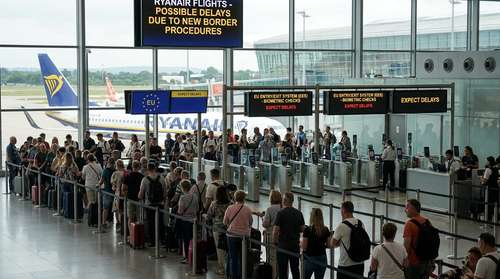
What is driving this sudden aversion to American vacations? The decline in America's tourism supremacy is largely self-inflicted. Industry advocates and the U.S. Travel Association consistently point to escalating visa fee increases, extensive U.S. travel visa delays, and a chilled international perception surrounding border policies.
Wait times for first-time visitor visas in several top inbound markets have forced prospective tourists to abandon their American holiday plans entirely. Combined with European advisories concerning entry risks and a staggering drop in visitors from neighboring Canada-down by 4.2 million trips-the logistical barriers to entering the United States are currently outweighing the appeal of its landmarks. Germany and France also recorded significant declines in visitation.
A welcoming posture is essential for international growth. When global travelers face unnecessary friction, they simply route their disposable income to countries offering seamless, frictionless entry. Removing these bureaucratic bottlenecks must become a primary objective for lawmakers aiming to revitalize American tourism growth 2026 and beyond.
The 2026 FIFA World Cup Tourism Impact
Fortunately, the United States has a golden opportunity to reclaim its market share and rewrite its hospitality narrative. North America will co-host the upcoming global soccer tournament, an event that promises an unprecedented influx of international attention. The 2026 FIFA World Cup tourism impact is expected to be a monumental catalyst, bringing an estimated 1.24 million international visitors to the region during the tournament period.
This tournament provides a critical, time-sensitive platform to showcase diverse American destinations, demonstrate a renewed commitment to international hospitality, and convert first-time event attendees into lifelong repeat visitors. According to Chase Travel, the WTTC report's lead research partner, the World Cup offers an extraordinary chance to forge meaningful connections across global communities and inject billions back into local economies.
The trajectory of the U.S. tourism market share 2026 will ultimately be determined by how the country responds to this current crossroads. By streamlining visa processing, investing heavily in destination marketing, and rolling out the welcome mat for the World Cup, the United States can reignite its global appeal. If the nation fails to act, the title of the world's premier travel destination will likely be surrendered to Asia before the decade concludes.