
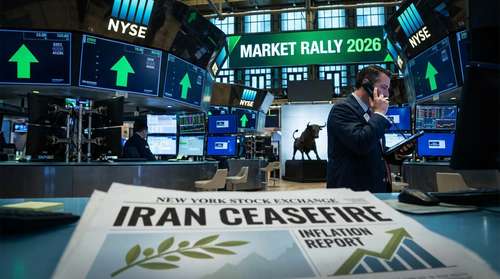
Wall Street is witnessing a historic moment as the U.S. stock market rally 2026 takes hold following breakthrough geopolitical developments. U.S. stocks surged on Wednesday following reports of a potential ceasefire in the ongoing Iran conflict, offering a rare moment of optimism to global markets. The Dow Jones Industrial Average rocketed over 1,300 points in early trading, resetting expectations across the board. However, this bullish momentum faces a complex economic reality. Beneath the surface of the U.S. stock market rally 2026, investors are grappling with a surprisingly hot April 2026 inflation report and a stark government reading that confirmed the weakest GDP expansion since 2017.
The Iran Conflict Ceasefire Impact on Oil and Equities
The primary catalyst for Wednesday's explosive market performance is the anticipated de-escalation in the Middle East. The Iran conflict ceasefire impact was immediate and dramatic, sending shockwaves through energy and equity markets alike. West Texas Intermediate (WTI) crude futures plunged more than 16% to settle near $94 a barrel, marking a sharp reversal in recent global oil price volatility.
The White House indicated that a preliminary two-week truce is on the table, designed to secure key shipping lanes. The Trump administration economic policy team has been vocal about maintaining military readiness until a durable agreement is achieved. This approach has reassured markets that transit through the Strait of Hormuz will remain open. For airlines, consumer discretionary stocks, and tech heavyweights, the plunge in energy costs acted as a massive relief valve, driving the broader U.S. stock market rally 2026.
Digesting the Scorching April 2026 Inflation Report
Despite the geopolitical relief, domestic economic indicators remain stubbornly hawkish. The newly released April 2026 inflation report revealed that consumer prices continue to rise, holding sticky at 3%, well above the central bank's target. High energy costs from earlier in the month, before the ceasefire talks gained traction, have already baked in higher producer prices and transportation costs.
Beyond energy, core services and housing costs remain elevated. The stubborn nature of these price increases highlights the challenge facing consumers who are already stretching their budgets. This localized inflation spike creates a challenging environment for equities. Typically, rising inflation dampens consumer sentiment and squeezes corporate margins. Yet, traders are seemingly looking past the rearview data found in the April 2026 inflation report. They are betting that the sharp decline in oil prices will eventually cool the broader economy and ease supply chain pressures.
Balancing a Historic GDP Growth Slowdown
Further complicating the bullish narrative is the latest government data highlighting a severe GDP growth slowdown. First-quarter estimates showed the economy expanding at its most sluggish pace since 2017, grinding down to a mere 1.3% growth rate. This GDP growth slowdown stems from tightened corporate spending and the lagging effects of prolonged international tension.
For many observers, the disconnect between dismal macroeconomic figures and a surging stock market seems counterintuitive. The answer lies in forward-looking risk premiums. Wall Street had heavily priced in a worst-case scenario—a prolonged oil shock combined with stagnant growth. Now that the immediate threat of a wider conflict has receded, the unwinding of that fear is powerful enough to override the current GDP growth slowdown.
Federal Reserve Interest Rate News and the Path Forward
All eyes now turn to the central bank's next move. The latest Federal Reserve interest rate news suggests that policymakers are caught in a delicate balancing act. On one hand, the weak economic expansion warrants a dovish pivot to stimulate growth. On the other hand, the persistent inflation data demands sustained high rates to cool price pressures.
In the bond market, Treasury yields have fluctuated wildly as traders digest the conflicting signals. Current futures pricing indicates a near 99.5% probability that the Fed will hold rates steady at their upcoming meeting. Federal Reserve interest rate news continues to reflect caution, as officials recently warned that premature rate cuts could reignite inflation, especially if the fragile ceasefire collapses and global oil price volatility spikes again.
What Investors Should Watch Next
Until the truce proves durable, the central bank is likely to maintain its restrictive stance. The intersection of the Trump administration economic policy goals and the Fed's inflation fight will dictate the market's trajectory in the coming weeks. For now, investors are reveling in the relief rally. While the macroeconomic headwinds of slow growth and sticky prices remain unresolved, the prospect of peace and cheaper energy has given Wall Street exactly what it needed to push indices back into the green.