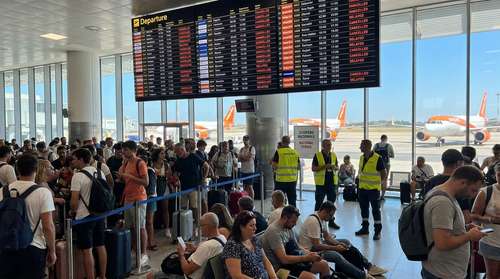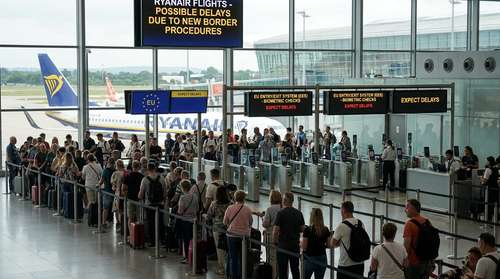
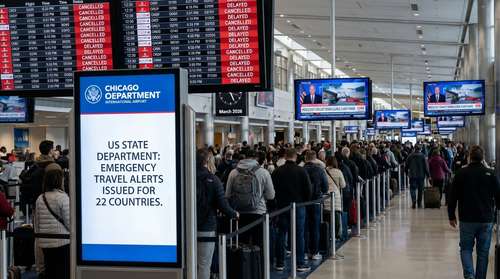
The global travel landscape has shifted dramatically this weekend as the US State Department travel alerts 2026 reached an unprecedented level of urgency. On Saturday, March 7, 2026, U.S. officials activated emergency security alerts for 22 nations, urging Americans in specific high-risk zones to "depart immediately" while ordering others to shelter in place. This sharp escalation in geopolitical tension has triggered a global aviation crisis March 2026, paralyzing major transit hubs in the Middle East and causing catastrophic ripple effects at domestic gateways like Chicago O'Hare.
State Department Issues "Depart Now" Orders for 22 Nations
In a move described by consular affairs experts as historic, the State Department has categorized 22 countries across the Middle East and North Africa under emergency alert protocols. The directive splits the region into two distinct safety zones based on the imminent threat of conflict expansion.
For Americans in Lebanon, Kuwait, and Iraq, the guidance is unequivocal: "Depart immediately via commercial means." Assistant Secretary for Consular Affairs Mora Namdar emphasized that the U.S. government cannot guarantee assistance if commercial options evaporate completely. Meanwhile, a strict "Shelter in Place" order remains in effect for U.S. citizens in Israel, Iran, and Jordan, particularly those in Amman, where embassy personnel have already been evacuated due to specific security threats.
The upgraded international travel safety warnings also encompass Saudi Arabia and the UAE, which were elevated to Level 3 (Reconsider Travel) and Level 4 (Do Not Travel) respectively, following reports of regional drone activity. "The security environment is unpredictable," the alert states. "Travelers should monitor local media and be prepared to adjust their plans with zero notice."
Middle East Flight Suspensions: Emirates and Qatar Airways Grounded
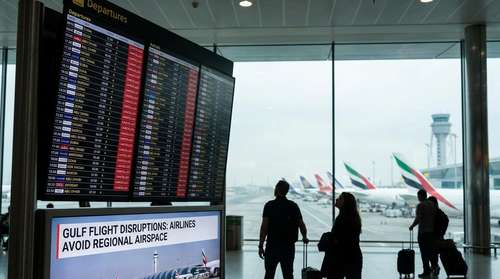
The diplomatic red alert has coincided with a near-total paralysis of air travel through the Gulf. Emirates and Qatar Airways flight status boards are showing a sea of red, with both carriers suspending the vast majority of their operations as airspace over Iran, Iraq, and Jordan closes to civilian traffic.
Dubai International Airport (DXB) and Hamad International Airport (DOH)—two of the world's busiest transit hubs—are effectively offline for transiting Western passengers. As of this morning, Emirates has extended its flight suspension, leaving thousands of travelers stranded in transit lounges. Qatar Airways has similarly halted operations as long as Qatari airspace remains compromised.
The Middle East flight suspensions are forcing long-haul carriers to reroute flights between Europe and Asia, adding hours to flight times and straining fuel reserves. Industry analysts from Cirium report that over 3,000 flights have been canceled in the last 48 hours alone, severing critical connectivity between the East and West.
Chicago O'Hare Flight Cancellations Reach Catastrophic Levels
While the epicenter of the conflict is thousands of miles away, the shockwaves are being felt acutely in the United States. Chicago O'Hare flight cancellations have surged to what officials are calling "catastrophic" levels, compounded by a domestic infrastructure crisis.
On Friday, March 6, O'Hare recorded 42 cancellations and over 600 delays, a situation exacerbated by a newly announced FAA order to cap summer schedules. The convergence of displaced international passengers, rerouted long-haul flights, and domestic capacity constraints has created a perfect storm. Travelers connecting through O'Hare are facing multi-day delays, with regional carriers like SkyWest and PSA Airlines bearing the brunt of the disruptions.
The FAA has warned that this global aviation crisis March 2026 will likely persist through the summer. "The system was already strained," noted a Department of Transportation spokesperson. "The sudden removal of Gulf airspace from the global network has pushed major hubs like O'Hare beyond their breaking point."
What Travelers Need to Do Immediately
If you are currently abroad or planning international travel, the State Department advises taking the following emergency security alerts for Americans seriously:
- Enroll in STEP: Register immediately for the Smart Traveler Enrollment Program (STEP) to receive real-time location-based alerts.
- Check Your Route: Avoid connecting through Doha, Dubai, or Abu Dhabi until further notice. Rebook via European or Asian hubs that avoid Middle Eastern airspace.
- Monitor US Embassy Alerts: Follow the specific U.S. Embassy social media accounts for the country you are in. Directives in this fluid situation can change by the hour.
- Prepare for Delays: If flying domestically through hubs like Chicago, build in extra buffer time. The collapse in international schedules is bleeding into domestic networks, meaning your flight to Denver or Dallas is not safe from the fallout.