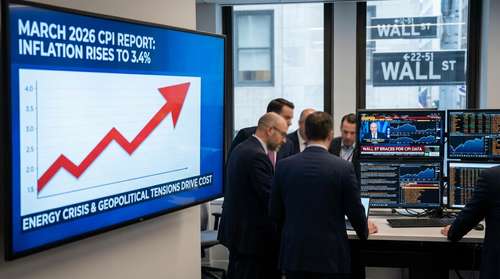
Wall Street traders are glued to their terminals this morning as the highly anticipated US inflation March 2026 data is set to cross the wires at 8:30 a.m. Eastern Time. After a period of relative economic calm, financial markets are bracing for a jolt. Analysts broadly expect the upcoming March CPI report release to reveal headline consumer prices jumping to 3.4% year-over-year, up from 2.4% in February. The culprit? A massive geopolitical shock that sent fuel costs skyrocketing over the past month, threatening to upend the broader economic recovery and leaving the definitive path for monetary policy hanging in the balance.
The March CPI Report Release: Energy Costs Take Center Stage
You cannot understand this morning's inflation forecast without looking squarely at the pump. The national average for a gallon of regular gasoline surged 8 cents over the past week alone, hitting $4.16 according to AAA—the highest levels seen since late 2022. This spike is the direct fallout of the broader energy crisis 2026, ignited by the sudden military conflict between the United States and Iran that briefly shut down the Strait of Hormuz in late February.
According to the U.S. Energy Information Administration (EIA), the price increase for crude oil during the first quarter was the largest on an inflation-adjusted basis since 1988. Economists project that gasoline's staggering monthly surge will add roughly half a percentage point to the headline inflation figure. While core inflation, which strips out volatile food and energy sectors, is expected to remain more muted at around 2.5% to 2.7% annually, the headline shock is impossible for consumers and businesses to ignore. Major logistics providers and airlines are already slapping fuel surcharges on their services, raising concerns that the initial energy shock will quickly bleed into the core data by April or May.
Will the Fragile Ceasefire Tame Oil Prices Today?
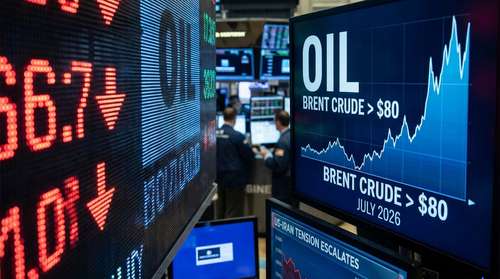
Global markets breathed a temporary sigh of relief on Wednesday following the announcement of a two-week, Pakistan-mediated ceasefire between the U.S. and Iran. The diplomatic breakthrough pulled the globe back from the brink of a larger regional war, but oil prices today reflect deep skepticism among commodity traders.
West Texas Intermediate (WTI) crude remains stubbornly high, hovering near $97.87 a barrel, while the international benchmark Brent crude briefly touched $118 during the first quarter's peak panic before settling back to the mid-$90s. The ceasefire is fraught with complications, most notably Israel's ongoing operations in Lebanon, which fall outside the parameters of the U.S.-Iran agreement. Until shipping tankers can freely and safely navigate the Persian Gulf without the threat of seizure or strike, the risk premium on global crude supplies will remain elevated.
Supply Chains on High Alert
The temporary truce has not entirely reopened the vital maritime arteries. Industry experts warn that it will take weeks to clear the backlog of delayed shipments and normalize refinery inputs. For the average American consumer, this means elevated pump prices and higher grocery bills are likely locked in for the immediate future, regardless of diplomatic handshakes in Islamabad. Furthermore, agricultural costs are feeling the squeeze, with fertilizer supplies drastically reduced due to the Strait of Hormuz disruptions.
Federal Reserve Interest Rates Hanging in the Balance
The rapidly shifting energy landscape has thrown a massive wrench into the central bank's playbook. Just months ago, investors were pricing in a series of rate cuts for the year. Now, the conversation surrounding Federal Reserve interest rates has shifted dramatically. With the target rate currently holding steady between 3.50% and 3.75%, Fed Chairman Jerome Powell faces an incredibly difficult balancing act.
If the March inflation data comes in at or above the expected 3.4%, it effectively boxes the Fed into a corner. Policymakers have repeatedly stressed their commitment to anchoring inflation near the 2% target. Cutting rates while headline inflation accelerates and the labor market remains tight—with the US economy adding a massive 178,000 jobs in March and unemployment dropping to 4.3%—risks triggering a secondary inflation spiral. Swap markets and CME prediction platforms have already priced in a near 99% probability that the Fed will hold rates steady in April, shifting the consensus toward a frustrating "higher for longer" reality.
Stock Market Outlook 2026: Navigating the Volatility
For investors relying on newsvot business news to navigate these turbulent waters, the immediate future requires a defensive posture. The stock market outlook 2026 hinges almost entirely on whether this inflation spike is a temporary geopolitical artifact or the beginning of a sustained structural problem.
Here is what market participants should monitor closely in the days ahead:
- Core Inflation Revisions: Any indication that the energy shock has permeated core services, such as healthcare or housing, will trigger a sharp sell-off in equities.
- Geopolitical Developments: The expiration of the two-week ceasefire later this month will be a make-or-break moment for global energy markets.
- Corporate Earnings: Watch for profit margin compressions as companies struggle to pass rapidly rising freight and fuel costs onto reluctant consumers.
Wall Street hates uncertainty above all else. Until the geopolitical dust settles and supply chains fully normalize, the combination of stubborn inflation and stalled interest rate cuts will keep market volatility at a rolling boil. Traders should prepare for wild swings following the Bureau of Labor Statistics release this morning as the stark reality of the 2026 economic landscape sets in.