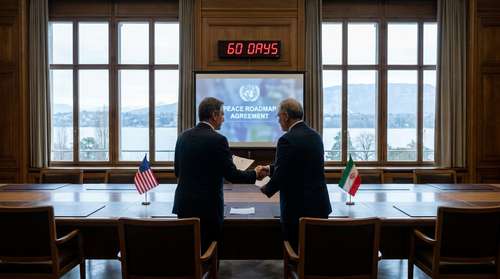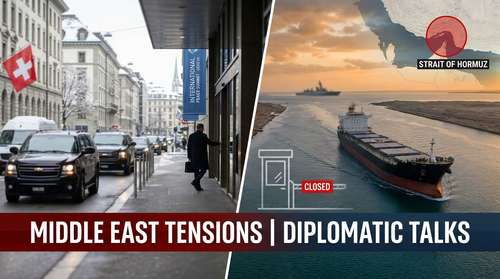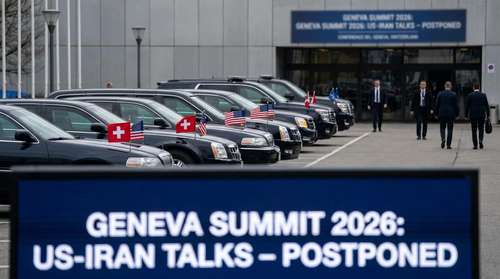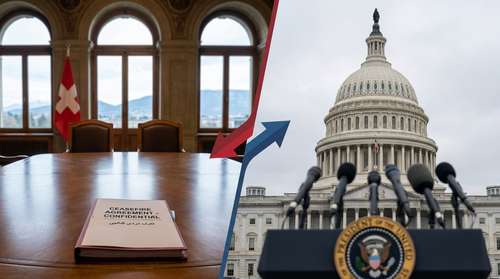
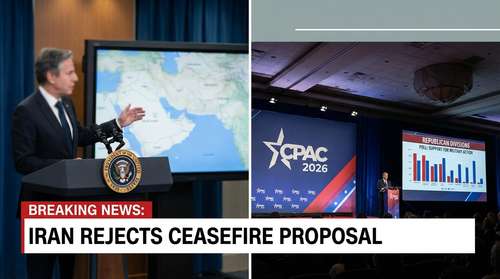
Tensions in the Middle East reached a boiling point on Thursday after Tehran outright dismissed a 10-point diplomatic framework. In this critical Trump Iran war update, the administration has issued a stark ultimatum. President Donald Trump is prepared to sharply escalate military operations, warning he will "unleash hell" if the Iranian regime refuses to concede defeat. Yet, while the White House projects unwavering strength abroad, domestic support is fracturing. A fresh US military action poll indicates that 59% of Americans view the ongoing offensive as excessive, a sentiment that is currently igniting a fierce debate among conservatives gathered in Texas.
Trump Warns He Will "Unleash Hell" on Iran
White House Press Secretary Karoline Leavitt addressed the media on Wednesday, making it clear that Washington's patience is wearing thin. While the administration claims to prefer a peaceful resolution, Leavitt stressed that the military is prepared for maximum escalation. To quote the administration directly, a move by Trump to unleash hell on Iran is imminent if Tehran miscalculates again.
The month-long conflict has already seen the U.S. decimate over 140 Iranian naval vessels—including nearly 50 minelayers—in what the Pentagon describes as the largest naval elimination since World War II. Over the weekend, U.S. forces dropped 5,000-pound bombs on underground facilities storing anti-ship cruise missiles along the Strait of Hormuz coastline. "President Trump does not bluff," Leavitt cautioned reporters. Any further violence, she noted, will rest squarely on the Iranian regime's refusal to recognize its military defeat.
Iran Rejects Ceasefire Proposal, Offers Counter-Terms
The diplomatic stalemate solidified when Iran rejects the ceasefire proposal delivered earlier this week through Pakistani intermediaries. The comprehensive US Iran peace plan 2026 reportedly demanded the cessation of uranium enrichment, a halt to ballistic missile programs, and guaranteed maritime security in the Gulf.
Tehran's state-backed Press TV scoffed at the conditions, labeling the demands "unreasonable" and accusing the Trump administration of negotiating with itself. In response, Iranian officials floated a five-point counteroffer. Their plan demanded a complete withdrawal of U.S. hostilities, reparations for the war, and recognized Iranian sovereignty over the Strait of Hormuz—a list of demands widely considered a non-starter for Washington.
Public Backlash: The New US Military Action Poll
Back home, the prolonged military engagement is evolving into a potential political liability. According to a newly released AP-NORC poll, a staggering 59% of Americans believe the offensive has gone too far. This highly circulated US military action poll also highlights growing economic anxieties, with 45% of respondents stating they are "extremely" or "very" concerned about skyrocketing gas prices in the coming months.
The demographic breakdown reveals a stark partisan divide. While 9 in 10 Democrats and 6 in 10 Independents oppose the current scale of the attacks, Republicans are torn. About half of conservative voters feel the military response is "about right," but very few advocate for pushing the envelope further. Preventing Iran from obtaining a nuclear weapon remains a bipartisan priority, but the American public is deeply skeptical of broader military entanglements that could drain domestic resources.
Republican Division Deepens at CPAC 2026 in Texas
This friction isn't limited to the general electorate. The conflict has triggered a visible Republican division over the Iran war right at the heart of the conservative movement. Thousands of activists are currently gathered at the Gaylord Texan Resort in Grapevine for the annual Conservative Political Action Conference. The mood on the ground is noticeably split between traditional defense hawks and the non-interventionist populist base.
Among the highly anticipated CPAC 2026 highlights are addresses from exiled Iranian Crown Prince Reza Pahlavi and former UN Ambassador Mark Wallace, both of whom are using the platform to advocate for permanent regime change. However, their hawkish rhetoric is colliding with "America First" loyalists, who largely propelled Trump to power on promises to end foreign wars.
What This Means for the Midterms
For lawmakers roaming the halls of CPAC, the anxiety regarding November is palpable. Texas Representative Steve Toth, a prominent attendee, acknowledged that while MAGA voters remain fiercely loyal to the President, the party's messaging on the geopolitical ramifications of the conflict needs serious refinement.
If the administration cannot secure a swift resolution, the ongoing war—and the ensuing pain at the gas pump—could severely threaten Republican prospects in the upcoming midterms. The White House must now navigate the perilous tightrope of projecting global military dominance while satisfying the domestic demand for economic stability and peace.