
President Donald Trump has officially submitted a historic and highly controversial request to Congress for the Trump military budget 2026, demanding a staggering $1.5 trillion to fund the rapidly expanding Operation Epic Fury Iran. The unprecedented spending proposal arrived on Friday, April 3, 2026, as the administration faces mounting pressure on multiple fronts. With over 50,000 U.S. troops deployed and the conflict entering its second month, the economic and political fallout is becoming severe. Squeezed by skyrocketing Iran war gas prices and increasingly grim 2026 midterm election polls, Republican leaders are bracing for significant voter backlash just months ahead of the critical November elections.
A Historic Shift: Pentagon 1.5 Trillion Spending Plan
The formal request for Pentagon 1.5 trillion spending marks a massive 50% surge from the previously approved $901 billion baseline for the current fiscal year. White House officials insist this dramatic infusion of capital is essential for maintaining the momentum of the current Middle Eastern offensive and modernizing the armed forces into what the president has dubbed a "Dream Military".
However, the proposal comes with steep domestic trade-offs. To offset the defense surge, the administration is pushing for $73 billion in cuts to non-defense discretionary spending. This sweeping reduction targets environmental programs across multiple federal agencies, including the elimination of $15 billion in grants dedicated to renewable energy technology. Congressional Democrats have already voiced fierce opposition, while some deficit-conscious Republicans privately express reservations about ballooning the national debt.
Operation Epic Fury Iran: Strategic Objectives
During a prime-time broadcast from the White House this past Wednesday night, the president attempted to reassure a weary public. A comprehensive Trump national address summary reveals a commander-in-chief projecting confidence, declaring that the core objectives of the offensive are "nearing completion". American forces have struck more than 12,000 targets inside Iranian territory since the campaign began on February 28, decimating military stockpiles and key production facilities.
The human toll of the conflict continues to evolve. According to U.S. Central Command, at least 348 American military personnel have been wounded since the operation commenced, though military spokespersons note that approximately 91% have already returned to active duty. Despite the president's optimistic timeline of wrapping up intensive strikes in two to three weeks, defense officials are actively pouring resources into rapidly fielding layered air defenses and constructing additional troop bunkers across the theater.
Defining the US Military Objective Iran
The scope of the current conflict goes far beyond previous limited engagements like 2025's Operation Midnight Hammer. The primary US military objective Iran is multipronged: entirely dismantling the nation's nuclear infrastructure, decimating its ballistic missile stockpiles, and annihilating its naval capabilities.
Early strikes successfully eliminated Supreme Leader Ayatollah Ali Khamenei, sending shockwaves through the regime's leadership structure and elevating his son, Mojtaba Khamenei, to power. Defense Secretary Pete Hegseth recently returned from a highly classified, weekend-long trip to the Middle East, where he met with intelligence analysts and pilots to evaluate the ongoing systematic degradation of the Iranian military apparatus.
The Economic Toll: Iran War Gas Prices Threaten the Homefront
While the administration touts tactical military successes overseas, the domestic economic reality is painting a starkly different picture. In retaliation to the U.S. and Israeli joint offensive, Iranian proxy forces and naval remnants have severely disrupted maritime traffic near the critical Strait of Hormuz. President Trump explicitly addressed the blockade this week, stating the U.S. would only consider a ceasefire when the strait is "open, free, and clear".
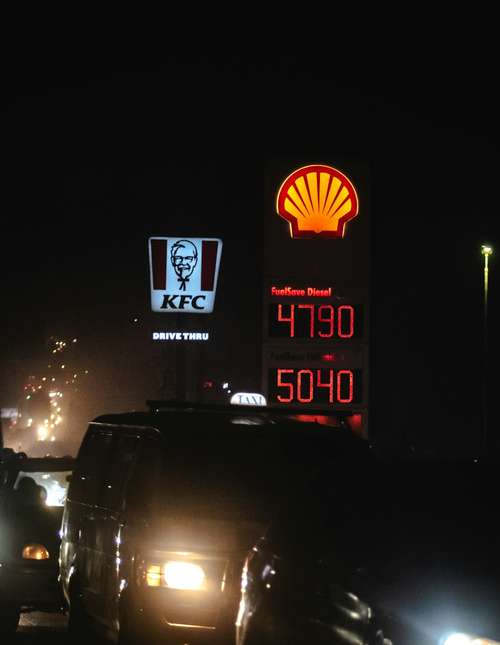
This global shipping bottleneck has severely constrained global oil supplies, leading to astronomical Iran war gas prices at American pumps. The sudden inflationary spike is straining household budgets across the country, overshadowing the administration's broader economic narrative. For the average consumer, the geopolitical victory of neutralizing a foreign adversary is quickly being overshadowed by the daily financial burden of filling up their gas tanks.
GOP Anxieties and 2026 Midterm Election Polls
The combination of a costly overseas war, domestic budget cuts, and soaring inflation has created a volatile political environment. Recent 2026 midterm election polls reflect growing voter frustration, signaling intense trouble for the Republican party's efforts to maintain its slim congressional majorities. Political strategists warn that the massive Trump military budget 2026 request—especially when paired with cuts to domestic programs like housing and renewable energy—could alienate working-class and independent voters.
As the conflict abroad escalates and the financial toll mounts at home, the administration faces a delicate balancing act. Securing congressional authorization for the Pentagon 1.5 trillion spending package will require navigating intense bipartisan scrutiny. Whether the promise of a neutralized Iranian threat can ultimately outweigh the immediate pain of high gas prices and reduced domestic spending remains the defining question as the pivotal November elections rapidly approach.