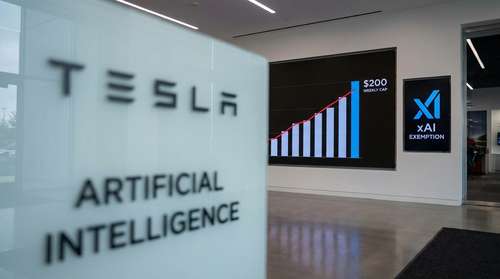
Tesla has officially slammed the brakes on runaway artificial intelligence expenses, enforcing a strict $200 weekly Tesla AI spending cap for all employees starting July 6, 2026. After months of encouraging aggressive AI adoption that saw some software engineers burning through thousands of dollars in tokens weekly, the electric vehicle giant is now mandating explicit managerial approval for any excess spending. However, the new policy comes with a highly specific carve-out that subtly directs workers toward CEO Elon Musk's personal ventures.
The Rise and Fall of the Bottle Rocket Boom
The sweeping policy shift marks a dramatic reversal for a company that recently championed maximum AI usage. Over the past six months, the automaker aggressively pushed its workforce to integrate AI, consolidating usage onto the internal Tesla Bottle Rocket platform. This unified dashboard gave employees seamless access to top-tier models, including:
- OpenAI: Utilized for general-purpose reasoning and drafting.
- Anthropic (Claude): The widely reported favorite among Tesla engineers for complex coding tasks.
- xAI (Grok) & Cursor: Heavily promoted by leadership for internal adoption.
Tesla originally gamified this initiative, rolling out internal dashboards that ranked staff by their token consumption. The strategy worked almost too well. Driven by the demands of complex software engineering, enterprise AI token costs skyrocketed. At standard API rates, engineers running autonomous agentic coding sessions on massive codebases were exhausting their budgets in a matter of days. The era of unlimited experimentation had suddenly collided with harsh procurement realities.
The Strategic Elon Musk xAI Exemption
While cost control is the primary stated objective of the internal memo, the fine print reveals a strategic pivot. The $200 limit completely exempts beta versions of products developed by xAI, Musk's independent artificial intelligence startup. This Elon Musk xAI exemption effectively nudges engineers who hit their budget wall toward in-house solutions like Grok and Cursor's Composer model.
The corporate synergy extends beyond just software preferences. SpaceX, another Musk-led enterprise, is currently set to acquire Cursor's parent company, Anysphere, for a staggering $60 billion. Despite these aggressive internal nudges, sources indicate that many developers still overwhelmingly prefer using Anthropic's Claude. The new budgetary constraint essentially serves as a soft mandate: use the preferred internal models, or face the bureaucratic friction of constantly requesting manager sign-offs for additional Claude tokens.
The Broadening Era of Corporate AI Budget Limits
Tesla's sudden austerity measures reflect a broader reckoning occurring across the tech sector. As organizations transition from pilot programs to full-scale deployment, corporate AI budget limits are becoming an industry standard. The invisible but massive expenses associated with premium AI model API calls are forcing tech giants to rethink their IT spending.
The electric vehicle maker is hardly alone in this predicament. Uber recently made headlines after reportedly burning through its massive $3.4 billion 2026 AI budget in just four months, prompting strict internal constraints. Similarly, tech heavyweights like Meta and Walmart have introduced tighter governance protocols and directed staff toward lower-cost models. The fundamental challenge is universal: balancing the undeniable productivity boosts of AI with the astronomical costs of unrestricted token usage.
Navigating Generative AI in the Workplace
For everyday employees, this shift means adapting to a new kind of digital resource management. Integrating generative AI in the workplace now requires strict optimization. Workers must actively craft more efficient prompts, select smaller, cheaper models for routine tasks, and save their premium token allowances for complex problem-solving. It is a necessary reality check for an industry that briefly treated computing power as an infinite resource.
Balancing Security, Costs, and Future Innovation
Beyond the simple procurement math, Tesla's move is also deeply rooted in corporate data security. By funneling all AI interactions through the authorized Bottle Rocket system and penalizing off-platform usage, the company aims to prevent proprietary source code from leaking into unapproved public models. Security teams have actively warned employees about the severe risks of feeding sensitive data into unvetted systems.
The belt-tightening comes during a critical operational stretch for the automaker, which just reported global Q2 2026 deliveries reaching 480,126 vehicles. As Musk continues to tie Tesla's multi-billion dollar valuation to autonomous innovations like the upcoming Robotaxi network and the Optimus humanoid robot, strict internal cost discipline is paramount. The $200 weekly ceiling proves that even the most forward-thinking tech companies must eventually answer to the bottom line.