The United States has reached a critical inflection point in the escalating US Middle East conflict. Over the weekend, President Donald Trump abruptly convened an emergency meeting in the White House Situation Room following a severe escalation: the complete Strait of Hormuz closure by the Islamic Revolutionary Guard Corps (IRGC). With reports of Iranian forces firing on international commercial tankers and a looming global oil price spike, Trump has dispatched Vice President JD Vance on an urgent, high-stakes diplomatic mission to Islamabad. This maneuver marks a make-or-break moment in the ongoing Trump Iran negotiations aimed at salvaging a rapidly deteriorating ceasefire.
The Strait of Hormuz Closure and Renewed Hostilities
The fragile two-week ceasefire that temporarily halted the devastating month-long conflict between the U.S., Israel, and Iran has been thrown into chaos. Iranian military command explicitly ordered the Strait of Hormuz closure to all commercial vessels on Saturday, completely reversing course after allowing partial transit just a day prior.
According to the IRGC, any ship approaching the vital chokepoint in the Persian Gulf or the Sea of Oman is now considered to be cooperating with the enemy. This was not merely an empty threat. Over the weekend, Iranian fast attack boats and naval forces fired upon an Indian-flagged crude oil tanker and a British cargo vessel, severely damaging containers. Tehran claims the aggressive blockade is a direct retaliation against the United States for refusing to lift its naval blockade on Iranian ports. The sudden maritime clampdown provides the most alarming Iran war 2026 updates to date, showing that despite heavy strategic losses, Tehran's asymmetric warfare capabilities remain highly lethal.
Inside the Emergency White House Situation Room Meeting
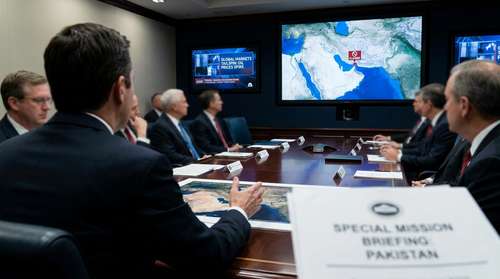
The renewed crisis sent shockwaves through Washington, prompting President Trump to rush his top security officials to the White House Situation Room. Vice President JD Vance, Secretary of State Marco Rubio, and Secretary of Defense Pete Hegseth scrambled to address the collapsing truce. U.S. intelligence officials warned that unless a diplomatic breakthrough occurs immediately, the armed conflict could formally reopen within days.
Trump has publicly stated that American forces will maintain their naval blockade until a definitive agreement is reached, accusing Iran of blackmailing the international community. However, the stakes inside the Situation Room were incredibly high. Recognizing the disastrous potential of an extended waterway shutdown, the administration green-lit an unconventional and highly personal diplomatic channel to secure an immediate resolution.
The JD Vance Pakistan Mission and Brokered Talks
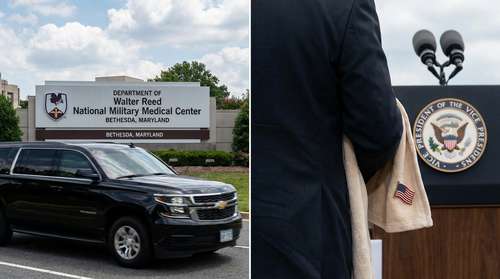
In a bold bid to force a diplomatic breakthrough, Trump authorized the JD Vance Pakistan mission. The Vice President is leading an American delegation to Islamabad, joined by special envoy Steve Witkoff and senior presidential adviser Jared Kushner. The choice to utilize loyalists rather than traditional State Department channels highlights Trump's desire for direct, unfiltered Trump Iran negotiations.
Pakistan has played a surprisingly aggressive role in brokering these talks. Sources indicate that Pakistani Army Chief Gen. Asim Munir leveraged a mutual defense pact with Saudi Arabia, warning Tehran that any further escalation against Saudi energy infrastructure would force Islamabad into the fray. This psychological pressure successfully brought Iranian officials to the negotiating table in Pakistan. However, deep mistrust remains. Vance faces the monumental task of convincing Iran to reopen the strait without fully conceding to their demands regarding the ongoing U.S. blockade and Israeli operations in Lebanon.
The choice of Islamabad as the venue is highly strategic. Pakistan shares a volatile border with Iran and maintains deep military ties with the Gulf States, making it uniquely positioned to enforce diplomatic guarantees. If Tehran reneges on a potential deal, they risk permanently alienating a crucial neighbor while simultaneously inviting the full wrath of the American military apparatus.
Looming Global Oil Price Spike and Economic Fallout
The immediate economic ramifications of the blockade are already materializing. The Strait of Hormuz is the world's most critical oil passageway, and its sudden chokehold is practically guaranteeing a catastrophic global oil price spike.
Industry leaders are hitting the panic button. UK airlines have already cautioned about severe aviation fuel shortages within six weeks if the disruption persists. Adding to the chaos, the UN's food agency has announced that a prolonged war could trigger a severe global nutrition price escalation.
Energy analysts fear that even a temporary blockade could rewrite the baseline for barrel prices well into the summer. With the global supply chain bracing for skyrocketing freight costs and delayed shipments, an artificial constriction of this magnitude creates immediate economic anxiety. If the Trump Iran negotiations in Islamabad fail to yield a durable agreement, the resulting energy crisis could paralyze global markets, compounding the economic strain of the US Middle East conflict.
What This Means for the US Middle East Conflict
As the world watches the unfolding talks in Islamabad, the situation balances on a knife's edge. The current ceasefire is set to expire early next week on Tuesday, creating a notoriously tight window for Vance and his diplomatic team.
If the JD Vance Pakistan mission succeeds, it could lay the groundwork for the most significant regional agreement since the hostilities began, potentially neutralizing the immediate maritime threat. But if talks collapse, Washington and Tehran are primed to plunge back into full-scale war, with global energy markets caught in the crossfire. For now, commercial vessels sit paralyzed at their anchorages, awaiting a resolution that could either stabilize the region or ignite an unprecedented global crisis.