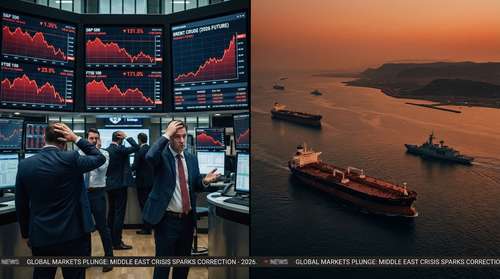
Financial hubs from London to Tokyo are reeling as a severe stock market correction 2026 takes hold across major indices. Following the unexpected collapse of weekend diplomatic talks in the Middle East, global equities have officially dropped more than 10% from their recent all-time highs. The catalyst for this sudden, violent downturn is an escalating geopolitical conflict that has rapidly morphed from a localized dispute into a full-blown global economic shock, leaving institutional investors scrambling for cover.
Traders abandoned risk assets aggressively on Monday morning after the highly publicized Trump Iran ultimatum completely upended market expectations for a near-term peace agreement. By flatly rejecting the proposed ceasefire terms and demanding immediate concessions, the administration has set the stage for prolonged hostilities. This hardline diplomatic pivot sent capital rushing out of equities and toward traditional safe-haven assets, driving gold prices higher and causing government bond yields to fluctuate wildly.
The Trump Iran Ultimatum Triggers a Massive Selloff
The swift rejection of the ceasefire proposal caught Wall Street completely off guard. For months, automated trading systems and human portfolio managers alike had priced in a gradual de-escalation of regional tensions. Now, the aggressive posture of the Trump Iran ultimatum demands an immediate shift in strategy. Geopolitical analysts warn this hardline approach could easily draw neighboring nations into the fray, expanding the theatre of conflict.
This diplomatic breakdown immediately wiped out trillions in global market capitalization. The FTSE 100 plunged early in the trading session, shedding hundreds of points and dragging broader European indices down with it. While London's blue-chip index contains several energy majors that might normally benefit from rising crude, the sheer panic of an impending recession overwhelmed any sector-specific resilience.
Emerging market gauges have been battered even worse. The MSCI Emerging Markets Index plummeted past the critical 10% threshold, officially entering correction territory. Developing economies are historically vulnerable to sudden capital flight when geopolitical panic sets in. A surging US dollar, acting as a global safe haven, is simultaneously driving up the cost of dollar-denominated debt for these nations, leaving their domestic equity markets starved for liquidity and facing massive currency devaluations.
Brent Crude Oil Price Spike and Regional Energy Fears
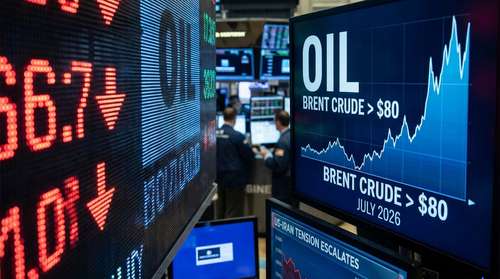
At the center of the financial turmoil is a terrifying prospect for physical commodity markets. A violent Brent crude oil price spike dominated trading floors as front-month futures surged relentlessly toward $120 per barrel. This represents the most aggressive commodity price action witnessed in recent years, driven entirely by the very real fear of catastrophic supply disruptions in one of the world's most critical producing regions.
Energy analysts are sounding the alarm over the escalating threat of a Strait of Hormuz closure. Approximately 20% of the world's daily global oil consumption passes through this narrow, vulnerable maritime chokepoint. Any direct military action or asymmetric warfare that disrupts commercial shipping lanes here would instantaneously sever a vital artery of the global industrial economy.
Freight rates for supertankers have already skyrocketed, and marine insurance premiums for commercial vessels operating in the Persian Gulf reached unprecedented highs over the weekend. The unfolding Middle East energy crisis is no longer just a hypothetical tail-risk scenario modeled by commodity traders; it has become the baseline expectation driving market mechanics this week.
How a Strait of Hormuz Closure Paralyzes Markets
A prolonged naval blockade or mining of the strait would force major energy importers in Asia and Europe to scramble desperately for alternative supplies. However, spare production capacity among non-OPEC producers remains remarkably thin. Western oil majors have already begun the costly process of rerouting shipments, adding weeks to delivery times and pushing logistics costs to unsustainable levels. Even a partial or temporary disruption guarantees that elevated energy costs will persist throughout the upcoming quarters, severely impacting corporate balance sheets.
Inflation 2026 News: Central Banks Caught in a Bind
The timing of this energy supply shock could not possibly be worse for central bankers in Washington, London, and Frankfurt. Just as the Federal Reserve and the Bank of England seemed poised to finally declare victory over the cost-of-living crisis, the latest inflation 2026 news paints a decidedly grim macroeconomic picture. A sustained run of $120 oil will inevitably bleed into transportation networks, manufacturing processes, and retail consumer goods, threatening to reverse months of hard-fought disinflationary progress.
Equity markets are currently rapidly pricing out any remaining hopes for interest rate cuts this calendar year. Higher baseline energy costs act as a massive, unavoidable tax on consumer spending, simultaneously stifling aggregate economic growth while pushing headline prices higher. This dreaded stagflationary dynamic is the primary driver behind the aggressive equities selloff. Portfolio managers are dumping retail, airline, and industrial stocks, terrified that corporate profit margins will completely evaporate under the crushing weight of soaring fuel expenses.
Navigating the Fallout of a Global Economic Shock
For retail and institutional investors alike, the current landscape offers virtually no places to hide. The sheer velocity of this global economic shock highlights the fragile, over-leveraged nature of the early 2026 market rally. Technology stocks, which heavily weighted major indices to their recent peaks, are currently experiencing violent downward revisions as risk premiums expand across every sector of the economy.
Market volatility indicators have spiked to levels unseen since previous major macroeconomic crises. Wealth management firms are actively advising clients to maintain elevated cash positions and shift toward defensive, recession-resistant sector allocations until the geopolitical dust finally settles. Until there is concrete clarity regarding the uninterrupted flow of oil through the Persian Gulf and a tangible resumption of diplomatic dialogue, the downside risks for global equities remain exceptionally high.
The coming trading sessions will prove absolutely critical. If benchmark crude prices officially breach the $120 mark and stabilize there, the current market correction could easily devolve into a much more severe, prolonged bear market. Financial institutions are watching Washington and Tehran closely, acutely aware that the very next diplomatic maneuver will heavily dictate the trajectory of the global economy for the remainder of the year.