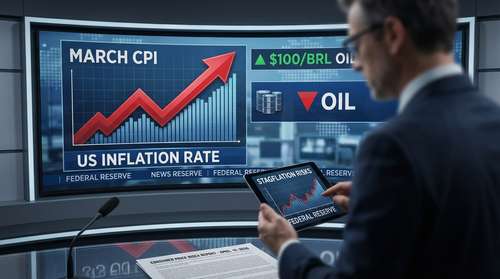
Wall Street is holding its collective breath this morning. The highly anticipated March CPI report 2026 drops in hours, bringing with it a harsh reality check for an already jittery market. Investors tracking the US inflation rate today face a formidable wall of worry, built on a sudden spike in energy costs and rapidly deteriorating economic output. The optimistic soft landing narratives that dominated financial media throughout the winter have vanished, replaced by a much darker economic reality.
The Energy Shock: When Oil Prices $100 Per Barrel Arrive
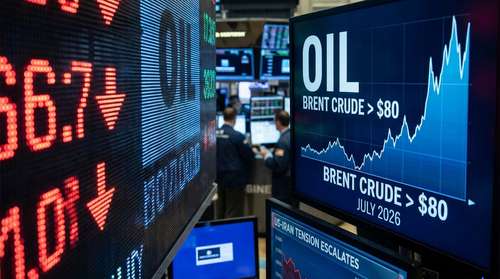
Energy markets have effectively hijacked the broader economic narrative over the past forty-eight hours. With the reality of oil prices $100 per barrel firmly established this week, the ripple effects are already showing up in consumer supply chains. The direct energy price impact on inflation cannot be overstated; higher crude prices translate immediately to pain at the fuel pump, escalated shipping costs, and severely squeezed corporate profit margins.
Analysts suggest this latest crude rally—driven by persistent supply tightness and unexpected geopolitical friction—threatens to undo months of disinflationary progress. Airlines and global logistics firms are already issuing early profit warnings, citing the immediate leap in fuel expenses. Unlike previous commodity spikes, this current climb to triple digits lacks the buffer of strategic petroleum reserve releases, leaving the open market to absorb the full brunt of the price shock.
Growth Downgrades Expose US Economic Stagflation Risks
Inflation alone is manageable for a robust, expanding economy. But the current macroeconomic environment is anything but robust. Earlier this week, the Commerce Department shocked trading desks by slashing its late-2025 GDP growth estimate to a meager 0.5%. This dramatic deceleration transforms a standard inflationary cycle into something far more dangerous.
We are now staring down elevated US economic stagflation risks. For those unfamiliar with the terminology, stagflation represents a toxic cocktail of stagnant economic growth paired with stubbornly high consumer prices. It is an economic trap that punishes households twice: first through diminished purchasing power, and second through a cooling labor market that rapidly suppresses wage growth. The 0.5% GDP print confirms that the underlying engines of the American economy are sputtering right as the basic cost of living accelerates.
Echoes of the 1970s
Financial historians are quickly drawing parallels to the painful stagflationary periods of the 1970s. While the domestic economy is notably less energy-intensive today than it was fifty years ago, the psychological impact on consumer confidence remains remarkably similar. When everyday Americans expect prices to rise while simultaneously fearing for their job security, discretionary spending contracts violently. Retail sales data leading up to this morning indicates consumers are already exhausting their savings, increasingly relying on credit cards to cover groceries and rent.
Decoding the Consumer Price Index April 10 Release
As the Bureau of Labor Statistics prepares to publish the Consumer Price Index April 10 update, economists are braced for ugly headline numbers. Consensus estimates anticipate a sharp month-over-month increase, heavily skewed by the aforementioned energy sector disruptions. However, institutional traders will look immediately past the headline print.
Market participants will fiercely dissect the shelter and services components of the report. While energy grabs the headlines, stubborn housing costs and service-sector inflation have been the primary culprits keeping baseline price levels uncomfortably high. A surprising upside miss in these sticky categories would confirm that inflation is entrenching itself deeper into the domestic economy, operating completely independent of international oil benchmarks.
Paralyzing the Federal Reserve Interest Rate Forecast
The most immediate casualty of this morning's data is likely to be monetary policy clarity. Jerome Powell and his colleagues at the central bank find themselves boxed into an impossible corner. The rapidly shifting Federal Reserve interest rate forecast reflects this institutional paralysis.
If the central bank aggressively hikes rates to combat the inflation revealed in the March CPI report 2026, officials risk crushing that fragile 0.5% GDP growth entirely, potentially plunging the nation into a deep, sustained recession. Conversely, if they attempt to stimulate the economy by cutting rates to support growth, they risk throwing gasoline on the inflationary fire sparked by the energy sector.
Bond markets are screaming warnings across the yield curve. The 10-year Treasury yield surged in overnight trading, reflecting the growing anxiety that inflation premiums must be aggressively priced back into long-term debt. Traders in the fed funds futures market have wildly recalibrated their expectations over the past 48 hours, shifting from anticipating modest accommodation to bracing for a prolonged period of restrictive rates.
Volatility indexes are spiking in tandem with these shifting expectations, suggesting that institutional capital is actively seeking shelter. All eyes now turn to the Department of Labor. Once those figures cross the wire, the theoretical debate over stagflation ends, and the market's brutal repricing reality begins.