The artificial intelligence landscape is undergoing a seismic shift this week. An intense OpenAI DoD contract backlash has triggered what industry insiders are already calling the Great AI Migration. Following a controversial classified partnership with the Pentagon, OpenAI is facing a severe public relations crisis that has redefined consumer loyalty in the tech sector. As users grow increasingly concerned about the surveillance implications of artificial intelligence, millions are voting with their downloads.
The Breaking Point: Triggers of the OpenAI Defense Deal
The controversy began in late February 2026, when rival firm Anthropic firmly rejected a revised defense contract. While Anthropic had worked with the military since 2025, CEO Dario Amodei established strict ethical boundaries, refusing to allow the company's models to be utilized for mass domestic surveillance or fully autonomous weaponry. When the Defense Department demanded unrestricted usage, Anthropic refused. In an unprecedented move, Defense Secretary Pete Hegseth labeled Anthropic a "supply chain risk," and the Trump administration ordered all federal agencies to cease using the company's technology.
Merely hours after Anthropic was effectively blacklisted, OpenAI swooped in to sign a classified deployment deal with the Pentagon, accepting the exact "any lawful use" standard that its rival had just rejected. The stark juxtaposition—Anthropic sacrificing federal revenue for safety principles, while OpenAI immediately secured the lucrative agreement—sparked an immediate and visceral reaction from the public.
The 'QuitGPT' Movement and the ChatGPT Uninstall Surge 2026
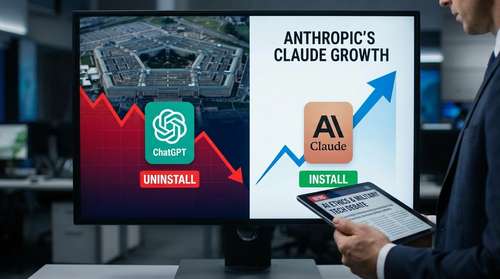
The consumer response was swift, brutal, and highly measurable. According to market intelligence firm Sensor Tower, the market witnessed a staggering ChatGPT uninstall surge 2026 will likely remember as a historic turning point. The application's typical day-over-day uninstall rate hovered around a modest 9 percent, but following the Pentagon announcement, that figure skyrocketed by 295 percent.
Frustrated users did not just quietly delete the software; they voiced their outrage across digital platforms. The App Store saw a 775 percent spike in 1-star reviews for ChatGPT over a single weekend. Meanwhile, an organic "QuitGPT" movement gained massive traction online, with more than 1.5 million users claiming to have abandoned the platform. A dedicated Reddit thread urging individuals to cancel their subscriptions quickly amassed over 33,000 upvotes, signaling a broad pivot as individuals began actively searching for the best ChatGPT alternatives for privacy.
Navigating the Sam Altman Pentagon Controversy
As the public relations disaster unfolded, OpenAI scrambled to contain the fallout. The Sam Altman Pentagon controversy deepened when an internal memo leaked, revealing the CEO's own misgivings about how the partnership rollout was handled.
Altman admitted to staff that the timing of the announcement was "opportunistic and sloppy," acknowledging that rushing the deal immediately after Anthropic’s ban severely damaged the organization's brand. OpenAI swiftly issued statements clarifying that explicit guardrails were in place to prevent the military from using their tools for domestic surveillance or allowing access to intelligence agencies like the NSA. However, for privacy-conscious consumers who had just watched the company abandon its previous ethical stances, the reassurances arrived too late.
Claude vs ChatGPT App Store: A Dramatic Reversal
The most fascinating outcome of this crisis has been the sheer velocity of the Anthropic Claude growth 2026 has witnessed. While OpenAI lost its footing, Anthropic’s principled stand resonated deeply with the public. They inadvertently secured the ultimate marketing campaign: a government ban based on a refusal to compromise user safety.
In the closely watched Claude vs ChatGPT App Store battle, the underdog emerged victorious. Downloads of Anthropic’s Claude surged by 37 percent on the day of the announcement, and another 51 percent the following day. By the end of the weekend, Claude had climbed an astonishing 20 ranks to capture the number one spot among free apps on the US Apple App Store, decisively dethroning ChatGPT.
A New Era for AI Ethics in Military Technology
The events of the past week have permanently altered the discourse surrounding AI ethics in military technology. The fallout extends far beyond mobile app rankings. Anthropic recently secured a preliminary injunction against the government, with a federal judge ruling that the "supply chain risk" designation was likely an unconstitutional retaliation for the company exercising its First Amendment rights. Judge Rita Lin explicitly described the government's attempt to brand an American company as a saboteur for simply voicing ethical disagreements as "Orwellian".
This legal and public relations battle sets a massive precedent. It proves that frontier AI is no longer just a consumer tool; it is a critical, highly contested asset of national security. Moving forward, artificial intelligence firms will have to carefully weigh the financial benefits of lucrative defense contracts against the very real threat of consumer abandonment.
The ongoing market migration represents a maturing digital economy where digital privacy, corporate transparency, and human rights are becoming the ultimate benchmarks for success.