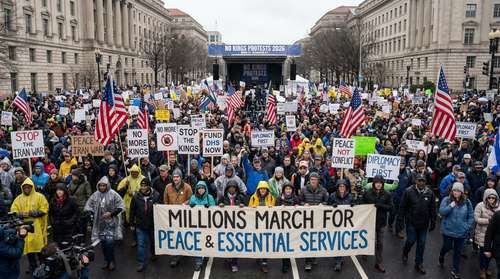
A historic wave of civil action swept across all 50 U.S. states and several international cities this weekend as millions of Americans took to the streets for the highly anticipated No Kings protests 2026. Fueled by mounting frustration over military casualties in the Middle East and domestic budget deadlocks, citizens poured into city centers, suburban parks, and state capitol lawns. Demonstrators directed their anger at the ongoing conflict in Iran, aggressive immigration enforcement crackdowns, and a month-long federal shutdown that has left vital security personnel without pay.
Organizers estimated that up to 9 million people participated in more than 3,500 decentralized events, signaling a massive escalation from the movement's previous demonstrations in June and October of last year. As the country grapples with both international conflict and domestic paralysis, the March 29 political rallies established a clear mandate: Americans are demanding constitutional protections and an immediate shift in the administration's current trajectory.
The Flagship Springsteen Minnesota Protest
While massive crowds gathered from Los Angeles to Boston, the epicenter of the weekend's resistance took place in St. Paul. The flagship event at the Minnesota State Capitol drew staggering numbers, culminating in a powerful Springsteen Minnesota protest performance. Legendary musician Bruce Springsteen headlined the rally, delivering a passionate call for democratic norms and an end to authoritarian policies.
Minnesota became the focal point for these demonstrations following recent tragedies involving federal agents during "Operation Metro Surge," an immigration crackdown that resulted in the fatal shooting of two U.S. citizens, Renée Good and Alex Pretti. Protesters stood shoulder-to-shoulder in the crisp spring air, holding signs that read "No ICE, No Wars, No Lies, No Kings". Springsteen praised the resilience of the local community, emphasizing that the sheer volume of attendees showcased a deep, unifying desire to protect civil liberties.
Growing Trump Iran War Opposition
A primary catalyst for the unprecedented turnout is the swelling Trump Iran war opposition. Since the launch of military operations in the Middle East, the anti-war movement US has gained significant traction, drawing together diverse coalitions of voters who fear the long-term consequences of a prolonged conflict.
Protesters expressed deep concerns over the human cost and geopolitical instability sparked by the administration's military strategies. During the rallies, organizers pointed to the recent resignation of National Counterterrorism Center Director Joe Kent as proof that the war lacked a clear, imminent necessity at its onset. Kent explicitly stated in his resignation letter that Iran "posed no imminent threat" to the nation.
Mockery as a Tool for Resistance
In addition to traditional marching and chanting, the No Kings protests 2026 utilized satire and mockery to convey their message. Across various cities, demonstrators organized theatrical performances, human banners, and elaborate costumes to lampoon authoritarian tendencies. In San Francisco, thousands formed a massive human banner on Ocean Beach spelling out "TRUMP MUST GO NOW!" creating a visually striking symbol of the coalition's widespread reach. Organizers noted that turning authoritarianism into a punchline is an intentional strategy designed to strip power from the administration's rhetoric.
The Impact of the DHS Funding Lapse
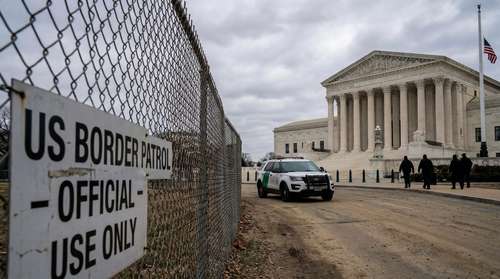
While foreign policy dominated much of the discourse, the ongoing DHS funding lapse fueled domestic grievances. The Department of Homeland Security has been without funding for over a month, a crisis sparked by congressional battles over immigration reform and operational transparency. Senate Democrats are demanding a ban on deportation officer masks and the requirement of judicial warrants for property entries, while Republicans have firmly held the line against these reforms.
This shutdown has had immediate, tangible impacts on everyday Americans. Key issues highlighted by protesters include:
- Unpaid federal workers: Over 100,000 DHS employees, including TSA agents, have missed paychecks. Many are resorting to driving for rideshare apps just to cover basic grocery bills.
- Airport chaos: Travelers are enduring hours-long security lines at major airports due to severe staffing shortages heading into the busy spring travel season.
- Leadership turmoil: The recent 54-45 confirmation of Markwayne Mullin to replace Kristi Noem as DHS Secretary has brought the agency's management struggles to the forefront.
The administration's directive for unpaid TSA staff to simply "go to work" became a major rallying cry over the weekend. Demonstrators demanded immediate action to pass clean funding bills and relieve the financial burden on essential workers who are caught in the political crossfire.
Looking Ahead: The 2026 Midterm Election Primaries
As the weekend's events transition into a broader legislative strategy, political analysts are already assessing how this grassroots momentum will influence the upcoming 2026 midterm election primaries. The No Kings movement has evolved from scattered frustrations into a highly structured political force. Organizers distributed detailed "March 28 Toolkits" to local chapters, ensuring that the energy from the streets translates directly to the ballot box.
With millions of newly energized voters mobilizing against both the international conflict and the domestic DHS funding lapse, the political landscape is shifting rapidly. The No Kings protests 2026 have set a definitive tone for the election cycle, warning lawmakers that the electorate will no longer tolerate the current trajectory of American governance.