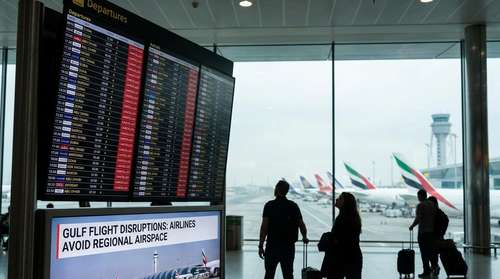
DUBAI, UAE — A catastrophic collapse of commercial aviation across the Middle East has left more than 9,500 flights cancelled and hundreds of thousands of passengers stranded, as of Tuesday, March 3, 2026. The unprecedented disruption follows a massive regional security escalation that forced the simultaneous closure of airspace over the United Arab Emirates, Qatar, Saudi Arabia, and Kuwait. While Dubai International Airport (DXB) has announced a "limited resumption" of services, the backlog threatens to gridlock global travel for weeks.
Dubai Airport Status Update: Limited Flights Resume Amid Chaos
After a total shutdown that began late February 28, Dubai Airports confirmed on Tuesday morning that a restricted number of departures have resumed. However, authorities issued a stern warning to travelers: do not come to the airport unless you have a confirmed booking and direct contact from your airline.
"We are prioritizing the repatriation of stranded passengers and those with urgent travel needs," a Dubai Airports spokesperson said in a press statement. "The airspace reopening is partial, and safe corridors are strictly limited. Normal operations are days, if not weeks, away."
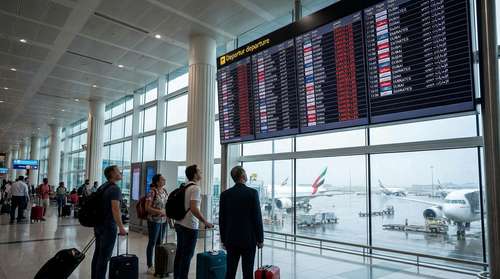
Emirates and flydubai have restarted a skeletal schedule, focusing on clearing the massive backlog of passengers stuck in transit. Terminal 3 at DXB remains a scene of confusion and exhaustion, with reports of travelers sleeping in departure halls for the third consecutive night.
Emirates Travel Disruptions and Rebooking
Emirates has extended its suspension of regular check-ins for most routes until at least March 5. The carrier is currently offering rebooking waivers, allowing passengers to change dates without penalty for travel up to March 20. "Our contact centers are overwhelmed," the airline noted on its website, urging customers to use self-service digital tools where possible.
Regional Airspace Closure News: Qatar and Saudi Arabia Hard Hit
The impact extends far beyond Dubai. Doha's Hamad International Airport remains effectively shuttered for commercial traffic as Qatar Airways suspended operations due to the complete closure of Qatari airspace. The airline has not yet provided a confirmed restart time, citing pending security clearances.
In Saudi Arabia, aviation authorities have issued urgent travel alerts. King Khalid International Airport in Riyadh and King Abdulaziz International Airport in Jeddah are seeing mass cancellations. Saudi national carrier Saudia has grounded flights to eight regional destinations, including Amman, Kuwait, and Bahrain, until further notice.
Key Regional Developments:
- Bahrain: Airspace remains restricted; British Airways has cancelled services to Manama through Wednesday.
- Kuwait: Airport operations are minimal following reports of nearby security incidents.
- Iraq & Jordan: Both nations have extended airspace closures for another 48 hours, effectively sealing off the northern corridor for east-west air traffic.
Stranded Travelers Dubai 2026: A Humanitarian Challenge
The human cost of the Middle East flight cancellations is mounting. Embassies in the UAE and Saudi Arabia are scrambling to assist citizens. Indonesian officials reported over 58,000 pilgrims stranded in Saudi Arabia, unable to return home after completing Umrah. Meanwhile, an estimated 30,000 German tourists are stuck across the Gulf region, many confined to hotels or cruise ships docked at closed ports.
"It’s not just about getting home; it’s about safety," said Sarah Jenkins, a British national stranded in a Dubai hotel. "We are watching the news about the conflict and just waiting for a text message from our airline. The uncertainty is the worst part."
International Flight Rerouting and Global Impact
The closure of these critical air corridors has forced international carriers to execute complex flight rerouting strategies. Lufthansa, Air France, and KLM are bypassing the region entirely, adding up to three hours of flight time to routes connecting Europe and Asia. This detour requires additional fuel stops, further reducing cargo capacity and passenger seats.
Analysts warn that the ripple effects will be felt globally. "This is the single largest disruption to air travel since the pandemic," noted aviation analyst Henry Harteveldt. "With 9,500 flights already wiped from the schedule, we are looking at hundreds of millions of dollars in losses and a recovery phase that will stretch well into April."
As the situation remains fluid, travelers are strongly advised to check flight status updates online before attempting to travel to any airport in the region.