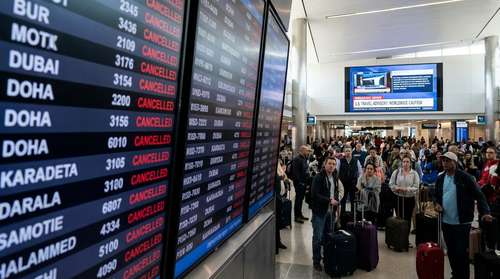
March 2, 2026 – A paralyzed aviation network and silent skies over the Persian Gulf mark the third day of what analysts are calling the most severe air travel disruption since the COVID-19 pandemic. A major military escalation involving strikes in Iran has triggered the emergency closure of airspace across the Middle East, forcing global super-hubs in Dubai, Doha, and Abu Dhabi to suspend operations. Over 6,000 flights have been canceled in the last 48 hours, stranding tens of thousands of passengers and prompting the U.S. State Department to issue a rare "Worldwide Caution" for American travelers.
Gulf Super-Hubs Grind to a Halt
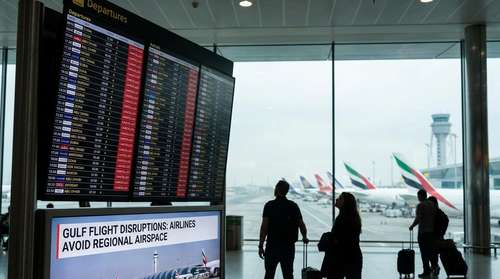
The closure of airspace over Iran, Iraq, Kuwait, and the Persian Gulf has effectively severed the primary air corridor connecting Europe and Asia. Dubai International Airport (DXB), the world's busiest hub for international traffic, remains closed today following confirmed reports of regional missile activity. Authorities at Dubai Airports have suspended all operations until at least 3:00 PM local time on Tuesday, March 3, citing safety concerns.
The disruption extends beyond Dubai. Qatar Airways has grounded its entire fleet as Qatari airspace remains shuttered, and Etihad Airways in Abu Dhabi has canceled all flights until further notice. These three carriers—Emirates, Qatar Airways, and Etihad—collectively transport millions of passengers daily. With their home bases non-operational, the ripple effect is being felt globally, from London Heathrow to Sydney Kingsford Smith.
"This is not just a regional issue; it is a structural break in the global aviation network," said aviation analyst Sarah Jenkins. "When you take the Middle East connectors offline, you remove the bridge between East and West. Rerouting around this block adds hours to flight times and renders many non-stop routes impossible."
Security Incidents Reported at Airports
The closures were precipitated by direct security threats. Unverified reports indicate minor infrastructure damage at a concourse in Dubai International Airport due to falling debris from intercepted projectiles. Meanwhile, officials in Abu Dhabi are investigating a security incident at Zayed International Airport that resulted in injuries to ground staff. These events have led civil aviation authorities to enforce a total "no-fly" zone until the security situation stabilizes.
US State Department Issues 'Worldwide Caution'
In response to the rapid escalation, the US State Department issued a Worldwide Caution late Sunday evening, a designation reserved for moments of acute global risk. The alert advises U.S. citizens overseas to "exercise increased caution" and specifically warns against travel to the Middle East and surrounding regions.
The bulletin explicitly states: "Due to the potential for retaliatory attacks and the unpredictable security situation in the Middle East, U.S. citizens should remain alert. Commercial flight options may vanish with little notice."
Embassies in the region are currently on lockdown, and Americans in the UAE, Qatar, and Bahrain have been advised to shelter in place. The caution also highlights the risk of "sympathetic attacks" or demonstrations in other parts of the world, urging travelers to keep a low profile.
Airlines Scramble: Emirates Flight Status and Refunds
For passengers holding tickets with Gulf carriers, the situation is chaotic. Emirates flight status today shows a sea of "Canceled" notifications. The airline has issued a statement urging passengers not to go to the airport, as terminals are already overcrowded with stranded travelers. Emirates is offering full refunds or free rebooking for travel through March 10, but rebooking options are scarce.
Other major carriers are also reacting:
- Lufthansa and British Airways have canceled all flights to the region and are rerouting Asia-bound flights via longer northern or southern corridors to avoid the conflict zone.
- United Airlines has suspended its services to Dubai and Tel Aviv indefinitely.
- Air India has canceled flights to the UAE, Saudi Arabia, and Qatar, affecting thousands of expatriate workers.
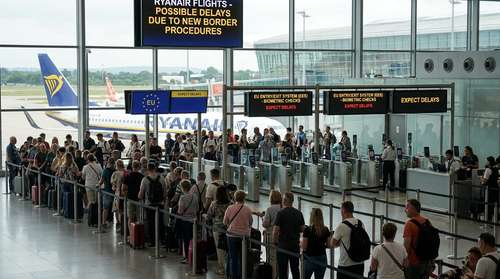
The sheer volume of Middle East flight cancellations 2026 has overwhelmed customer service centers, with wait times exceeding 12 hours for many airlines.
Travel Warnings: Iran Conflict Escalation
The trigger for this unprecedented shutdown was a series of joint military strikes on Iranian military facilities on February 28, followed by immediate retaliatory missile barrages targeting Gulf states hosting Western allies. The travel warnings Iran conflict generated are the most severe seen in decades.
Insurance providers are already signaling that policies purchased after the conflict began on February 28 may not cover cancellations due to "known events" or acts of war. Travelers are urged to check the fine print of their travel insurance policies carefully. "Force majeure" clauses are being invoked by airlines and tour operators alike, leaving many travelers to cover their own accommodation costs while stranded.
What Travelers Should Do Now
If you are currently stranded or have upcoming travel plans involving the Middle East, experts advise the following immediate steps:
- Do Not Go to the Airport: Unless your flight is confirmed and the airport is open, stay at your hotel or residence. Airports in Dubai and Doha are restricting access to ticketed passengers with confirmed flights only.
- Contact Airlines Online: Phone lines are jammed. Use airline apps or social media channels (X/Twitter) for faster responses regarding rebooking.
- Check Alternative Routes: If you must travel between Europe and Asia, look for carriers operating via Istanbul (which remains open but congested) or routes that bypass the region entirely, such as via North America, though these will be significantly more expensive.
- Register with Your Embassy: U.S. citizens should enroll in the STEP (Smart Traveler Enrollment Program) to receive real-time security updates.
As the Middle East airspace closure news continues to develop, the aviation industry braces for a week of historic disruption. With no immediate ceasefire in sight, the "crossroads of the world" remains closed for business.