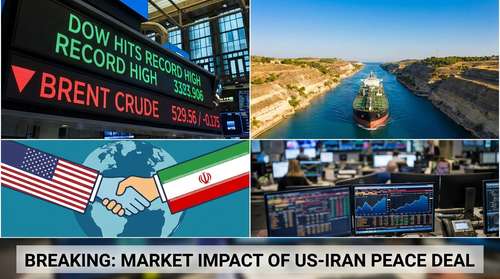
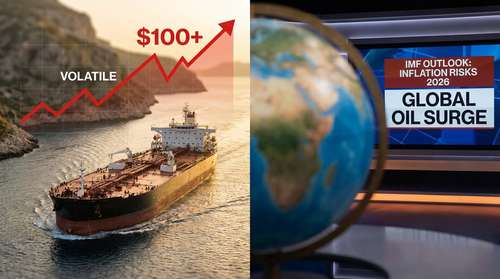
The global economy is bracing for a severe shock this weekend. As of March 22, 2026, the unprecedented shutdown of the Middle East's most critical maritime chokepoint has darkened the forecast for global oil prices 2026, sending benchmarks skyrocketing past the $100 per barrel mark. The sweeping Strait of Hormuz energy crisis has abruptly severed a vital artery for international trade, stranding millions of barrels of crude and sparking fears of widespread fuel shortages. With nearly a fifth of the world's petroleum and liquid natural gas supplies paralyzed, financial institutions are scrambling to revise their projections.
The Strait of Hormuz Energy Crisis Paralyzes Supply
Stretching just 29 nautical miles across at its narrowest point, the waterway between Oman and Iran serves as the single most critical transit route for international energy markets. The current blockade has trapped roughly 20 million barrels of oil per day. This translates to a staggering 20% of global petroleum liquids consumption disappearing from the open market overnight.
The crude oil price surge is only half the story. The passage is equally crucial for liquefied natural gas. Approximately 20% of global LNG trade relies entirely on this corridor. Because natural gas producers like Qatar and the United Arab Emirates cannot simply reroute their exports through pipelines, their massive LNG shipments are effectively stranded. This sudden energy supply chain disruption has triggered panic buying across European and Asian commodity exchanges.
Asian Markets Bear the Brunt of the Shock
While Western nations are feeling the pinch at the pump, the immediate threat lies furthest east. Approximately 84% of the crude oil and 83% of the LNG shipped through the strait historically sail toward Asian markets. Four nations—China, India, Japan, and South Korea—absorb the vast majority of these flows.
The situation looks particularly dire for economies lacking domestic energy resources. Japan relies on imported fossil fuels for roughly 87% of its total energy usage, while South Korea imports about 81%. For these heavy manufacturing hubs, an extended disruption threatens to halt factory production, squeeze industrial margins, and force emergency rationing protocols.
IMF Economic Outlook Sounds the Alarm on Inflationary Risks 2026
When assessing global oil prices 2026, the macroeconomic fallout is already materializing. During a press briefing this week, International Monetary Fund Communications Director Julie Kozack delivered a sobering update on the IMF economic outlook. Kozack noted that energy prices had climbed by more than 50% over the past month, blowing past $100 a barrel and compounding existing transport bottlenecks.
The prolonged shutdown introduces severe inflationary risks 2026 for a world that was just beginning to recover from post-pandemic price instability, as the true scale of the Strait of Hormuz energy crisis becomes apparent. According to IMF modeling, every sustained 10% increase in oil prices pushes global headline inflation up by roughly 40 basis points and shaves up to 0.2% off global economic output. With crude markets blowing past initial stress-test scenarios, policymakers face a grueling battle against a renewed cost-of-living crisis. Managing Director Kristalina Georgieva previously warned that this type of sustained shock could leave central banks with very little room to maneuver, forcing them to choose between fighting sticky inflation and saving economic growth.
Compounding Global Market Volatility
The ripples of this supply shock extend far beyond wholesale energy costs. Global market volatility has spiked sharply in response to the blockade. Stock markets have retreated globally, and sovereign bond yields are climbing across advanced and emerging economies.
Furthermore, the collateral damage to the agricultural sector could be devastating. The waterway closure has halted vital fertilizer shipments. Combined with sky-high marine fuel costs, this reality creates a perfect storm for surging global food prices later this year. The latest IMF economic outlook data suggests this dynamic disproportionately harms developing nations. Such developments compound the inflationary risks 2026 presents, threatening to drag vulnerable energy-importing economies into deeper financial distress.
Navigating the Energy Supply Chain Disruption
Resolving this bottleneck remains the top priority for international diplomats and naval task forces, but structural alternatives are alarmingly scarce. Saudi Arabia and the UAE possess limited pipeline infrastructure capable of bypassing the strait, yet this spare capacity cannot absorb the sheer volume of stranded cargo.
Analysts monitoring global oil prices 2026 expect severe market turbulence to persist until commercial shipping safely resumes. For now, governments must tap into strategic petroleum reserves to artificially suppress the crude oil price surge and buy diplomats time. The events of this week highlight an uncomfortable truth for the global economy: despite years of renewable energy investments and supply chain diversification, international stability still hinges precariously on a 29-mile stretch of water.