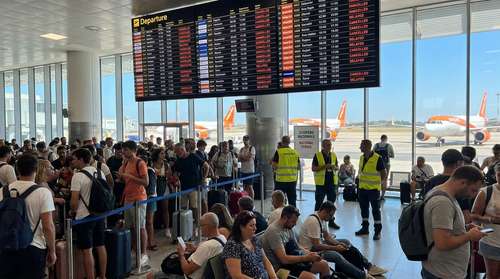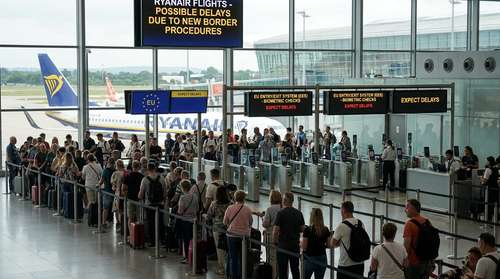
DUBAI, March 4, 2026 – The global aviation industry is facing its most severe disruption since the 2020 pandemic as a rapidly escalating conflict in the Middle East has forced the closure of critical airspace corridors. Over 20,000 flights have been canceled in the last 48 hours alone, leaving hundreds of thousands of passengers stranded across Europe, Asia, and the Americas. The flight cancellations Middle East 2026 crisis has effectively severed the primary air bridge between East and West, with major transit hubs in Dubai, Doha, and Abu Dhabi grinding to a near-complete halt.
Dubai Airport Shutdown and Gulf Hubs Go Dark
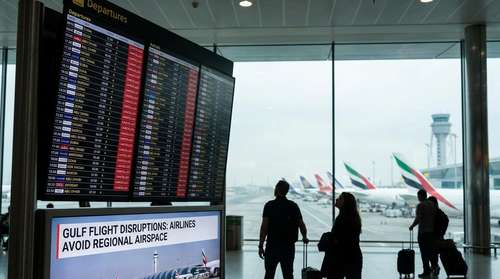
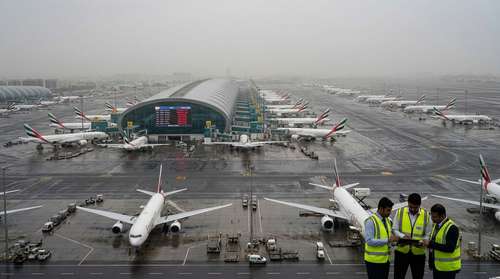
The situation deteriorated rapidly on Saturday, February 28, following the launch of "Operation Epic Fury," a joint military campaign that triggered immediate retaliatory missile and drone strikes across the Persian Gulf. By Wednesday morning, the Dubai airport shutdown was nearly total, with Dubai International (DXB)—the world’s busiest international airport—suspending almost all commercial operations. Similar scenes are unfolding at Doha’s Hamad International (DOH) and Abu Dhabi’s Zayed International (AUH), where departure boards show a sea of red "CANCELED" notices.
Aviation authorities in the UAE, Qatar, and Bahrain have issued NOTAMs (Notice to Air Missions) closing their airspace to civilian traffic to prevent accidental shootdowns. "This is not a temporary weather delay; this is a strategic airspace collapse," said aviation analyst Sarah Jenkins. "We are seeing a complete unparalleled blockage of the central Middle East corridor. Airlines like Emirates, Qatar Airways, and Etihad have effectively had their wings clipped overnight."
Stranded Travelers and Repatriation Efforts
For the estimated 300,000 passengers currently stuck in transit zones or unable to depart, the situation is becoming desperate. With hotels in Dubai and Doha at capacity, many travelers are sleeping in terminal concourses. Governments are scrambling to organize repatriation flights for stranded travelers, though options remain dangerously limited.
Limited Corridors Opening
As of March 4, a fragile "humanitarian air corridor" has been negotiated via Saudi Arabia and Oman. Limited evacuation flights operated by foreign carriers have begun trickling out of Muscat and Riyadh, ferrying citizens away from the immediate conflict zone. However, passengers in Qatar face a more complex challenge due to the specific U.S. travel warning Qatar, which has urged all American citizens to shelter in place due to the proximity of military assets. Diplomatic channels are working overtime to secure safe passage for civilians before the conflict intensifies further.
Airline Rerouting and the Global Ripple Effect
The global aviation crisis March 2026 is not confined to the Gulf. The closure of Iranian, Iraqi, and Jordanian airspace has forced long-haul carriers to implement drastic airline rerouting conflict zones protocols. Flights from London to Singapore or Frankfurt to Sydney are now being diverted north over the Arctic or south through Egypt and Saudi Arabia, adding up to four hours of flight time and requiring unscheduled fuel stops.
Major carriers including Lufthansa, British Airways, and United Airlines have indefinitely suspended services to the region. The financial toll is mounting, with aviation stocks tumbling 12% on Monday. "The geometry of global travel has changed," noted a spokesperson for the International Air Transport Association (IATA). "You cannot simply remove the Middle East from the map without causing a logjam in Frankfurt, Heathrow, and Changi. The system is interconnected, and right now, the central node is broken."
Middle East Airspace Closure Updates
Travelers are advised to monitor official channels closely. The latest Middle East airspace closure updates indicate that while Saudi airspace remains partially open for overflights, the risk level is categorized as "Critical." Insurance premiums for aircraft operating near the region have spiked by 400%, forcing some budget carriers to cancel routes entirely rather than absorb the cost.
For now, the advice from embassies is clear: Do not travel to the region. Those already there should register with their consulate and prepare for potential short-notice evacuation orders. As the geopolitical situation remains fluid, the aviation sector is bracing for a shutdown that could extend well into mid-March.