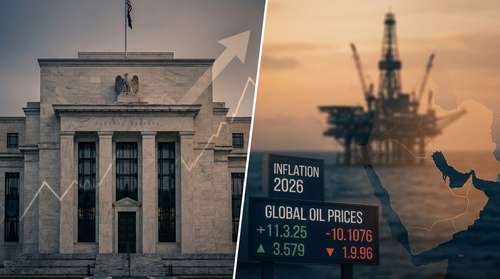
The fragile ceasefire in the Middle East has temporarily halted direct military engagements, but the economic fallout is just beginning. According to the recently released FOMC meeting minutes, policymakers are now openly considering Federal Reserve rate hikes to combat resurging inflationary pressures. As the geopolitical landscape shifts daily, the Iran conflict business impact is spreading from the Strait of Hormuz directly into the boardrooms of American businesses. With global oil prices today hovering near the $100 mark despite the diplomatic pause, central bank officials are retreating from their earlier promises of reduced borrowing costs.
Energy Market Volatility Derails the 2026 Inflation Forecast
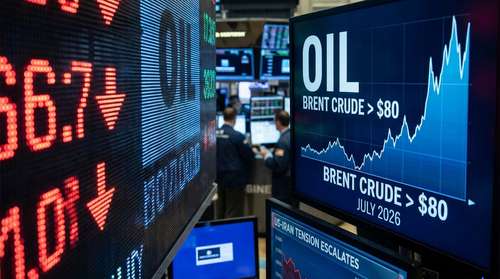
When the year began, financial markets confidently priced in multiple interest rate cuts for 2026. That optimism has largely evaporated. The escalating tensions and subsequent two-week truce between the United States and Iran have triggered immense energy market volatility. Brent crude violently swung from a 15% plunge back toward $98 a barrel after Tehran restricted access to the Strait of Hormuz following new Israeli strikes in Lebanon. Asian stocks, highly exposed to Middle Eastern energy, dropped sharply, with the South Korean Kospi plunging 2% and European indexes opening lower. This cascading disruption is a nightmare scenario for policymakers hoping to tame consumer prices.
Cleveland Fed President Beth Hammack recently cautioned that April's consumer inflation could spike to 3.5%, representing a significant retreat from the central bank's 2% target. If disruptions persist through the spring, international brokerages warn that crude could test $110 per barrel, cementing a structurally higher price regime that would force a complete rewrite of the 2026 inflation forecast. Shipping companies are already demanding hefty risk premiums or outright refusing to transit the vital waterway until the terms of the ceasefire become clear.
FOMC Meeting Minutes Reveal a Hawkish Shift
The minutes from the Federal Reserve's March 17-18 meeting, published Wednesday, expose a central bank deeply concerned about the persistence of inflation. The discussions highlight a sharp pivot: an increasing number of the 19 rate-setting officials now support adjusting their forward guidance to reflect the possibility of future rate increases. The primary drivers are twofold: the undeniable risk that sustained high energy costs will bleed into core goods, and the ongoing pressure from newly imposed tariffs, which officials concede are keeping inflation well above target.
The FOMC meeting minutes indicate that while officials maintained the benchmark rate between 3.50% and 3.75%, the mood has soured. The committee noted that the upward pressure on gas prices has worsened the broader economic outlook. Instead of celebrating an imminent soft landing, officials are bracing for what they term two-sided risks—balancing the threat of slowing household spending against the urgent need to keep long-term inflation expectations anchored.
The Changing Trajectory for Jerome Powell Interest Rates
Wall Street is now actively recalibrating its expectations for Jerome Powell interest rates. While the Fed Chair had previously downplayed the need for tighter policy, the narrative has shifted rapidly in the face of ongoing Middle Eastern hostilities. Market futures, which once projected aggressive easing, now show less than a 25% chance of a single rate cut by December. Some analysts suggest that if the current $2 million transit fees reportedly coordinated by Iran's armed forces in the Strait of Hormuz become the new normal, borrowing costs will have to rise to prevent a devastating secondary wave of inflation.
Navigating the Iran Conflict Business Impact
For American businesses and consumers, the geopolitical chess match translates directly into bottom-line pain. The Iran conflict business impact goes far beyond the pump. Supply chain managers are already scrambling to reroute shipments or absorb staggering maritime insurance premiums. These elevated input costs leave companies with a difficult choice: absorb the losses and crush profit margins, or pass the expenses onto consumers and risk choking off demand.
The fragility of the current two-week truce cannot be overstated. US President Donald Trump has warned that American military assets will remain stationed in the region until Iran fully complies with the agreement. Furthermore, Vice President JD Vance is slated to lead a US delegation to Islamabad for direct talks this weekend, a critical meeting that energy markets are treating as a make-or-break moment. The resulting uncertainty paralyzes corporate planning. Executives cannot accurately forecast transportation costs, making hiring and capital investment decisions incredibly perilous.
What Happens Next for the US Economy?
All eyes are now glued to the upcoming March and April inflation reports. If the data reflects the grim estimates floating around regional Fed banks, the era of higher-for-longer interest rates will be firmly established. The Federal Reserve is legally mandated to pursue both maximum employment and stable prices, but an oil-driven inflation spike puts those twin goals in direct opposition.
Investors must prepare for choppy waters. The transition from anticipated rate cuts to potential Federal Reserve rate hikes fundamentally alters the investment landscape. As global crude benchmarks test upper resistance levels and the Middle East remains a volatile flashpoint, the path to economic stability looks narrower and far more treacherous than anyone predicted just a few short months ago.