As the Formula 1 paddock descends on Albert Park for this weekend's F1 2026 season opener, the celebratory atmosphere is being overshadowed by a deepening geopolitical crisis that threatens to derail the upcoming Middle Eastern leg of the championship. With the Australian Grand Prix 2026 set to kick off a revolutionary new era for the sport on March 6, breaking reports suggest that the Bahrain and Saudi Arabian Grands Prix—scheduled for mid-April—are facing imminent cancellation due to escalating conflict in the region.
Middle East Races on the Brink
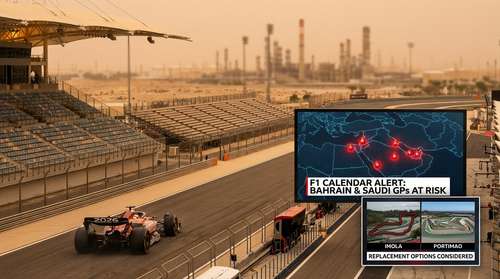
Senior paddock sources indicate that the FIA and Formula One Management (FOM) are holding emergency meetings regarding the viability of the Bahrain Grand Prix (April 12) and the Saudi Arabian Grand Prix (April 19). The instability follows a series of military exchanges involving U.S. and Israeli forces and Iran, which have severely disrupted commercial aviation and logistics across the Gulf. Reports from The Telegraph and other outlets confirm that approximately 1,000 F1 personnel faced travel chaos earlier this week, with flights rerouted or cancelled as airspace closures took effect.
The situation intensified after Pirelli was forced to scrap a scheduled wet-weather tyre test at the Bahrain International Circuit earlier this week. While no F1 team personnel were present, the cancellation serves as a stark warning of the logistical nightmare facing the sport. An FIA spokesperson stated late Tuesday that they are "closely monitoring the evolving situation," emphasizing that the "safety and well-being of all participants is the sole priority."
Imola and Portimao: The European Contingency Plan
In response to the potential Formula 1 schedule changes, officials have reportedly activated contingency plans to keep the record 24-race calendar intact. Leading the list of F1 race replacements are Italy's Imola circuit and Portugal's Portimao.
Imola, which was controversially dropped from the 2026 calendar to make way for the new Madrid Grand Prix later in the season, has remained on high alert. Local officials in the Emilia-Romagna region have previously signaled their readiness to step in. "The track facilities, paddock areas, and grandstands are already prepared," noted one insider report, highlighting that Imola could host a race with as little as three weeks' notice.
Similarly, the Algarve International Circuit in Portimao—already contracted to return in 2027—is viewed as a logistical savior. Its location in southern Europe offers a stable, low-risk alternative that teams can reach easily via road freight from their European bases, bypassing the treacherous air corridors of the Middle East. A double-header in Europe during April would drastically alter the season's flow but would ensure the championship momentum isn't lost after Melbourne.
Melbourne Focus Amidst Global Tension
Despite the uncertainty looming over April, the immediate focus remains on Albert Park. The Australian Grand Prix 2026 updates confirm that the event will proceed without issue, marking the first time since 2019 that Melbourne has hosted the season opener. The return to the top slot was a strategic move to accommodate Ramadan, which pushed the Bahrain and Saudi races to April—a decision that has ironically placed them directly in the window of the current geopolitical flare-up.
Teams are arriving in Australia with 2026-spec machinery that features significantly revised active aerodynamics and sustainable fuel power units. However, the talk in the hospitality units isn't just about lap times; it's about whether the freight containers leaving Melbourne on Sunday night will be heading to the Persian Gulf or being diverted back to Europe.
Logistics at Breaking Point
The Middle East conflict sports impact extends beyond just the race track. Insurance premiums for freight traversing the region have skyrocketed in the last 48 hours. Team principals are reportedly pressuring the FOM for a decision by the conclusion of the Australian GP this Sunday, arguing that the risk of sending personnel and millions of dollars of equipment into a volatility zone is untenable. If the Bahrain and Saudi rounds are scrubbed, F1 faces a month-long gap unless the European replacements can be confirmed immediately.
For now, the engines will fire up in Melbourne, but the eyes of the sporting world remain fixed on the developing crisis thousands of miles away. As the situation remains fluid, the 2026 season faces its first major test before the lights even go out.