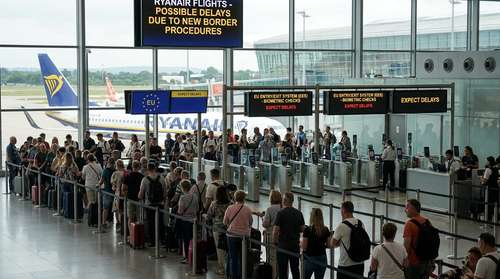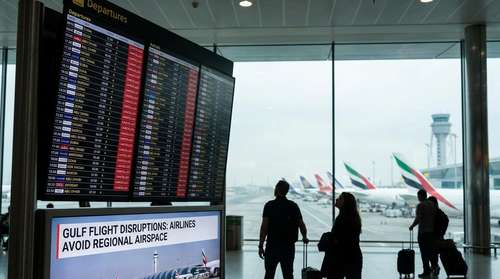
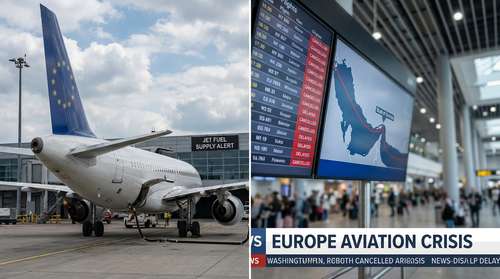
A looming Europe jet fuel shortage threatens to ground flights and upend holiday plans across the continent as the blockade of the Strait of Hormuz tightens. The International Energy Agency (IEA) has issued a dire warning that European aviation fuel reserves could be completely exhausted in just six weeks, leaving the travel sector uniquely vulnerable as it hurtles toward its peak season.
With major carriers already reporting steep financial losses and beginning to slash schedules, passengers are bracing for unprecedented turbulence. The geopolitical standoff in the Middle East has driven kerosene prices to record highs, fundamentally threatening the global tourism ecosystem and putting millions of holidays at risk.
IEA Travel Warning 2026: A Six-Week Ticking Clock
IEA Executive Director Fatih Birol painted a sobering picture of the cascading economic fallout during an Associated Press interview on Thursday, describing the situation as the "largest energy crisis we have ever faced". The cornerstone of this IEA travel warning 2026 is Europe’s deep structural dependency on Middle Eastern refined oil products.
"In Europe, we may have six weeks or so of kerosene left," Birol cautioned. "If we cannot open the Strait of Hormuz, we will soon hear that flights from city A to city B are being canceled due to a lack of jet fuel".
The global market is currently losing between 10 million and 15 million barrels of oil per day due to the closure. While the IEA recently released 400 million barrels from emergency reserves, analysts warn the intervention will not yield short-term relief for aviation hubs. The United Kingdom, Europe’s leading kerosene consumer, is particularly exposed, possessing only four operational refineries compared to 18 in the 1970s. For travelers, this structural weakness virtually guarantees massive European flight cancellations unless maritime traffic resumes immediately.
Strait of Hormuz Flight Impact and the Airline Fuel Crisis
The Strait of Hormuz flight impact is disproportionately severe because the strategic waterway accounts for roughly 40% of Europe's jet fuel imports. No aviation fuel has successfully passed through the strait since hostilities escalated in late February, effectively severing a vital energy artery for the continent. The crisis deepened earlier this week after peace talks failed in Pakistan, prompting the United States to launch a naval blockade to counter Iranian shipping restrictions.
This supply chain collapse has triggered a full-blown airline fuel crisis. Spot prices for jet fuel climbed to an astonishing $1,838 per tonne in early April—more than doubling since the onset of the conflict. Jet fuel typically makes up about 30% of an airline's operating expenses, but current market dynamics are pushing that figure much higher, eroding profit margins across the board.
Airports Council International (ACI) Europe has formally written to the EU Commission, warning that a "systemic jet fuel shortage" could become a reality by early May. Furthermore, IATA Director General Willie Walsh noted that even if the waterway opens tomorrow, it will take months to restore normal supply lines due to widespread disruptions in Middle Eastern refining capacity.
Carriers Slash Routes Amid Rising Airfares 2026
The financial strain on major airlines is rapidly translating into physical route reductions and skyrocketing costs for consumers. Dutch carrier KLM announced plans to cut 160 flights next month—roughly 1% of its European network—citing routes that have become financially unviable due to extreme kerosene costs. Ryanair similarly cautioned that suppliers can only guarantee sufficient fuel through most of May.
Meanwhile, easyJet projects a staggering pretax loss of £540 million to £560 million for the first half of its 2026 fiscal year. To offset these mounting deficits, carriers are passing the burden directly to travelers. Industry watchers are reporting fuel surcharges as high as $280 per ticket appearing on new bookings, serving as a primary driver behind rising airfares 2026.
Preparing for Summer Travel Disruptions
For passengers booking summer getaways, the outlook is highly volatile. Regional hubs like London Oxford Airport are already feeling the operational strain, and the looming macro-crunch practically ensures widespread summer travel disruptions. Travelers should expect everything from combined routes and reduced intra-European flight frequencies to absolute groundings.
Passengers must also navigate a complex compensation landscape. Because the current crisis stems from geopolitical events outside the control of the airlines, typical payout frameworks—such as Europe’s EC 261 rule—are unlikely to apply to most cancellations. While airlines remain obligated to provide basic care and assistance during major delays, industry experts strongly advise passengers to secure robust travel insurance and maintain flexible itineraries as the six-week fuel deadline rapidly approaches.