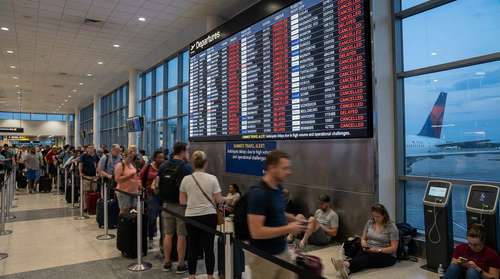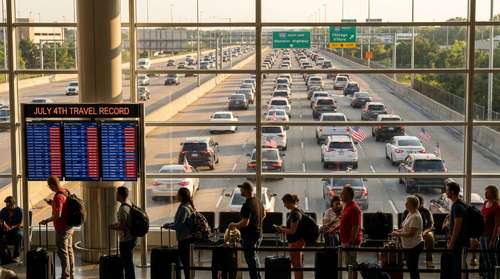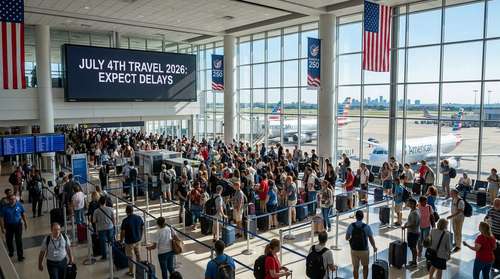
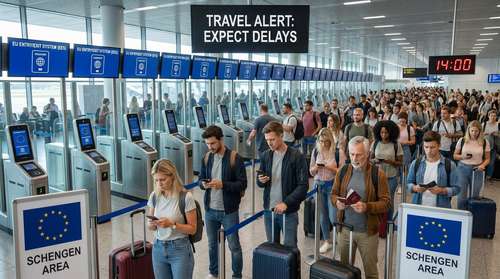
As the peak holiday season kicks into high gear, non-EU tourists are bracing for unprecedented EU Entry Exit System travel delays. The European Union has officially refused frantic pleas from the aviation industry to pause its newly implemented digital border checks. Despite acknowledging severe bottlenecks that have already triggered up to five-hour wait times, officials maintain that halting the biometric rollout is both unnecessary and legally impossible. With over 40 million additional passengers expected across the continent's airports in July and August, the standoff guarantees a rocky experience for millions of international vacationers.
The Push for a European Union EES Suspension
Since the Entry/Exit System (EES) fully launched in April 2026, the transition from traditional passport stamps to digital fingerprint and facial scans has been chaotic. A coalition of major aviation organizations recently sent an urgent letter to European Commission President Ursula von der Leyen, begging for a temporary European Union EES suspension to salvage the busy holiday period. They argued that border processing times have exploded, rendering the current infrastructure fundamentally incapable of handling summer volumes.
Instead of yielding, EU authorities held firm this week. Officials admitted the system is 'not perfect' and identified roughly 20 'difficult spots' out of the bloc's 1,500 border crossing points experiencing massive gridlock. However, they argued that a piecemeal implementation across different member states would create chaotic loopholes. If a tourist entered through a border with active biometric checks but exited through a suspended checkpoint, the central database would fail to record their departure. This glitch would falsely flag them as overstaying their 90-day limit, leading to automatic entry denials on future visits. Consequently, authorities insist the system must stay active everywhere.
Ryanair ACI Europe Border Warnings Grow Dire
The refusal to budge has sparked outrage across the travel sector, where Ryanair ACI Europe border warnings underscore a system on the brink of collapse. Airports Council International (ACI) Europe, along with Airlines for Europe (A4E) and the International Air Transport Association (IATA), have plainly stated that borders have reached a 'critical point'. The trade bodies warned that immediate intervention is needed before the situation completely deteriorates.
Ryanair has been particularly vocal about the impending disaster, especially for those traveling with young children. Neal McMahon, the airline's Chief Operations Officer, stated that passengers should not be used as 'guinea pigs for a half-baked passport control system'. The carrier noted that major holiday hubs—including airports in Alicante, Málaga, Palma, Milan, and Paris—lack the necessary staff and self-service kiosks to process travelers efficiently. The bottlenecks are so severe that some commercial planes are forced to depart half-empty while passengers remain hopelessly stuck at immigration checkpoints.
The Reality of EES Biometric Registration Passport Delays
At the heart of the crisis are the severe EES biometric registration passport delays, which are directly fueling the wider EU Entry Exit System travel delays at major transit hubs. Under the new rules, every non-EU national—including Americans and Brits—must register their biometric data upon their first entry into the Schengen zone. While the European Commission originally estimated that processing would take about 70 seconds per person when functioning correctly, the reality on the ground is drastically different.
When multiple international flights touch down simultaneously, those seconds compound into agonizing hours. Reports indicate wait times regularly stretching between three and five hours in poorly equipped terminals. In one extreme instance at a smaller regional airport, 3,000 passengers arrived within an hour, yet border forces only had four biometric processing booths available.
What to Expect When Traveling to Europe Summer 2026
For anyone traveling to Europe summer 2026, preparation and extreme patience are mandatory. The days of swiftly passing through customs with a quick passport stamp are officially over. To navigate the mandatory Schengen biometric border control checkpoints without derailing your trip, consider arriving at the airport significantly earlier than usual for your return flight, and build massive buffer windows for any layovers within the bloc.
To combat the worst of the summer travel airport queues Europe is currently facing, the EU is scrambling to deploy rapid response measures. Extra border personnel have recently been dispatched to ease gridlock in Lisbon, and Brussels Airport is adding 50 Frontex officers to manage the passenger flow. Additionally, officials emphasize that the most extreme delays are concentrated at seasonal destination airports rather than major international transit hubs.
Despite these minor improvements, aviation experts recommend a defensive travel strategy. If possible, book non-stop flights directly to your final destination to avoid unnecessary transfers within the Schengen area. If you must connect, consider routing through non-Schengen hubs like London or Istanbul. While border agencies continue their frantic efforts to stabilize the rollout, the persistent infrastructure gaps mean that EU Entry Exit System travel delays will remain an inescapable feature of a European vacation this year.