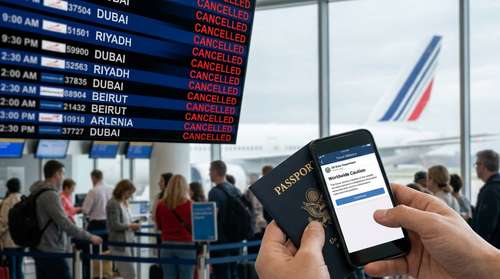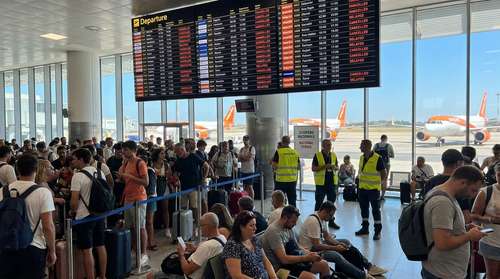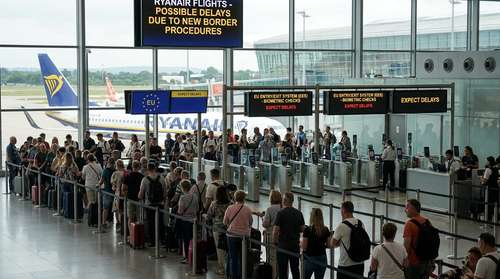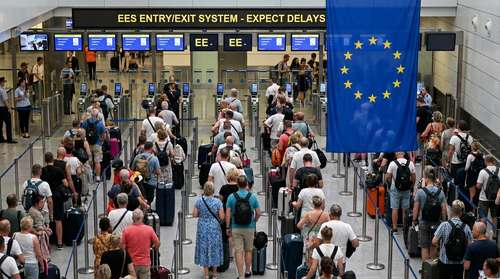
With the peak holiday season looming, an unprecedented threat is casting a long shadow over European tourism. A stark new report from the World Travel & Tourism Council points to severe EES border delays that could upend the vacation plans of tens of millions of international travelers. The full implementation of the Europe Entry Exit System 2026 is triggering lengthy processing times at major airports and ferry ports. According to the latest WTTC travel warning, if the queues stretching up to four hours become the new normal, the continent risks losing an estimated 41 million visitors. The financial fallout of this summer travel chaos Europe is bracing for could reach a staggering $45.4 billion in lost tourism spending.
The Financial Toll of Persistent Border Delays
The sheer scale of the potential economic loss is sending shockwaves through the travel industry. The WTTC commissioned a comprehensive survey of 2,500 travelers from four of Europe's most vital source markets: the United States, the United Kingdom, Canada, and Australia. The findings present a clear ultimatum from consumers. If wait times regularly hit the three-to-four-hour mark, approximately one-third of these travelers said they would abandon their plans to visit the Schengen Area entirely.
British tourists proved to be the most sensitive to the friction, with 39 percent indicating they would change their travel plans to avoid the bottleneck. Travelers from the US and Canada followed closely at 33 percent, while 27 percent of Australians expressed similar reluctance. When these percentages are mapped onto 2026 inbound visitor forecasts, the data projects a worst-case scenario of 41 million deterred arrivals. That volume of lost foot traffic equates to a $45.4 billion direct hit to the European economy. This staggering sum encompasses direct outlays by visitors and wider ripple effects across accommodation sectors, regional transport networks, local cultural attractions, and retail businesses that rely heavily on robust summer spending. The warning lands at a particularly delicate moment for European tourism authorities, which have depended on strong demand from long-haul markets to maintain industry growth over the past few years.
Navigating New Biometric Border Controls
The root of the bottleneck lies in the sweeping modernization of Schengen Area travel requirements. Fully activated across 29 participating nations in April 2026, the Entry/Exit System eliminates traditional manual passport stamps. In their place, it mandates stringent EU biometric border controls, requiring first-time non-EU arrivals to register their fingerprints and high-resolution facial scans directly at the border. Because this initial biometric enrollment must be supervised by border agents, processing times per passenger have skyrocketed compared to the old stamping method.
While the system is designed to tighten security and eventually streamline future crossings, the initial enrollment process is proving highly disruptive. Facilities are struggling to manage the sudden influx. Real-world reports from major hubs like Paris-Charles de Gaulle and cross-Channel ferry ports detail multi-hour standstills. In some extreme instances, travelers have missed their connections or return flights, forcing them to navigate the airport all over again due to the biometric passport delays Europe is currently grappling with.
Industry experts are sounding the alarm that relief may not be immediate. An official from the EU border agency Frontex recently cautioned that the operational teething problems might take up to two years to fully stabilize as member states adjust their resources and staffing to accommodate the heavy passenger volumes.
A Widespread Lack of Traveler Awareness
Compounding the operational friction is a glaring information gap among international tourists. The WTTC data reveals that 55 percent of respondents know little to nothing about the new biometric mandates, and nearly half are completely unaware of what will be expected of them upon arrival. This lack of preparation inevitably slows down processing times at the kiosks, as passengers arrive without understanding the necessary steps for border compliance.
Solutions to Mitigate the 2026 Border Crisis
Despite the frustrations, the majority of travelers recognize the long-term benefits of the updated security infrastructure. The WTTC research notes that 87 percent of visitors are willing to tolerate temporary disruptions if it leads to a more secure and efficient border experience down the line. WTTC President and CEO Gloria Guevara emphasized that the focus must now shift to operational readiness and queue management rather than debating the system's existence.
The council is strongly urging European member states to accelerate the adoption of digital pre-registration tools, specifically the Travel to Europe app developed by Frontex, to ease the immediate pressure at physical checkpoints. By allowing tourists to input basic data before they even board their flights, border agents can focus solely on the biometric capture phase. Combined with a coordinated international communication campaign across key source markets to educate travelers before they depart, these proactive measures are critical to preventing catastrophic EES border delays and ensuring the continent remains a premier global destination.