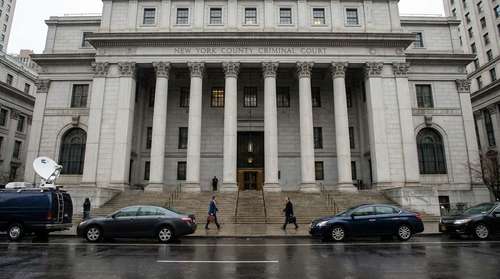
In the most significant Donald Trump trial update to date, the first criminal prosecution of a former U.S. president has officially entered its final phase. After four intense weeks of gripping testimony, the Trump defense rests its case without the presumptive Republican nominee taking the witness stand. Now, the courtroom braces for the next crucial step. The timeline is set for both sides to deliver their final, high-stakes pitches to the 12 New Yorkers tasked with deciding the case. As the nation watches, this impending milestone sets the stage for a Manhattan criminal court verdict that carries unprecedented weight for the upcoming November elections.
The Defense Strategy and Final Witnesses
The defense team concluded its presentation rapidly, calling only two witnesses before resting. The primary goal was to systematically dismantle the prosecution's narrative and cast doubt on their star witness. To achieve this, Trump's attorneys called Robert Costello, a former federal prosecutor and legal advisor, whose time on the stand was marked by contentious and testy exchanges with Justice Juan Merchan.
Costello was brought in specifically to undermine the Michael Cohen testimony. During his time on the stand, Costello asserted that Cohen had previously told him in 2018 that Trump knew absolutely nothing about the $130,000 payment made to adult film actress Stormy Daniels. The defense strategy hinged on painting Cohen as a rogue actor who facilitated the payment independently, without the former president's authorization or knowledge.
Despite weeks of public hints and assertions that he might testify in his own defense to clear his name, Trump ultimately chose to remain seated at the defense table. Taking the stand would have exposed the former president to a grueling, wide-ranging cross-examination under oath by prosecutors—a risk his legal team evidently decided was unnecessary. By relying on the burden of proof resting squarely with the prosecution, the defense hopes they have injected enough reasonable doubt into the minds of the jurors to prevent a conviction.
Looking Ahead: Hush Money Case Closing Arguments
With witness testimony officially concluded, the schedule now shifts to the highly anticipated hush money case closing arguments. Rather than rushing the proceedings, Judge Merchan has allocated time for these final statements to take place following the Memorial Day holiday. This scheduling ensures that the jury can hear both sides without a long weekend interrupting their concentration before they retreat to deliberate.
During closing arguments, prosecutors are expected to meticulously weave together the complex paper trail of business records, checks, and invoices. Their objective is to prove beyond a reasonable doubt that the former president intentionally falsified 34 business documents to cover up the hush money payment, thereby shielding his 2016 campaign from damaging stories. Prosecutor Joshua Steinglass has already hinted at their angle, emphasizing that the sometimes uncomfortable details of the case reinforce the underlying motive to buy silence.
Conversely, Trump's legal team will use their closing statements to highlight inconsistencies in witness accounts. Defense attorney Todd Blanche will likely hammer home the argument that Cohen—who previously pleaded guilty to federal charges and served prison time—is an unreliable narrator motivated by personal animus and financial gain. The defense's final pitch will focus on portraying the business records as standard legal expenses and retainers, rather than elements of a criminal cover-up.
Finalizing the Trump Trial Jury Instructions
Before the jury can begin deliberating, the court must resolve the Trump trial jury instructions. Following the defense resting, Judge Merchan held a charging conference with attorneys from both sides to rigorously debate the exact legal frameworks and definitions the jury must apply to the evidence.
These instructions are notoriously complex in New York financial record cases. The prosecution must prove not only that business records were falsified, but that they were falsified with the specific intent to commit or conceal another crime—in this case, an alleged violation of state election laws. The specific phrasing approved by the judge will serve as the jury's roadmap, significantly influencing how they interpret the threshold for guilt or innocence.
Implications for 2024 Election Legal Battles
This trial is just one facet of a broader, unprecedented legal landscape surrounding a major party's presumptive presidential nominee. A guilty Manhattan criminal court verdict would make Trump the first convicted felon to run as the candidate of a major political party, sending shockwaves through the electorate and reshaping the political discourse.
However, a unified acquittal or a hung jury would provide Trump with a massive political victory, validating his repeated claims that the charges are a politically motivated prosecution. As we look at the larger scope of 2024 election legal battles, the outcome in New York will undoubtedly set the tone for the months to come. Whether the jury returns with a conviction or an acquittal, the reverberations of their decision will echo far beyond the walls of the Manhattan courthouse, directly impacting the trajectory of the race for the White House.