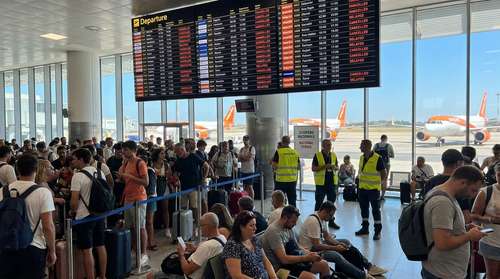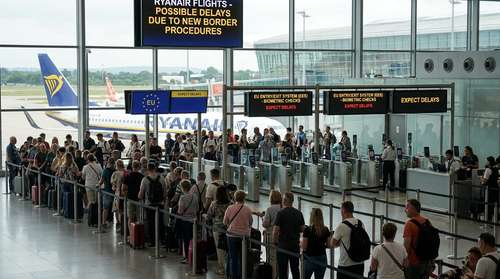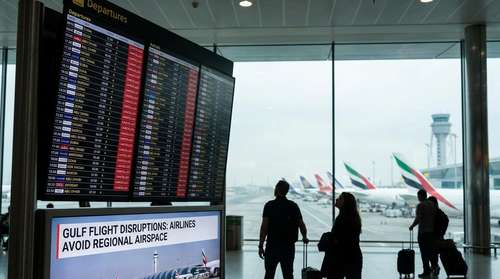
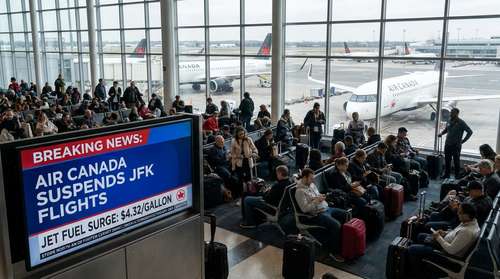
The global travel industry is officially entering turbulent airspace. In a stark indicator of a looming 2026 summer travel crisis, a major Air Canada JFK flight suspension has sent shockwaves through the North American aviation market. Slated to begin June 1, Canada's flag carrier will halt all direct passenger routes from Toronto and Montreal to New York's John F. Kennedy International Airport. The sweeping decision comes in response to an unprecedented jet fuel price surge 2026 directly tied to the escalating conflict in the Middle East, a crisis that is rapidly pushing airline operational costs past the breaking point.
Inside the Air Canada JFK Flight Suspension
Just days after the initial late-week announcement, the reality of the carrier's network consolidation is setting in for thousands of summer vacationers. From June 1 through October 25, 2026, direct flights from Toronto Pearson (YYZ) and Montreal-Trudeau (YUL) to JFK will be entirely grounded. Air Canada has bluntly stated that the staggering cost of fuel has rendered these specific lower-profitability routes no longer economically feasible for their network.
For those tracking New York airport news today, the silver lining is that the New York metropolitan area will not be entirely cut off from Canadian hubs. Air Canada will maintain its roughly 34 daily flights to nearby LaGuardia Airport (LGA) and Newark Liberty International Airport (EWR). However, industry analysts note that redirecting JFK-bound passengers to these alternative airports will undoubtedly tighten regional capacity, potentially adding up to four hours of travel time for those relying on JFK for complex international connecting flights. Aviation management experts point out that Air Canada's JFK routes are historically designed to feed passengers into international connections with partner airlines, rather than serving the local New York market. With fuel so scarce, the airline is strategically choosing to funnel those passengers directly into its own international departures from Montreal or Toronto.
Broader Network Cuts
The carrier's strategic retreat is not strictly limited to the East Coast. Route suspensions will also impact flights to Salt Lake City (SLC) and a previously planned route launch between Montreal and Guadalajara, Mexico. While these cuts represent approximately 1% of Air Canada's global capacity, they signal a broader trend of airlines aggressively trimming their schedules to preserve capital.
Decoding the Jet Fuel Price Surge 2026
To understand the root of this aviation contraction, one must look at the profound Middle East conflict travel impact. Following the outbreak of the Iran conflict in late February and subsequent disruptions in the critical Strait of Hormuz—a narrow waterway that historically handles 20% of the world's oil supply—global energy markets have fractured. Tanker traffic through the strait has plummeted by up to 80% in recent weeks, causing localized product dislocations and massive spikes in insurance premiums for shipping vessels.
According to Argus Media data released this week, the average price for a gallon of jet fuel skyrocketed to $4.32. To put this in perspective, airlines were paying just $2.50 per gallon the day before the war began. This staggering 70-plus percent increase is obliterating second-quarter profitability forecasts across the board. Long-haul international flights are particularly vulnerable; a standard 13-hour wide-body route now costs airlines tens of thousands of dollars more in fuel alone compared to just two months ago.
The crisis extends far beyond North America. The International Energy Agency (IEA) recently issued a dire warning that European commercial jet fuel inventories have plummeted to just a six-week reserve, sparking fears of mass flight cancellations across the Atlantic if alternative supply chains are not rapidly secured. Furthermore, the situation is exposing deep vulnerabilities for low-cost carriers. Unlike major legacy airlines that sometimes lock in fuel prices months in advance through complex financial hedging strategies, many budget airlines buy fuel at current market rates. As these companies face the immediate brunt of the $4.32 per gallon reality, analysts expect widespread consolidations and reduced frequencies on off-peak days.
Prepare for Airline Fee Increases and Expensive Tickets
If you are finalizing your summer itineraries, brace your wallet. The industry-wide response to these fuel spikes guarantees an era of expensive airline tickets 2026. Major U.S. and international carriers are not just passively absorbing these multibillion-dollar blows; they are passing the financial burden directly to passengers.
Delta Air Lines recently disclosed that surging fuel prices are expected to add a crippling $2 billion to its second-quarter operating costs. Consequently, an aggressive wave of airline fee increases is already rolling out. United Airlines and JetBlue have both initiated steep hikes to their checked baggage fees in a direct bid to neutralize the soaring cost of petroleum. Meanwhile, overseas carriers like Lufthansa and KLM have already begun proactively axing hundreds of flights from their spring and summer schedules due to thin margins.
As the conflict abroad persists and global fuel reserves remain under immense pressure, travelers should anticipate a volatile summer season. Experts recommend booking necessary flights immediately, preparing for dynamic scheduling changes, and budgeting extra capital for the inevitable surge in ancillary airline fees. The golden age of cheap summer getaways may be officially grounded for 2026.