President Donald Trump has ignited a profound political firestorm following his sudden decision to appoint Federal Housing Finance Agency (FHFA) director Bill Pulte as the Acting Director of National Intelligence. The highly controversial Bill Pulte DNI announcement, made shortly after the resignation of Tulsi Gabbard, places a federal housing regulator with absolutely zero national security experience at the helm of the United States' 18 intelligence agencies. The polarizing decision has sent immediate shockwaves through Washington, sparking deep bipartisan concern over the explicit politicization of the intelligence community during a period of complex global instability.
A "Dangerous" Move: The Jim Himes Face the Nation Interview
The swift condemnation of the Trump Bill Pulte alliance underscores the gravity of putting a political ally in charge of the nation's most sensitive secrets. On Sunday, the top Democrat on the House Intelligence Committee delivered a blistering critique of the move. During his high-profile appearance with Margaret Brennan, the Jim Himes Face the Nation segment highlighted the raw panic currently setting in among seasoned national security veterans.
Representative Himes explicitly labeled the decision as Trump's "worst and most dangerous" appointment to date. He argued that placing a Trump loyalist DNI in this role poses severe constitutional and security risks, emphasizing that Pulte's primary distinguishing feature in Washington has been ruthlessly executing the president's political will. During his tenure at the housing agency, Pulte controversially pursued mortgage fraud allegations against several of Trump's perceived political rivals. Now, critics fear he will readily weaponize the vast intelligence apparatus for similar partisan retribution.
Surveillance at Risk: The FISA Section 702 Extension Crisis
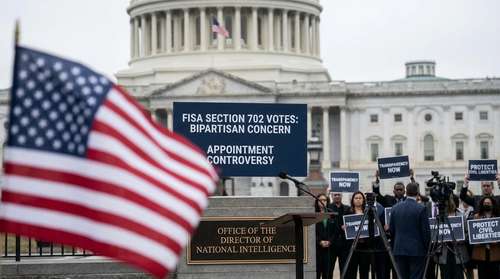
Beyond the immediate shock of the personnel change, the timing of the appointment threatens to permanently derail vital national security legislation. Congress is rapidly approaching a crucial Friday deadline to secure the FISA Section 702 extension, a sweeping foreign intelligence surveillance law that allows U.S. agencies to monitor the electronic communications of non-Americans overseas. Lawmakers on both sides of the aisle view this tool as indispensable for counterterrorism and cybersecurity.
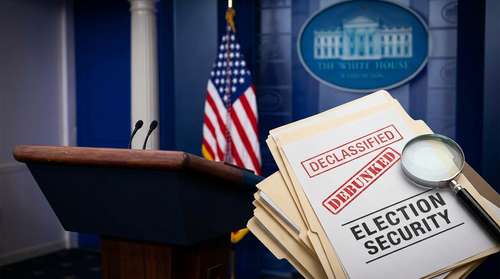
However, with an unvetted housing official suddenly leading the intelligence community, lawmakers with deep national security expertise warn that the required bipartisan coalition for the FISA Section 702 extension could fracture entirely. Members of Congress are increasingly hesitant to grant expansive surveillance powers to an office spearheaded by an acting director who was explicitly tapped to investigate unfounded claims of "rigged elections," as President Trump publicly suggested to reporters earlier this week.
The Threat to Legislative Trust and National Security
For decades, the intelligence community has relied on a foundational level of trust between the executive branch and congressional oversight committees. By installing a figure seen entirely as a political enforcer rather than an impartial professional, the administration has virtually obliterated the vital goodwill needed to navigate complex legislative renewals. If Section 702 expires because of this gridlock, intelligence officials warn of a catastrophic blind spot in monitoring terrorism and hostile foreign espionage.
Bracing for Impact: Looming Intelligence Agency Layoffs
Adding to the institutional turbulence, President Trump has made no secret of his underlying mandate for the new acting director: drastically shrinking the Office of the Director of National Intelligence. In a recent interview, Trump openly questioned the necessity of the overarching intelligence agency, suggesting it is bloated and should perhaps be completely terminated.
This mandate essentially tasks Pulte with initiating severe and immediate intelligence agency layoffs. While his predecessor had already reduced staff significantly to save taxpayer funds, Trump wants Pulte to "start the process" of making even deeper, more aggressive cuts. The stark prospect of massive intelligence agency layoffs orchestrated by a housing executive has deeply demoralized career intelligence professionals. Many insiders fear that the targeted reductions will not be based on merit or operational efficiency, but rather used as a blunt tool to purge the ranks of analysts deemed insufficiently loyal to the incoming administration.
The Future Under a Trump Loyalist DNI
While President Trump has clarified that Pulte will not serve as his permanent pick for the role, the acting designation grants him immense discretionary power for up to 210 days without ever requiring a formal Senate confirmation hearing. During this critical window, a fiercely partisan Trump loyalist DNI will possess unfettered access to highly classified materials and the authority to fundamentally reshape the structural foundation of American intelligence gathering while still simultaneously running the Federal Housing Finance Agency.
As the nation grapples with escalating global threats, the decision to boldly prioritize loyalty over proven expertise at the absolute pinnacle of the intelligence community represents an unprecedented gamble. Whether Pulte focuses on executing sweeping bureaucratic cuts, pursuing the president's domestic political adversaries, or simply acting as a disruptive placeholder, the fallout from this unorthodox appointment has already permanently altered the landscape of American national security.