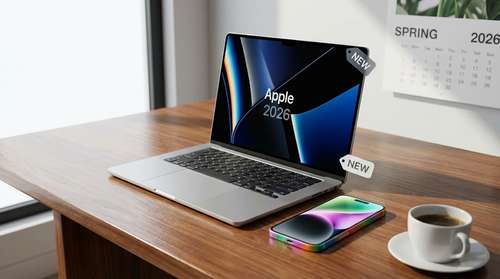
If you thought premium computing had to cost four figures, the tech landscape just radically shifted. The reverberations of the highly anticipated Apple Spring Event 2026 are still shaking the industry, as the Cupertino giant officially takes aim at the entry-level market. With the launch of the $599 MacBook Neo and the aggressively priced iPhone 17e, Apple has traded quiet dabbling for a full-scale assault on mid-range Windows and Android competitors. For readers following Newsvot Tech, this represents the most consequential strategic pivot the company has made in years.
The $599 Laptop Redefined: Apple MacBook Neo Reviews
For decades, Apple strictly avoided the sub-$1,000 laptop tier with its current-generation hardware. The MacBook Neo obliterates that barrier. Starting at just $599—and an astonishing $499 for education buyers—the Neo delivers a robust aluminum chassis devoid of the creaks and flexes commonly found in similarly priced PCs.
Under the hood, the Neo breaks tradition by utilizing the A18 Pro chip, the same silicon that powered the iPhone 16 Pro, rather than an M-series processor. Early Apple MacBook Neo reviews confirm this is a brilliant move. The 6-core CPU and 5-core GPU configuration, paired with 8GB of unified memory and a 256GB SSD, flies through daily tasks. Benchmarks show it running up to 50 percent faster than bestselling Intel Core Ultra 5 laptops. Furthermore, its fanless design ensures silent operation while delivering up to 16 hours of battery life.
Compromises to Reach the Price
To hit the $599 mark, Apple made a few calculated omissions. The base model lacks a backlit keyboard and requires a $100 upgrade to double the storage to 512GB and add Touch ID. Additionally, the 13-inch Liquid Retina display relies on the standard sRGB color space rather than the wider P3 gamut, and external display support is capped at a single 4K monitor at 60Hz. Despite these trims, the availability of four vibrant colors—Silver, Blush, Citrus, and Indigo—and surprisingly excellent side-firing Spatial Audio speakers make it a tremendously appealing package.
MacBook Neo vs MacBook Air: Making the Choice
The introduction of this new entry-level tier inevitably sparks a debate: MacBook Neo vs MacBook Air. With the M5 MacBook Air now starting at $1,099, the $500 gap represents a massive difference for students and casual users.
The Air remains the superior machine for creative professionals. It offers a larger, brighter P3 color display, a full M-series architecture designed specifically for macOS, and standard perks like a backlit keyboard and Touch ID on all configurations. However, the Neo provides roughly 80% of the authentic Mac experience for nearly half the price. If your daily workflow consists of web browsing, document creation, streaming, and light photo editing, the A18 Pro chip is more than capable of handling the load without breaking a sweat.
iPhone 17e Features: Flagship Value, Entry-Level Cost
While the Neo laptop dominates headlines, Apple's smartphone strategy received an equally aggressive update. The iPhone 17e price remains anchored at $599, but the value proposition has skyrocketed. Apple essentially doubled the base storage to 256GB, effectively making this generation $100 cheaper than its predecessor when matching specifications.
The iPhone 17e features bring premium capabilities to the masses. Built around a 6.1-inch Super Retina XDR OLED display, it incorporates Ceramic Shield 2 for significantly improved scratch resistance. Performance is driven by the brand-new A19 chip, ensuring that Apple Intelligence operations run smoothly and privately on-device.
Photography enthusiasts will appreciate the jump to a 48MP Fusion main camera equipped with a 12MP 2x telephoto option, replacing the dated single-lens systems of older budget models. The inclusion of the customizable Action Button, MagSafe support, Qi2 wireless charging, and up to 26 hours of video playback cements the 17e as the most uncompromising budget phone Apple has ever produced. Available in black, white, and a striking new soft pink, it leaves very little reason for the average buyer to spend a thousand dollars on a smartphone.
A Nightmare for Competitors
These parallel releases signal a terrifying reality for Apple's rivals. By vertically integrating their A-series silicon into the lowest-priced MacBook ever sold and stuffing top-tier storage and cameras into a $599 iPhone, Apple is aggressively pursuing market share. Consumers who previously felt priced out of the macOS and iOS ecosystems now have a frictionless entry point.
As these devices hit store shelves this month, the narrative is clear. High performance, premium build materials, and all-day battery life are no longer reserved for those willing to empty their wallets. Apple has set a new baseline, and the rest of the industry will have to sprint to catch up.