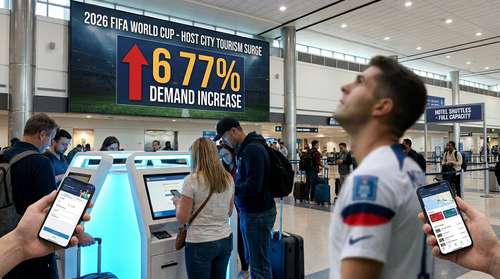
The countdown to North America's massive soccer tournament has officially triggered an unprecedented booking frenzy. Following the opening of the final ticket sales phase this month, travel searches associated with 2026 World Cup tourism have skyrocketed by an astonishing 677%. Millions of international fans are now scrambling to finalize their itineraries across the United States, Canada, and Mexico, turning the upcoming tournament into an economic juggernaut with a projected global impact of over $80 billion.
However, that massive influx of supporters is colliding with staggering inflation for live sports experiences. With an expanded field of 48 teams competing across 104 matches for the very first time, fans are quickly discovering that securing a spot in the stands—and a bed for the night—requires an astronomical budget. Organizers expect 6.5 million visitors to flood the region, setting the stage for the most lucrative, and expensive, sporting event in modern history.
The Unprecedented FIFA Ticket Demand Surge
The latest ticketing phase has left many die-hard supporters experiencing severe sticker shock. Driven by an aggressive dynamic pricing model implemented for this tournament cycle, the FIFA ticket demand surge has pushed the cost of premium seating to record-breaking levels. For the July 19 final at MetLife Stadium in New Jersey, Category 1 top-tier tickets are now listed at a jaw-dropping $10,990.
Even standard group-stage matches are demanding premium prices, with entry-level seats currently starting around the $700 mark. FIFA maintains that the pricing simply reflects historic, unprecedented global interest. The organization has budgeted an estimated $11 billion in total revenue for the 2023 to 2026 cycle. For travelers mapping out their soccer travel USA 2026 adventures, the steep admission cost is just the first hurdle in a complex logistical puzzle.
World Cup Host City Hotels Feel the Squeeze
Finding a place to sleep is quickly becoming a competitive sport in its own right. With millions of ticket holders finalizing their schedules, World Cup host city hotels are operating at maximum capacity months before kickoff. The average international visitor is projected to spend roughly $416 per day, stay for an average of 12 days, and attend at least two matches. This extended dwell time is creating a massive bottleneck for short-term lodging.
Industry analysts are already tracking severe World Cup accommodation shortages across major urban centers. In Los Angeles, where baseline hotel rates average $227 per night, prices are forecasted to jump by 90% to over $480 during the tournament. The squeeze is arguably even more intense in mid-sized markets. In Kansas City, the lodging crunch is so acute that local tourism boards expect fans to book rooms up to two and a half hours outside the metro area just to find an available bed.
Economic Windfalls and Transit Bottlenecks
The financial pressure extends far beyond lodging and airfare. Transportation logistics are adding unexpected and hefty line items to traveler budgets. In the New York and New Jersey region, fans attending games at MetLife Stadium are currently facing $150 round-trip NJ Transit tickets to travel from the city to the venue. With massive crowds attempting to navigate urban rail systems, regional transit authorities are desperately attempting to scale up operations.
Despite these high costs to consumers, local municipalities are anticipating massive financial returns. Los Angeles aims to generate $594 million in economic impact from hosting eight matches, a figure that widely surpasses the revenue generated by the 2022 Super Bowl. Meanwhile, Seattle projects a minimum of $929 million will be injected into King County's economy over the course of its six matches at Lumen Field.
Surging FIFA 2026 Flight Bookings
Airlines and regional airports are noticing the impact just as sharply. Current data tracking FIFA 2026 flight bookings reveals a massive spike in international inbound reservations specifically targeted for June and July. Tourism economists report that up to 60% of international arrivals to the U.S. will be new tourists traveling specifically for the tournament.
Even airports in non-host cities are preparing for the spillover. Mexico's newly opened Tulum International Airport is actively preparing for a massive influx of international fans who plan to blend match days in Mexico City or Monterrey with a luxury beach vacation in the Riviera Maya. This sprawling approach to travel highlights how fans are attempting to maximize their expensive cross-continental trips.
Strategies for Summer Travel 2026
For those still organizing their summer travel 2026 itineraries, the window for affordable logistics is rapidly closing. Travel experts strongly recommend looking at secondary airports and considering regional rail networks to bridge the gap between affordable outlying communities and central stadium districts. Rhode Island, for example, is launching marketing campaigns to lure fans attending matches at Gillette Stadium in Massachusetts, offering alternative lodging just a day trip away.
The coming months will dictate exactly how well North America's infrastructure can handle this unprecedented influx. The fans who manage to balance five-figure match tickets with savvy lodging choices will be the ones who successfully navigate what is shaping up to be the most expensive, dynamic, and sprawling sports tourism event in history.