The countdown to one of the decade's most anticipated celestial events has officially shifted into high gear. With just four months until the sun vanishes behind the moon on August 12, the window for 2026 total solar eclipse travel is rapidly closing. Travelers are scrambling to secure the last remaining accommodations in the path of totality, driving a frantic scramble that has caused hotel rates in prime viewing locations across mainland Europe and the North Atlantic to triple.
This astronomical phenomenon is the first total solar eclipse visible from mainland Europe since 1999. It also marks the beginning of an extraordinary trio of global eclipses, preceding the 2027 event over North Africa and the 2028 eclipse in Australia. Because the 2026 path passes over some of the most spectacular, remote, and historic landscapes in the world, the global tourism industry is seeing an unprecedented summer squeeze.
The Race for Totality: August 12 Eclipse Spain Hotels Near Capacity
The path of totality will sweep from the high Arctic and the Atlantic coast straight through northern Spain, casting a shadow over cities like A Coruña, León, and Zaragoza, before terminating at sunset in the Balearic Islands. For North American travelers who caught the eclipse bug in 2024, Spain represents the most accessible and cost-effective gateway to totality.
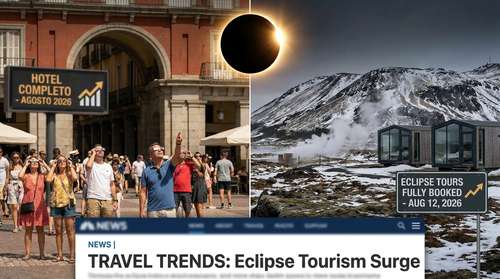
However, finding a place to sleep is becoming a monumental challenge. Demand for August 12 eclipse Spain hotels has reached fever-pitch levels. Hospitality experts report that accommodations within the 182-mile-wide shadow path are hovering at a staggering 90% occupancy. Properties in rural regions like Monroyo and high-end vineyards such as Leyenda del Paramo are completely sold out, often hosting exclusive astronomy groups and university alumni tours. In Mallorca, where totality will occur dramatically with the sun suspended just two-and-a-half degrees above the western horizon, luxury cliffside resorts have been fully committed for over a year. This incredibly low sun angle promises a breathtaking, distorted oval silhouette of the sun, but it also means open horizons are absolutely essential to avoid blocked views.
Iceland Eclipse Tours 2026: Glaciers, Geysers, and 2 Minutes of Darkness
For those willing to brave the unpredictable North Atlantic weather, Iceland offers one of the most dramatic backdrops for the event. The point of greatest duration—where darkness will last for a maximum of 2 minutes and 18 seconds—sits just 28 miles off the country's western coast. Inland, the capital city of Reykjavik falls directly within the path and will experience roughly one minute of totality. Meanwhile, the volcanic landscapes, black-sand beaches, and glaciers of the Snæfellsnes Peninsula offer a photographer's dream.
Because the island nation is a massive magnet for varying weather fronts, mobility is crucial. Iceland eclipse tours 2026 are heavily booked precisely because guided expeditions offer the flexibility to chase clear skies. Local tourism boards estimate a 40 percent chance of optimal weather, meaning tourists are relying on experienced guides with vehicles to rapidly shift locations if thick clouds threaten to obscure the shimmering solar corona.
Riding the Wave of Dark Sky Tourism Trends
With traditional brick-and-mortar lodging scarce, travelers are embracing rapidly expanding dark sky tourism trends. Stargazing eco-pods, remote rural glamping sites, and mobile campervan rentals have seen a massive booking surge. Meanwhile, maritime travel has exploded, turning the ocean into the ultimate viewing deck.
Eclipse cruise reservations are among the hottest tickets in the travel industry right now. Major operators like Cunard, Holland America, Fred Olsen, and Virgin Voyages have positioned their fleets directly under the path of totality. Ships sailing off the western coast of Iceland or anchored in the Mediterranean offer a distinct advantage over land-based viewing: the mobility to outrun cloud cover and secure pristine viewing conditions. Some of these sailings even feature onboard astronomers, special cosmic cuisine, and former astronauts to guide guests through the celestial phenomena. Luxury expedition vessels are even offering submarine dives and Zodiac excursions alongside their eclipse programming.
Navigating the Solar Eclipse Flight Price Surge
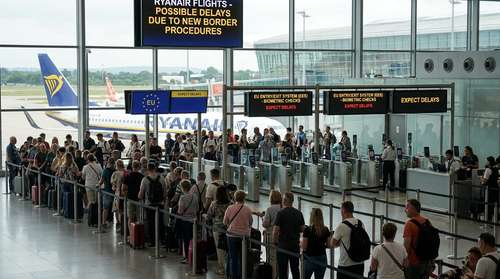
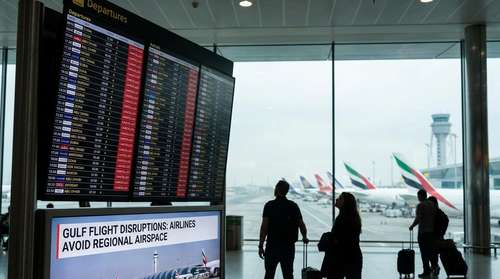
Getting to these prime locations is presenting its own set of logistical hurdles. Aviation data reveals a massive solar eclipse flight price surge for routes heading into Keflavik, Madrid, and Barcelona during the first two weeks of August. Direct flights from North America to Spain have more than doubled compared to standard summer rates. This is largely driven by the estimated 15 million people who already live in the path of totality, combined with the millions more driving or flying in for the peak summer travel season.
If you are still finalizing plans for the best places to see 2026 eclipse phenomena, flexibility is your greatest asset. Consider flying into secondary airports just outside the path of totality—such as Madrid or Barcelona, which narrowly miss the total blackout—and utilizing Europe's robust high-speed rail network to reach the centerline on the morning of August 12. Remember to pack certified safe eclipse glasses before you leave, as local supplies in Europe are expected to run out weeks in advance. While the financial and logistical hurdles are steeper than ever, the reward of watching daytime turn into twilight over a Spanish vineyard or an Icelandic fjord promises to be an unforgettable, once-in-a-lifetime return on investment.