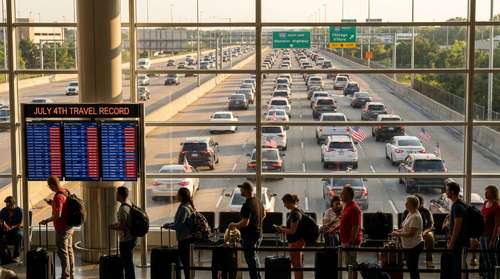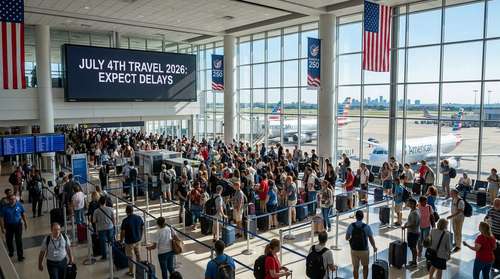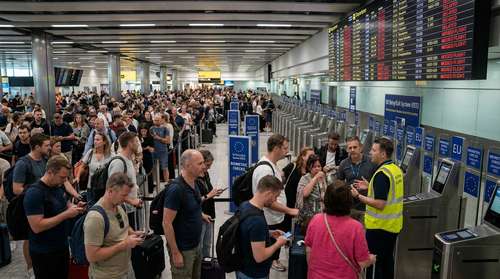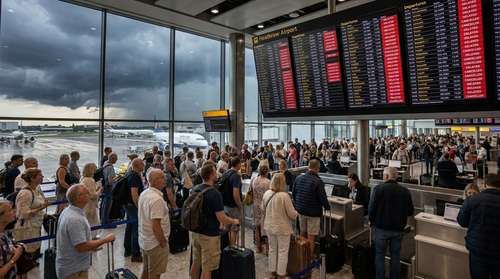
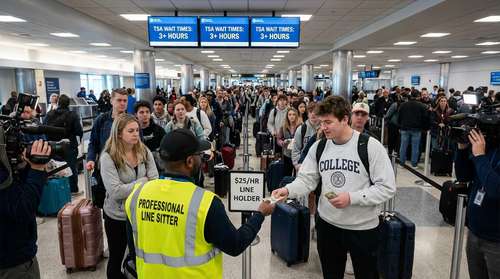
A national aviation crisis 2026 is unfolding across the country, transforming the start of the spring travel season into an unprecedented ordeal. Following a Department of Homeland Security funding lapse that began on February 14, a mass exodus of unpaid security personnel has crippled terminal operations nationwide. For travelers searching for US airport status today, the outlook is grim: security lines are snaking outside of terminal doors and spilling into drop-off lanes. In response to skyrocketing TSA wait times 2026, a bizarre and highly lucrative gig economy trend has exploded. Desperate flyers are increasingly turning to viral 'placeholding concierge services,' paying professional line sitters for airports up to $25 an hour just to hold their spot in the grueling queues.
The Roots of the National Aviation Crisis 2026
The severity of this gridlock stems from a devastating collision of record passenger volumes and an escalating political labor dispute. The ongoing government shutdown travel impact has left tens of thousands of essential frontline workers without paychecks for over six weeks. Morale has understandably plummeted. Congressional testimony recently revealed that more than 480 security officers have quit entirely since mid-February to seek more stable income. At major hubs, daily absentee rates have surged, with cities like Houston and Atlanta reporting shift call-out rates climbing as high as 40 percent.
Industry forecasts previously projected a staggering 171 million passengers would take to the skies between March and April, marking a 4% increase over last year's figures. Instead of a smooth departure, those vacationing families and college students are now walking straight into the latest TSA staffing shortage news. They are facing closed checkpoints, consolidated screening lanes, and a system stretched so thin that Immigration and Customs Enforcement (ICE) agents have been controversially reassigned to help manage the terminal chaos.
Historic Checkpoint Delays and the US Airport Status Today
If you are heading to a major hub this week, prepare for an endurance test. The Spring Break 2026 travel delays have officially shattered historical records. Acting agency administrators recently confirmed that the country is currently experiencing the highest wait times in modern aviation history.
Travelers at George Bush Intercontinental Airport (IAH) and William P. Hobby Airport in Houston have documented waits exceeding four and a half hours just to reach the document verification podium. In Atlanta's Hartsfield-Jackson, normally praised for its hyper-efficient passenger flow, morning bottlenecks routinely strand flyers who arrived three hours early. Frustrated crowds are left standing with limited access to water or seating, watching departure boards flash as their flights take off half-empty. Airlines are feeling the financial sting as well, with several carriers actively issuing travel waivers to allow passengers to rebook flights without severe penalties.
The Viral Boom of Professional Line Sitters for Airports
With federal gridlock showing no immediate signs of a resolution, the free market has stepped in to offer a controversial workaround. Enter the 'placeholding concierge'—a rapidly expanding network of gig workers and opportunistic locals cashing in on the misery of modern air transit.
For standard rates of up to $25 an hour, these professional line sitters will arrive at the terminal before dawn, enter the general security queue, and slowly inch their way forward. Meanwhile, the actual passenger can grab breakfast, handle business calls, or simply sleep in at their hotel. Once the hired sitter approaches the final document verification podium, they text the client to quietly swap places. The traveler then presents their own valid ID and boarding pass to the officer, maintaining core screening protocols while bypassing hours of exhausting standing.
While premium VIP variations of this hustle are reportedly charging hundreds of dollars in certain southern markets like New Orleans, the baseline $25 hourly rate has made the service surprisingly accessible for middle-class families desperate to save their costly vacations. Airport authorities are currently debating whether this constitutes unauthorized commercial solicitation, but for now, it operates entirely within a lucrative regulatory gray area.
How to Navigate Spring Break 2026 Travel Delays
Until legislators strike a deal to restore full funding and issue back pay to security personnel, passengers are largely left to fend for themselves. If you are flying in the coming weeks, standard pre-flight advice no longer applies.
- Arrive Exceptionally Early: Abandon the standard 'two hours prior to departure' rule. Aviation officials now urge travelers to arrive a minimum of four hours early, especially for morning flights when passenger surges are highest.
- Monitor Airline Apps Obsessively: Because planes are frequently departing with missing passengers who are stuck at checkpoints, gate agents are closing doors exactly on time. Keep push notifications on.
- Travel Carry-On Only: If you can avoid checking a bag, do so immediately. Bypassing the baggage drop removes one major hurdle from an already exhausting obstacle course.
- Check for Travel Waivers: Several airlines are offering fee-free cancellations or rebooking options due to the crisis. Leverage these waivers if your schedule is flexible.
As the standoff in Washington drags on into April, the sheer resilience of American travelers is being tested. Whether you brave the grueling queues yourself or outsource the headache to a placeholding concierge, surviving the terminal currently requires immense patience and serious advanced planning.