President Donald Trump has delivered a historic and uncompromising Trump Iran ultimatum, threatening to obliterate Tehran’s civilian energy and water facilities if a diplomatic resolution to the ongoing conflict is not reached immediately. As the intense war between the United States, Israel, and Iran enters its fifth week, this aggressive pivot highlights a rapidly escalating geopolitical crisis. While the administration claims that behind-the-scenes White House Iran negotiations are making significant progress, the public rhetoric has sent global markets into a frenzy. The blockade of the critical Strait of Hormuz has sent crude oil soaring past $100 a barrel, pushing US gas prices 2026 to a four-year high of $4.00 per gallon. The bold move has sparked a fierce debate over executive authority, international law, and the administration’s strategy of using unprecedented military threats to force a diplomatic breakthrough.
The Final Ultimatum: Diplomacy or Devastation?
In a series of blistering social media posts on Monday, President Trump warned that the United States would conclude its military operations in the Middle East by completely destroying vital infrastructure if a ceasefire agreement is not finalized shortly. The administration's list of potential targets for Iran energy infrastructure strikes includes electric generating plants, massive oil wells, and the strategic Kharg Island export hub. Shockingly, the commander-in-chief's threats also extended to the country's desalination plants, which supply essential drinking water to millions of civilians.
Despite the bellicose threats, White House Press Secretary Karoline Leavitt indicated that diplomatic channels remain open and productive. She stated that Iranian officials were "appearing more reasonable behind the scenes" and had agreed to several points of a comprehensive U.S. proposal to end the conflict. However, Iranian Foreign Ministry spokesman Esmail Baghaei publicly pushed back, characterizing the administration's 15-point peace proposal as "excessive, unrealistic and irrational," while denying that any direct talks were taking place. The back-and-forth messaging reflects a high-stakes psychological game as both nations posture for leverage in Pakistan-facilitated talks.
A Controversial Era of Unshackled Warfare
This escalating standoff is a defining moment for Trump foreign policy 2026, showcasing a stark departure from conventional, politically correct military engagement. Analysts and legal scholars are describing the administration's approach as an era of unshackled warfare, where traditional rules of engagement are heavily tested or outright discarded to force swift capitulation from adversaries.
The explicit threat to intentionally target civilian water supplies has sparked fierce domestic and international debate over executive authority. According to legal experts, including Marko Milanovic, a professor of public international law, ordering strikes on desalination plants that civilians rely upon for daily survival would be "manifestly unlawful" and could constitute a war crime under the Geneva Conventions. The laws of armed conflict typically only permit attacks on civilian infrastructure if the military advantage heavily outweighs the humanitarian harm.
However, the administration remains publicly undeterred by these legal warnings. Press Secretary Leavitt emphasized that the armed forces will always act within the confines of the law, but noted that the president is moving forward "unabated" to ensure total victory in Operation Epic Fury.
Retaliation and Regional Escalation
The Middle East military tension continues to spread dangerously across multiple fronts. Iran has already threatened to launch a ground invasion of neighboring Gulf Arab countries and retaliate by striking the energy infrastructure and desalination plants of U.S. allies in the Persian Gulf. In fact, Kuwait recently reported that an Iranian strike damaged a power and water plant, resulting in one casualty and several injuries, while Israel intercepted drones and faced attacks on its own oil refineries in Haifa. With roughly 2,500 U.S. Marines deployed to the region and thousands more en route, the prospect of an American ground operation to seize assets like Kharg Island looms heavily over the Gulf.
Economic Fallout: The Surge in US Gas Prices 2026
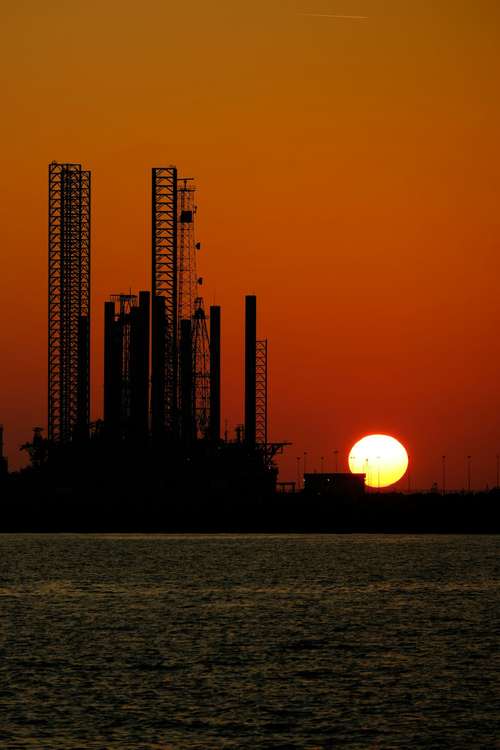
The geopolitical earthquake is reverberating far beyond the Middle East, directly and severely impacting American consumers. The near-closure of the Strait of Hormuz—a vital global chokepoint responsible for transporting a fifth of the world's oil in peacetime—has choked off supplies of energy, natural gas, and essential fertilizers. Consequently, Brent crude futures have surged dramatically, crossing the $115 per barrel threshold as panic buying sets in.
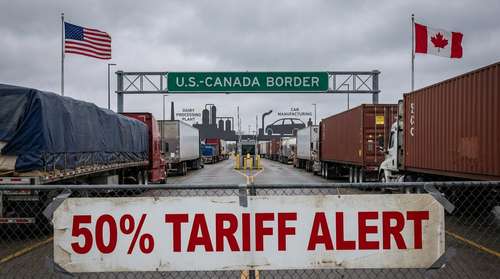
For everyday Americans, the most immediate consequence is the acute pain at the pump. The national average pump price has breached a key psychological barrier, pushing US gas prices 2026 to $4.00 a gallon. This unexpected spike represents a four-year high and presents a significant domestic challenge for the administration as it attempts to balance a forceful, uncompromising foreign policy with domestic economic stability. Elevated fuel costs threaten to reignite inflation, driving up the price of consumer goods right as the crucial summer driving season approaches.
What Happens Next?
The world now watches with bated breath as the clock ticks on the Trump Iran ultimatum. The unprecedented convergence of aggressive military posturing, secret diplomacy, and global economic disruption has created a highly volatile powder keg. If the White House Iran negotiations yield a breakthrough, it could rapidly stabilize global markets, reopen the Strait of Hormuz, and avert a devastating humanitarian catastrophe. Conversely, if the deadline passes without a comprehensive deal, the promised Iran energy infrastructure strikes could ignite a much broader regional war, permanently altering the geopolitical landscape and plunging the global economy into a deep energy crisis.