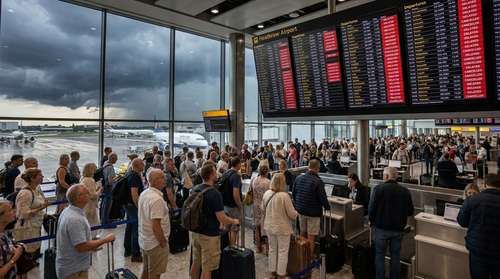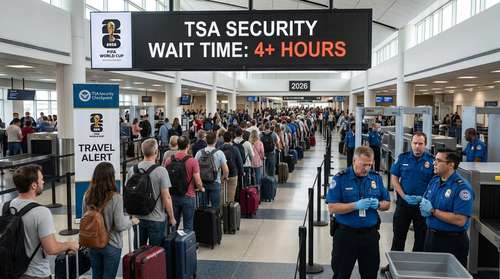
The U.S. aviation system is buckling under the weight of a severe transportation bottleneck just months before the globe's biggest sporting event arrives on American soil. An unprecedented TSA staffing crisis 2026—fueled by a bitter legislative standoff—has triggered catastrophic airport security wait times. Over the weekend, delays at major hubs stretched up to four and a half hours, bringing spring travel to a grinding halt. While an emergency executive order brought some retroactive pay to thousands of beleaguered screeners on Monday, aviation directors are already sounding the alarm. The mass exodus of fully trained officers has exacerbated the TSA staffing crisis 2026, leaving checkpoints dangerously vulnerable and prompting serious 2026 FIFA World Cup travel warnings ahead of the massive summer influx.
The Fallout of the Federal Funding Lapse TSA
Since mid-February, more than 50,000 Transportation Security Administration employees have been forced to secure the nation's skies without pay. This federal funding lapse TSA has devastated workforce morale and crippled daily operations. By late March, absentee rates at several major international hubs skyrocketed from a historical average of 4% to an astonishing 40% to 50%. Transportation security officers, struggling with eviction notices, drained savings, and repossessed vehicles, simply could not afford the gas to commute.
The result on the ground has been chaotic. US airport delays today remain highly unpredictable despite recent interventions. Travelers in Atlanta, Baltimore, and New Orleans found themselves standing in stagnant lines that spilled out of terminal buildings and into parking garages. At their peak, delays breached the four-hour mark, marking the highest wait times in the agency's history. In a desperate bid to alleviate the bottleneck over the weekend, the administration even deployed Immigration and Customs Enforcement (ICE) agents to support short-staffed checkpoints. However, this controversial stopgap measure did little to shorten the queues.
2026 FIFA World Cup Travel Warnings Issued
The timing of this historic attrition could not be worse for international tourism. During a recent House Homeland Security Committee hearing, Acting TSA Administrator Ha Nguyen McNeill issued severe 2026 FIFA World Cup travel warnings. She described the current environment as a "dire" perfect storm, noting that the workforce is hemorrhaging essential personnel.
More than 500 officers have permanently quit the agency since the funding lapse began. The core threat to the upcoming tournament lies in the agency's strict training pipeline. It takes four to six months to fully certify a new transportation security officer. Even if the agency drastically ramps up hiring immediately to replace those who walked away, those fresh recruits will not be ready to staff checkpoints by the time millions of international fans flood into the country. This logistical gap means the current, depleted workforce will bear the entire brunt of the summer travel surge.
Straining FIFA World Cup Houston Logistics
Nowhere is this pressure more evident than in Texas. Houston's George Bush Intercontinental Airport experienced some of the most dramatic operational swings this week, with absentee rates previously hitting alarming highs. As the city prepares to host seven matches during the massive summer tournament, FIFA World Cup Houston logistics are under intense local and federal scrutiny.
Aviation directors bluntly assessed the ongoing crisis, noting the heavy toll it takes on passengers missing crucial life moments. With nearby Arlington also hosting matches, the combined strain on Texas aviation hubs presents a formidable challenge. Local organizers must now figure out how to process an unprecedented volume of international visitors through significantly reduced security lanes.
Navigating Unpredictable US Airport Delays Today
While Monday's retroactive pay distributions provided a temporary band-aid—causing wait times to briefly plummet to single digits at some checkpoints—travelers should not expect smooth sailing. The underlying political standoff over Department of Homeland Security funding remains entirely unresolved. Lawmakers left Washington for a recess without a permanent solution, meaning another operational lapse could easily disrupt the system again. Furthermore, union representatives have cautioned that a mass exodus of debt-burdened officers may still occur as workers seek more stable, reliable employment outside the federal government.
If you are flying domestically or internationally in the coming weeks, staying informed is your best defense against missed flights. Monitor official travel alerts US airports closely and check your specific terminal's wait time dashboard before leaving home. Be aware that some hubs, including Hartsfield-Jackson Atlanta and John F. Kennedy International, temporarily suspended their online airport security wait times reporting due to rapid fluctuations. Until staffing levels permanently stabilize, the new golden rule of arriving three to four hours early for flights out of major hubs is no longer just a cautious suggestion—it is an absolute necessity.