The United States and Israel have entered the third day of a massive military offensive against Iran, dubbed "Operation Epic Fury," following a targeted strike that killed Supreme Leader Ayatollah Ali Khamenei and dozens of top regime officials. President Donald Trump, who claims the operation is "ahead of schedule" and could conclude within four weeks, is facing a bipartisan push in Congress for a War Powers vote as the strikes were launched without congressional authorization. Iran has responded with retaliatory missile strikes on U.S. assets in the Gulf, resulting in the first reported American casualties of the conflict.
Ayatollah Khamenei Killed in Decapitation Strike
In a seismic development that has reshaped the Middle East's geopolitical landscape, Iranian state media confirmed on Sunday that Supreme Leader Ayatollah Ali Khamenei was killed in a joint U.S.-Israeli airstrike on his secure compound in Tehran. The operation, which commenced on February 28, 2026, utilized precise intelligence to target a high-level meeting of Iranian leadership. Alongside Khamenei, approximately 40 senior officials, including Defense Minister General Aziz Nasirzadeh and IRGC commander Mohammad Pakpour, were reported dead.
President Trump announced the success of the mission on Truth Social, declaring the removal of "one of the most evil people in history" and urging the Iranian people to "take back their government." The strikes, described by Israeli officials as a "preemptive" measure to dismantle Iran's nuclear and missile capabilities, have plunged the region into chaos, with Tehran declaring 40 days of national mourning and vowing "crushing" revenge.
Trump Predicts 'Four-Week' War as Congress Pushes Back
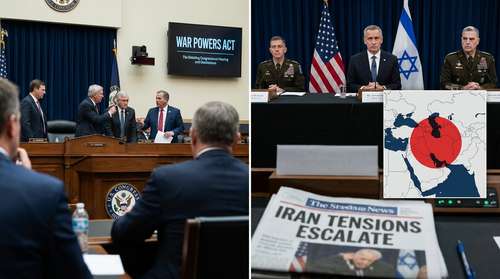
Despite the escalation, President Trump has projected confidence, stating in a video message that the military campaign is "ahead of schedule" and predicting the conflict could be resolved in "four weeks or less." However, this assertion has done little to quell a rising tide of opposition on Capitol Hill. Lawmakers from both parties are expressing alarm over the executive branch's decision to launch a major war without prior congressional approval, citing the War Powers Act of 1973.
Sen. Tim Kaine (D-Va.) and Reps. Ro Khanna (D-Calif.) and Thomas Massie (R-Ky.) are leading a bipartisan charge to force a vote on a War Powers resolution. "The Constitution says we're not supposed to be at war without a vote of Congress," Kaine stated, calling the unauthorized strikes a "colossal mistake" that risks an endless regional conflict. The resolution seeks to mandate the removal of U.S. forces from hostilities unless Congress issues a formal declaration of war, setting up a constitutional showdown between the legislative and executive branches.
First US Casualties in Kuwait and Regional Escalation
The cost of the conflict is already becoming painfully clear. The Pentagon confirmed on Monday that three U.S. service members were killed in a missile attack on the Ali al-Salem Air Base in Kuwait, marking the first American combat deaths of the war. The strike was part of a broader wave of Iranian retaliation that saw ballistic missiles and drones fired at U.S. and allied targets in Kuwait, Bahrain, Qatar, and the UAE. In a chaotic turn of events, U.S. Central Command also acknowledged a "friendly fire" incident where three U.S. F-15 jets were mistakenly shot down by Kuwaiti air defenses, though the crews ejected safely.
Middle East on the Brink
The violence has spilled over into neighboring countries, with reports of explosions in Dubai and attacks on oil tankers off the coast of Oman. The Iranian Red Crescent reports over 550 deaths within Iran due to the ongoing bombardment. As the U.S. and Israel continue their offensive, the window for diplomacy appears to have slammed shut, leaving the region bracing for a prolonged and unpredictable conflict that Congress is desperately trying to rein in.