The stakes have never been higher for global energy stability. Starting at 10 a.m. ET on Monday, the United States military is initiating a sweeping Strait of Hormuz blockade targeting all Iranian port traffic. The dramatic executive order from President Donald Trump comes just hours after high-stakes peace negotiations in Pakistan suffered a total collapse, abruptly ending what many hoped would be a diplomatic off-ramp for the escalating conflict.
JD Vance Islamabad Negotiations Reach a Bitter End
Vice President JD Vance spent 21 grueling hours locked in mediated talks in the Pakistani capital, attempting to secure a permanent ceasefire. Representing the highest level of face-to-face diplomacy between the two nations since 1979, the U.S. delegation, which included special envoy Steve Witkoff and Jared Kushner, engaged directly with Iranian Parliamentary Speaker Mohammad Bagher Ghalibaf. Host nation Pakistan, under the leadership of Prime Minister Shehbaz Sharif, locked down the city to provide heavy security for the historic summit.
But by early Sunday morning, the US-Iran nuclear talks failure was undeniable. Vance emerged visibly exhausted, citing Tehran's absolute refusal to dismantle its uranium enrichment capabilities as the insurmountable hurdle. Washington's baseline demands also required Iran to make an affirmative commitment to abandon its pursuit of nuclear weapons and cease funding for regional proxy groups.
"We just could not get to a situation where the Iranians were willing to accept our terms," Vance told reporters before departing. He bluntly framed the impasse, calling the lack of an agreement "bad news for Iran much more than it's bad news for the United States". Iranian officials countered that Washington failed to provide necessary assurances. Ghalibaf claimed his delegation offered constructive initiatives, but the American envoys ultimately failed to rebuild shattered trust.
Trump Iran Foreign Policy Shifts to Maximum Pressure
Unwilling to wait for further diplomatic maneuvering, the Oval Office shifted rapidly from negotiation to direct confrontation. In a sweeping declaration defining the latest era of Trump Iran foreign policy, the president took to his Truth Social platform to announce that the U.S. Navy would immediately move to sever Tehran's maritime economic lifelines.
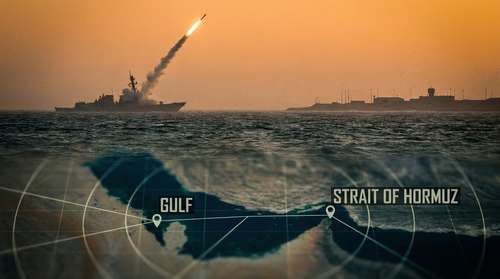
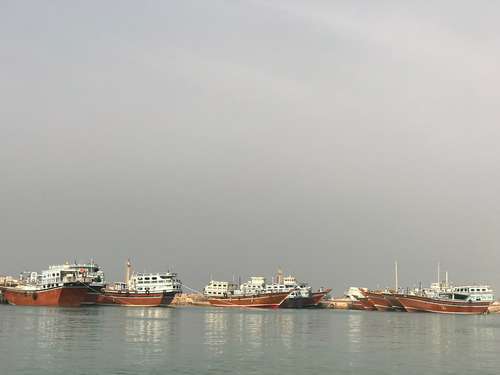
The Iranian port blockade 2026 directive officially empowers U.S. Central Command (CENTCOM) to intercept vessels attempting to enter or exit Iranian ports on the Arabian Gulf and the Gulf of Oman. Trump's rhetoric matched the severe military posture. He warned that any commercial vessel paying an "illegal toll" to Tehran would be intercepted, and explicitly authorized American forces to begin clearing naval mines reportedly laid in the strategic waterway.
"Any Iranian who fires at us, or at peaceful vessels, will be BLOWN TO HELL!" the president wrote. CENTCOM quickly issued a clarifying statement noting that freedom of navigation for vessels traveling to and from non-Iranian ports would be protected, aiming to mitigate panic among allied Gulf nations and global shippers.
Bracing for the Global Oil Market Impact
The economic shockwaves of militarizing the world's most critical energy chokepoint were instantaneous. With roughly 20 percent of the world's petroleum and liquefied natural gas (LNG) shipments transiting through the narrow 21-mile-wide corridor, the global oil market impact is expected to dominate international financial exchanges as trading resumes.
Futures trading already signaled deep distress, with energy benchmarks jumping nearly 7 percent ahead of Monday's opening bells. Energy analysts fear that a prolonged standoff will severely restrict supply chains, inflating manufacturing and transportation costs globally. The immediate threat lies within maritime insurance markets; if underwriters refuse to cover commercial shippers sending tankers into an active military interdiction zone, the sheer reduction in daily barrel movement could trigger the sharpest energy crisis of the decade.
A Flashpoint for Middle East Military Tension
The diplomatic breakdown and subsequent naval crackdown have pushed Middle East military tension past the boiling point. Iran's Islamic Revolutionary Guard Corps (IRGC) immediately issued a defiant counter-statement, promising a "forceful response" to any U.S. military interference with its sovereign shipping routes.
While regional mediators initially tried to foster goodwill, the chasm between Washington's demand for total nuclear capitulation and Tehran's insistence on sanctions relief proved fatal to the peace process. The six-week-old open conflict now enters its most dangerous and unpredictable phase yet.
As American naval destroyers position themselves to choke off Iran's primary source of revenue, the international community watches nervously. The coming days will heavily test whether this massive projection of naval power forces Tehran back to the negotiating table, or ignites a broader, devastating regional conflagration.