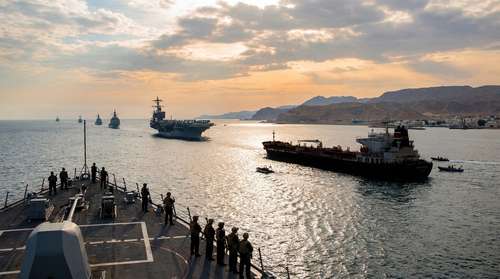
Following the dramatic US-Iran peace talks collapse in Pakistan early Sunday morning, President Donald Trump has escalated the Middle East war 2026 by ordering an immediate naval blockade. This historic decision comes on the heels of a massive escalation in regional hostilities that began in late February, leaving the international community scrambling for a diplomatic off-ramp.
The historic 21-hour diplomatic summit, spearheaded by Vice President JD Vance, ended without an agreement over Tehran's nuclear ambitions and control of the critical global shipping waterway. In response, the White House announced an aggressive US Navy Hormuz interdiction strategy aimed at financially starving the Iranian government.
Historic JD Vance Islamabad Negotiations End in Stalemate
The highly anticipated face-to-face meetings in Islamabad marked the highest-level direct diplomacy between the two nations since the 1979 Islamic Revolution. The JD Vance Islamabad negotiations stretched through the night, but the U.S. delegation—which included special envoy Steve Witkoff and Jared Kushner—failed to bridge massive ideological gaps with Iranian Parliament Speaker Mohammad Bagher Ghalibaf and Foreign Minister Abbas Araghchi. The Pakistani government, led by Prime Minister Shehbaz Sharif, mediated the talks in hopes of stabilizing the volatile region, even declaring a public holiday to ensure security for the diplomatic delegations.
Vice President Vance told reporters early Sunday that while the discussions were substantive, the Iranians refused to accept American terms. The primary roadblock centered on Iran's nuclear capabilities. According to U.S. negotiators, Tehran refused to offer an affirmative commitment to permanently halt the pursuit of a nuclear weapon. Complicating matters, intelligence reports indicated Iran held an estimated 972 pounds of 60% enriched uranium, putting them a short step away from weapons-grade material.
The failure of these talks severely complicates Trump Iran policy 2026, as the administration demands complete nuclear disarmament to end the six-week conflict that has devastated the region. "The simple question is: do we see a fundamental commitment of will not to develop a nuclear weapon," Vance stated before departing. "We haven't seen that yet".
Trump Orders Immediate Strait of Hormuz Blockade
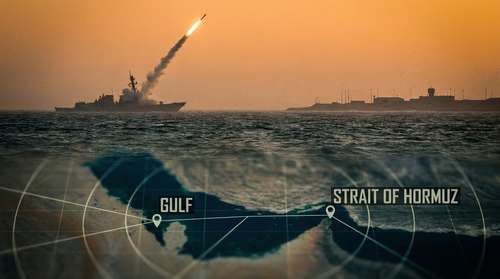
Just hours after the American delegation departed Pakistan, President Trump took to social media to announce a severe military escalation. He declared a complete Strait of Hormuz blockade, vowing to stop any vessels attempting to enter or leave the heavily contested waters.
The new directive authorizes a sweeping US Navy Hormuz interdiction campaign. American destroyers have already begun transit operations to clear mines allegedly laid by Iran. The most severe consequence of Trump's order targets international shipping companies directly: any commercial vessel caught paying a transit toll to the Iranian government will be intercepted immediately. The administration sees this financial cutoff as essential to crippling Iran's war machine and forcing them back to the negotiating table.
"No Safe Passage for Extortion"
Trump's statement made the administration's stance abundantly clear. "No one who pays an illegal toll will have safe passage on the high seas," the President wrote, emphasizing that the U.S. will not allow Iran to profit off what he termed an Illegal Act of EXTORTION. Iran's Revolutionary Guard quickly responded, threatening to deal severely with foreign military vessels in the waterway, significantly raising the risk of direct naval confrontations.
A Deepening Global Oil Supply Crisis
The breakdown of diplomacy and subsequent blockade orders have immediately worsened the global oil supply crisis. Prior to the conflict, roughly 20% of the world's traded oil passed through the Strait of Hormuz on more than 100 ships daily. Since the ceasefire began, maritime traffic has plummeted to roughly 10% of its normal volume.
Financial markets are reeling from the weekend's events. Brent crude oil prices have surged to $119.50 per barrel, and domestic gasoline prices in the United States have spiked 35% since the war initiated in late February. The economic pain is being felt globally, with major refineries, such as Saudi Arabia's SATORP facility, shutting down following targeted attacks. The current trajectory suggests energy markets will remain highly volatile as over 600 commercial vessels sit stranded in the Gulf region.
With international supply chains buckling under the pressure, energy experts warn that a sustained military standoff in the strait could trigger widespread economic repercussions far beyond the borders of the Middle East.
What Follows the US-Iran Peace Talks Collapse?
The Middle East war 2026 now hangs in a precarious balance. While a fragile 14-day ceasefire remains technically active until April 22, the lack of a permanent peace framework leaves the region on edge. The ongoing conflict has already resulted in nearly 3,400 casualties in Iran and caused severe infrastructure damage across multiple nations. Iran's economy has been particularly battered, with roughly 70% of its steel and petrochemical industries reportedly damaged by coalition strikes.
Another critical point of contention remains the scope of the ceasefire. Iranian negotiators, backed by Pakistani mediators, demanded the truce extend to Lebanon to halt ongoing Israeli airstrikes against Hezbollah. The United States and Israel firmly rejected this expansion, leading to continued bombardment in the Levant even as diplomats sat at the negotiating table in Pakistan. Despite pressure from UK ministers urging the Trump administration to include Lebanon in a broader peace deal, Vance maintained that the U.S. would not fold on this issue.
As the world watches the Persian Gulf, the success or failure of the upcoming naval blockade will likely dictate the next phase of the war. With diplomatic channels currently frozen, military deterrence has once again become the primary mechanism for resolving the international crisis. The world now braces for the impending enforcement of the blockade, knowing that any miscalculation in the heavily militarized Strait of Hormuz could ignite an even wider and more devastating global conflict.